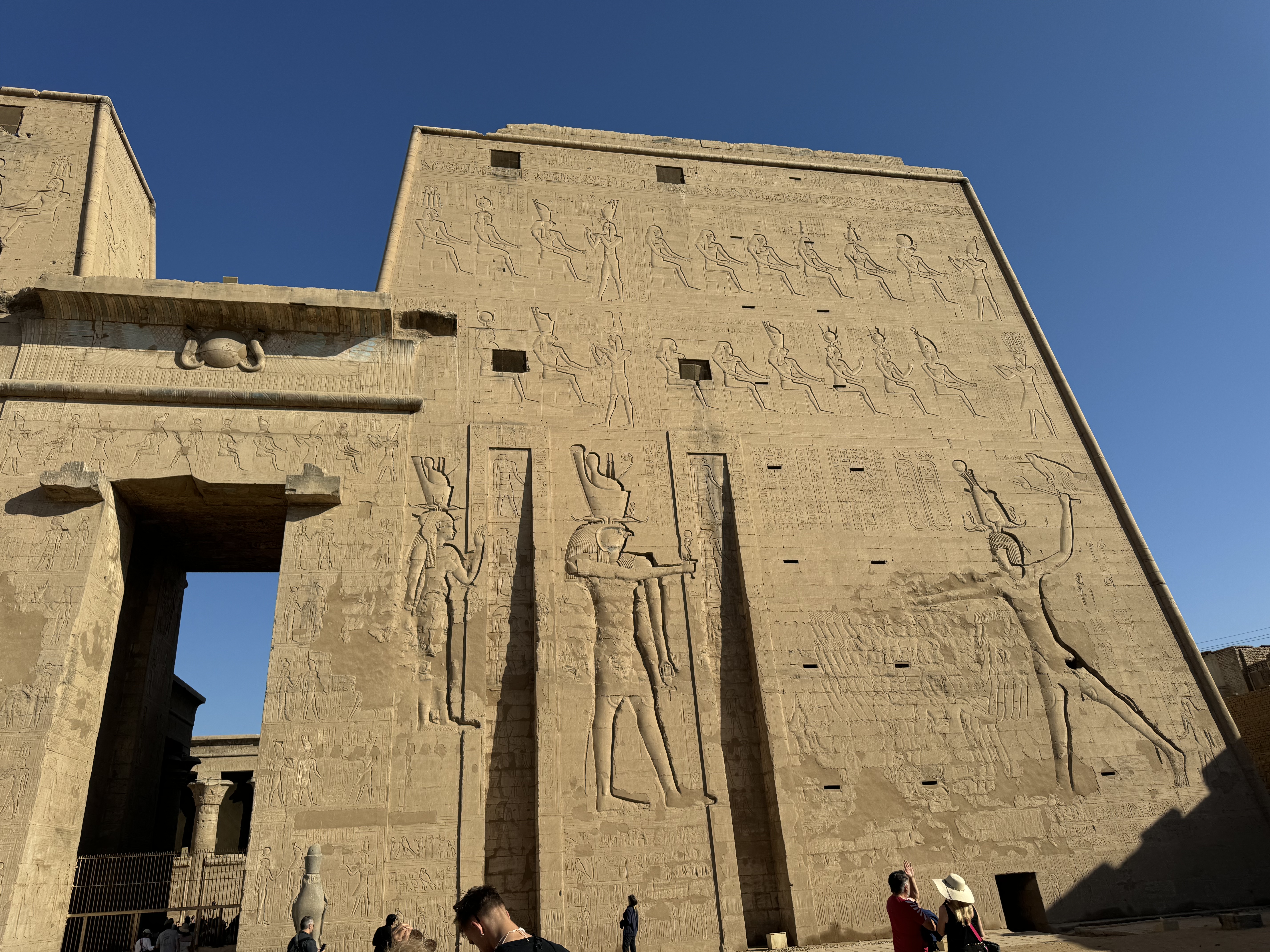
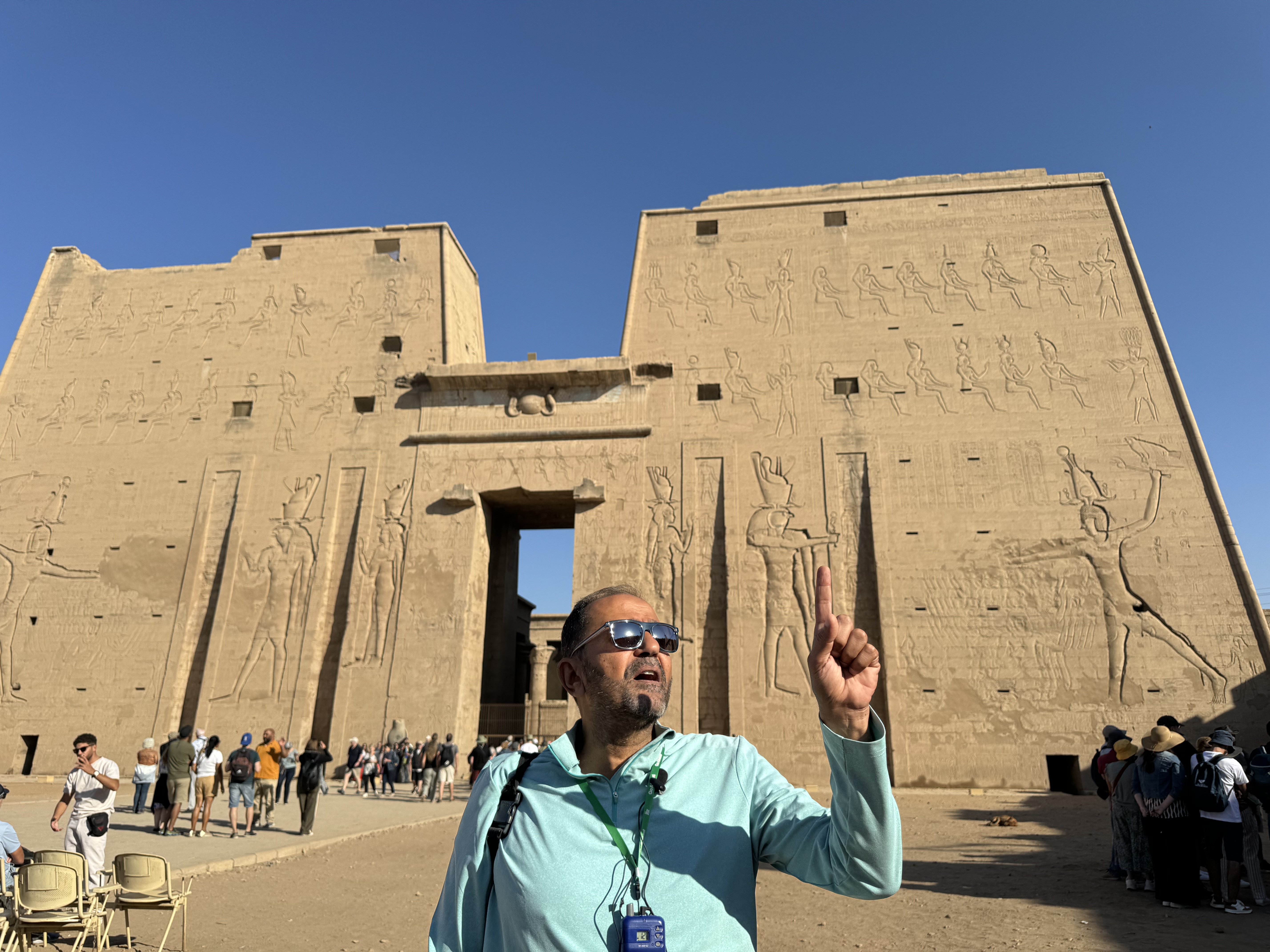
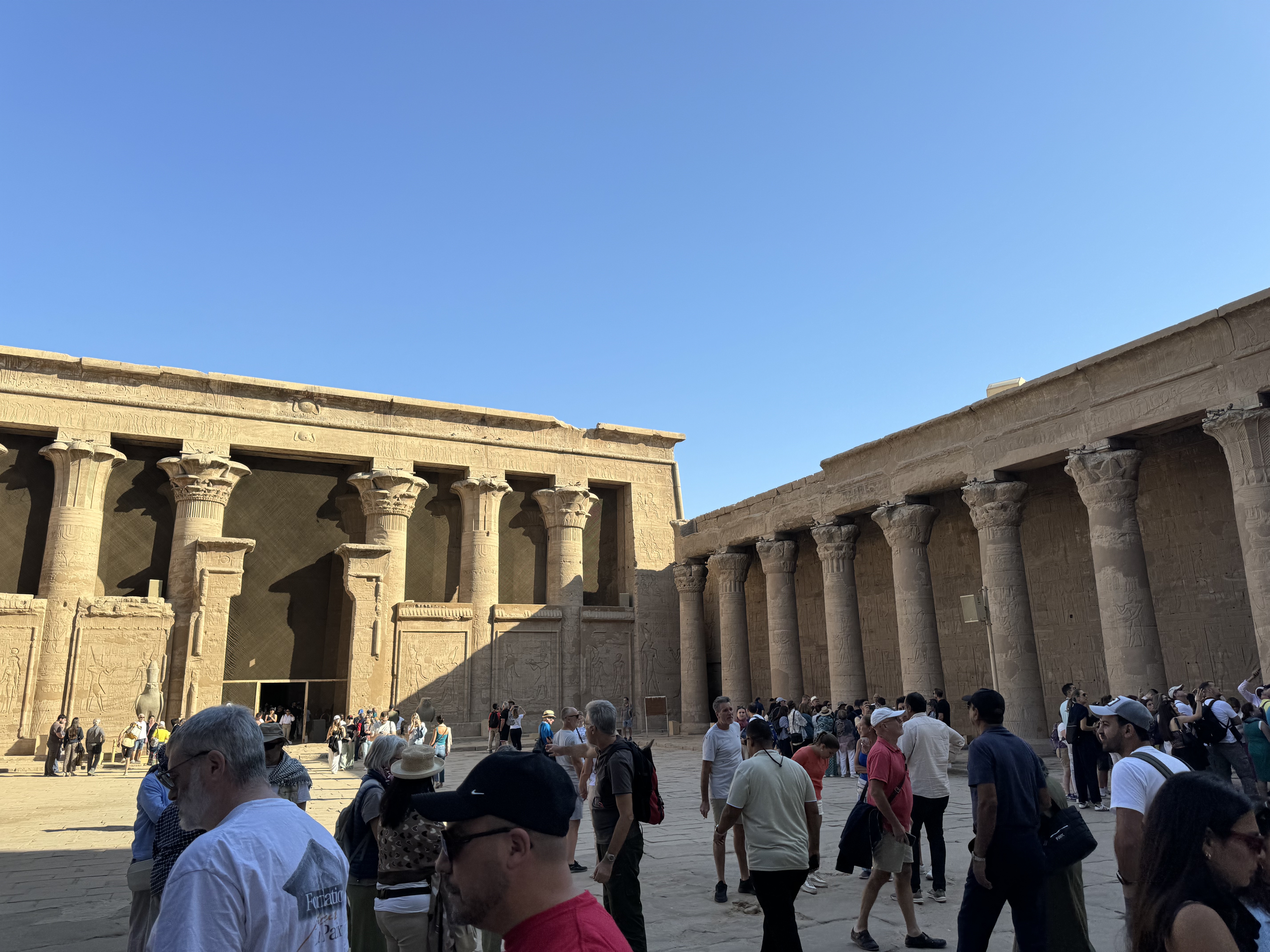
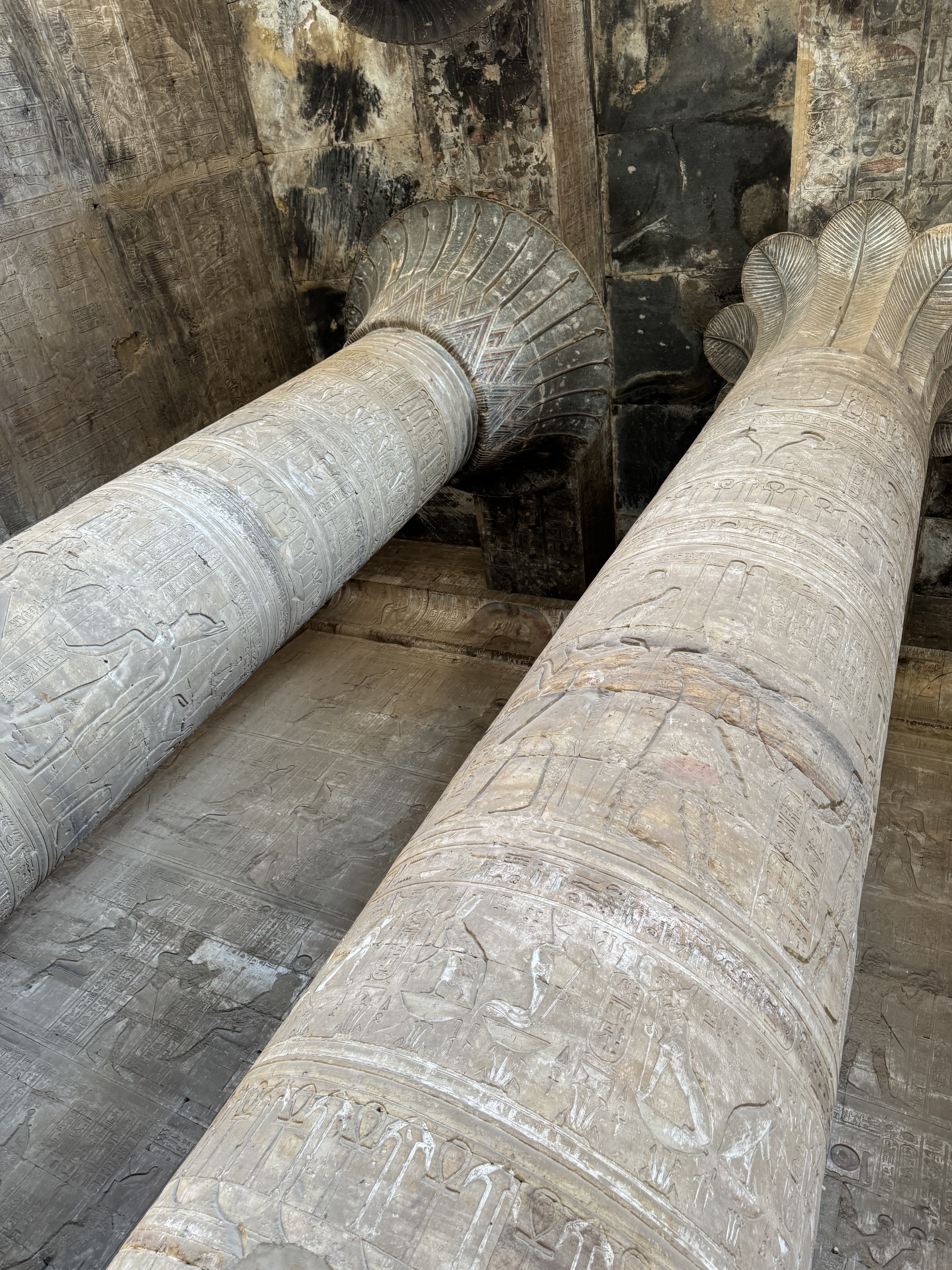
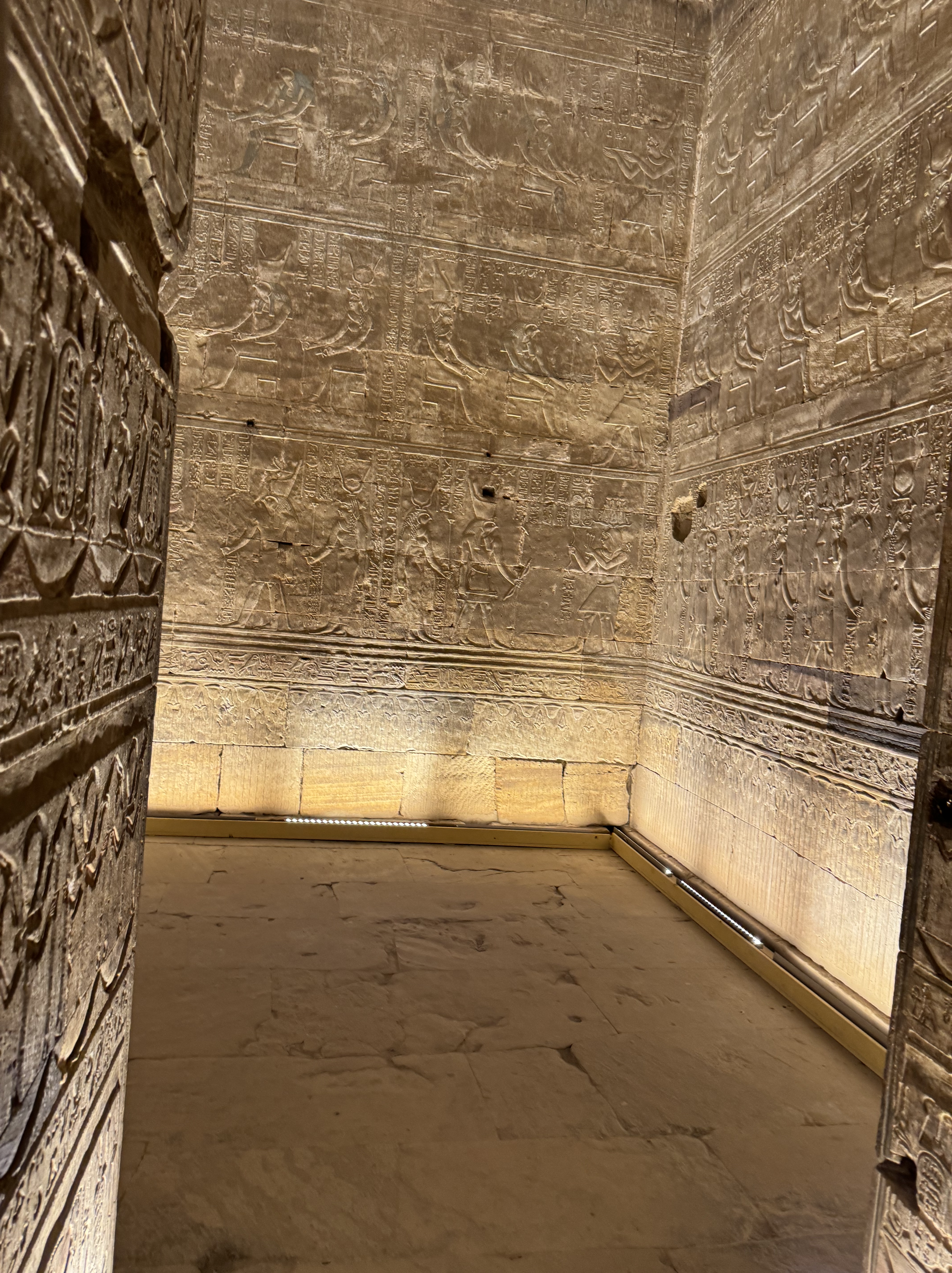
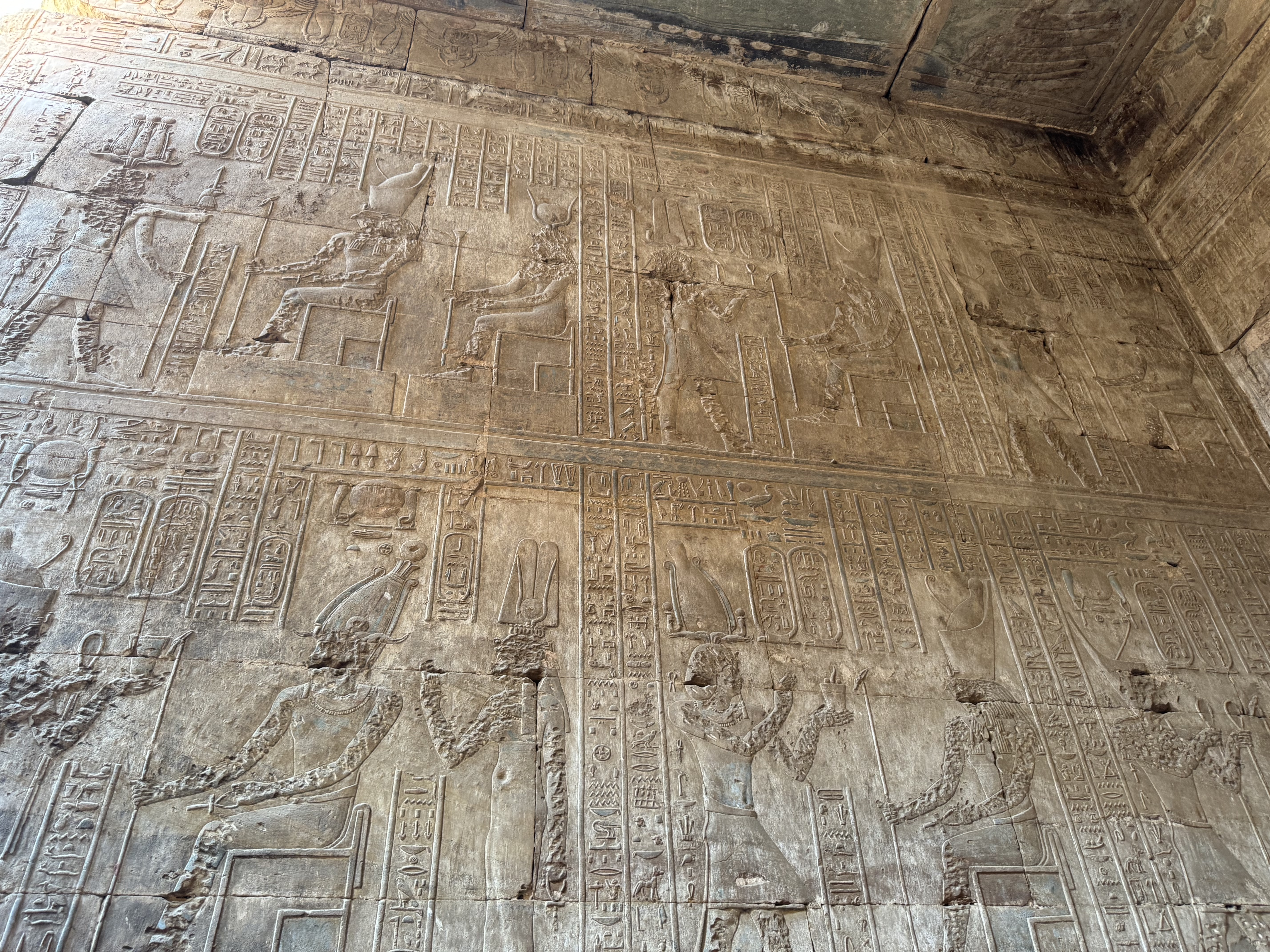
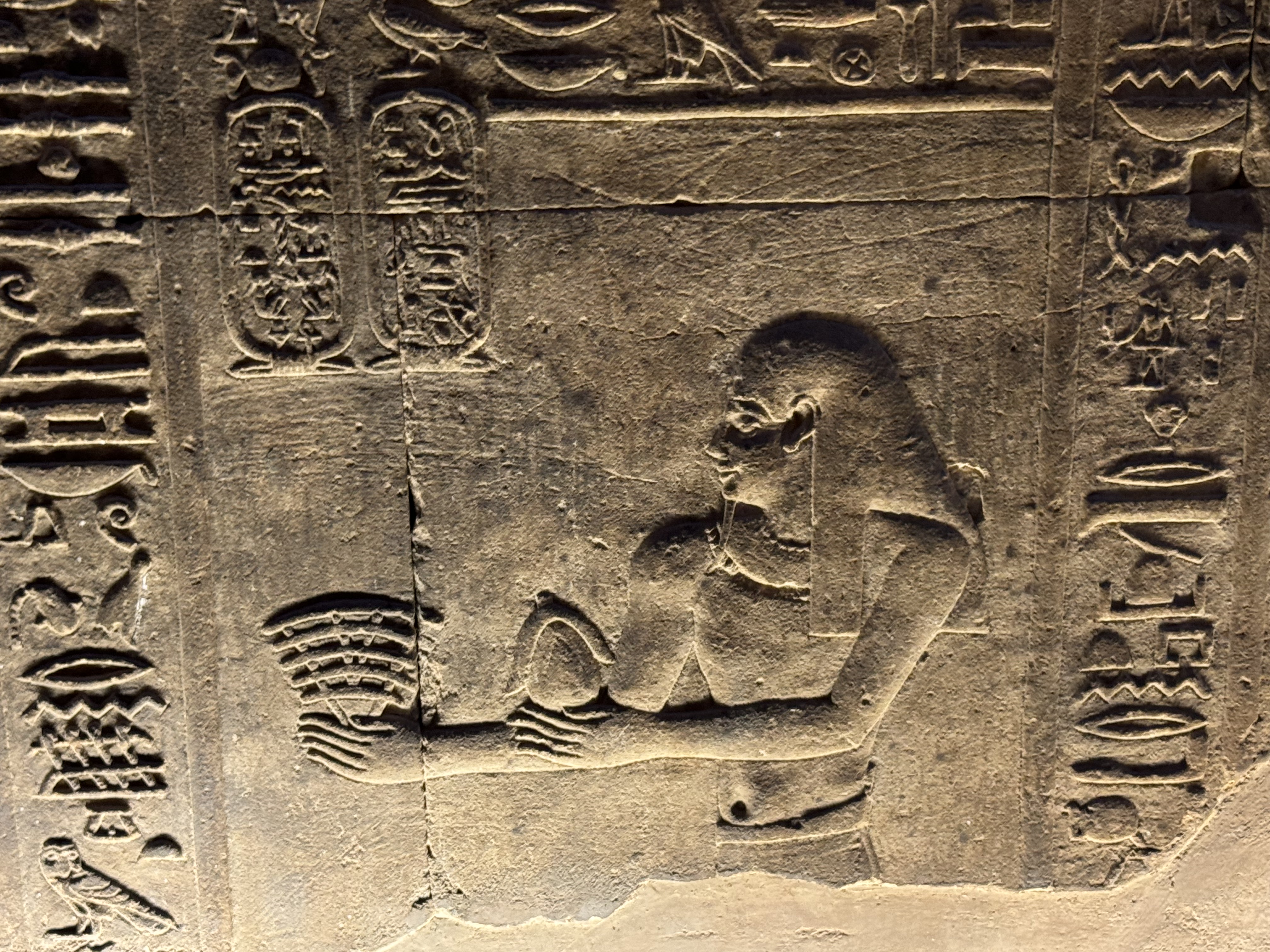
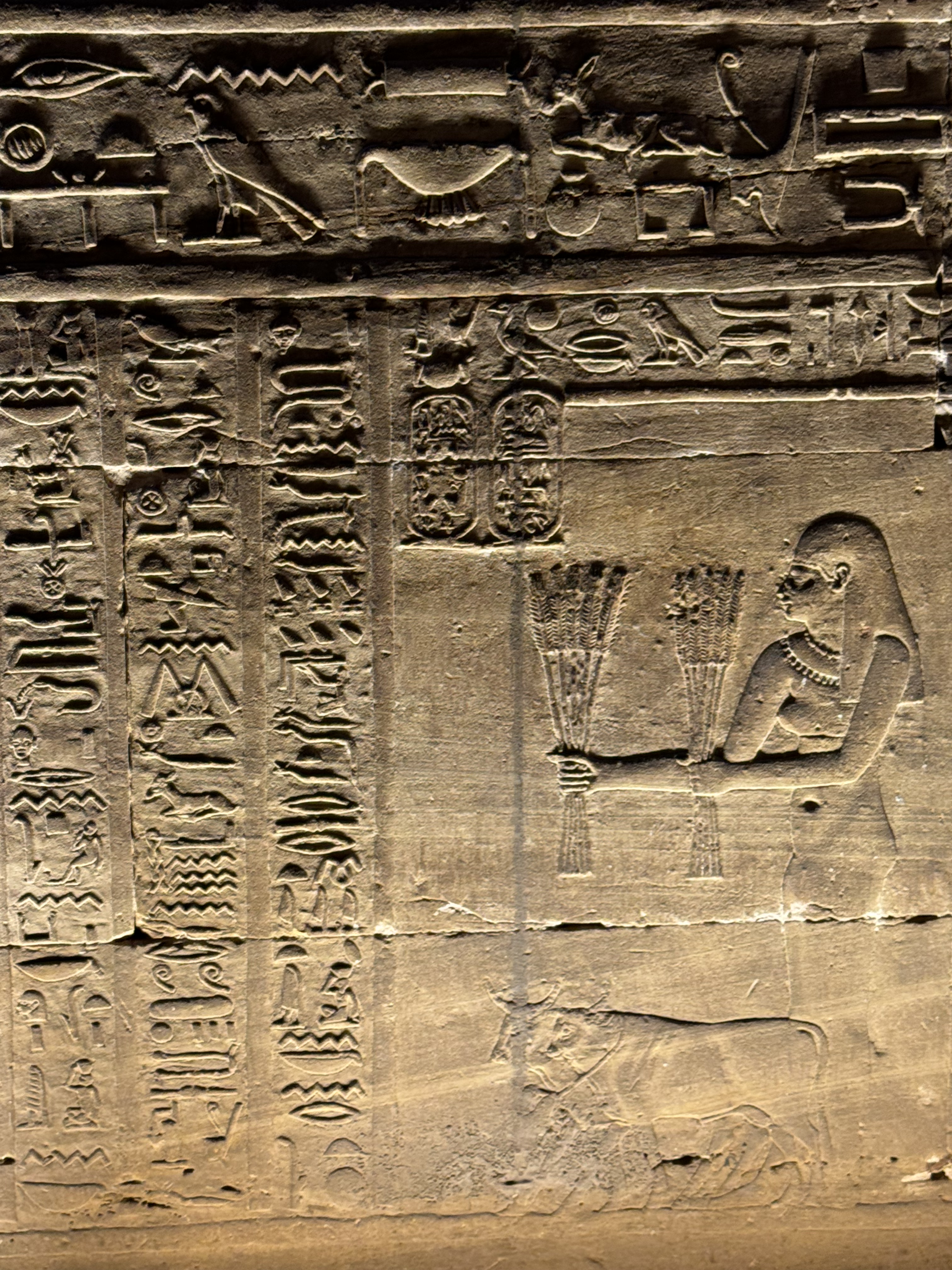
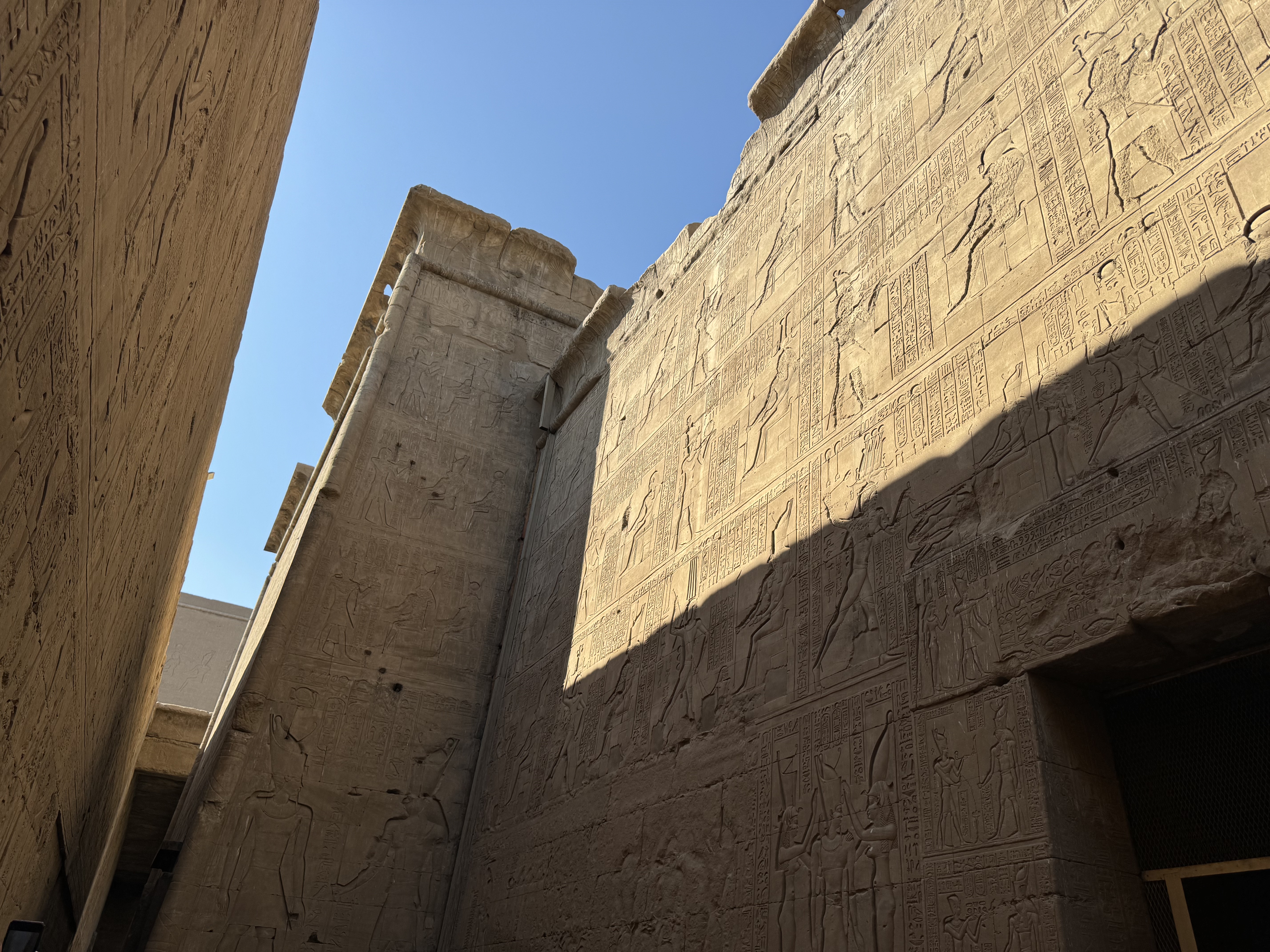
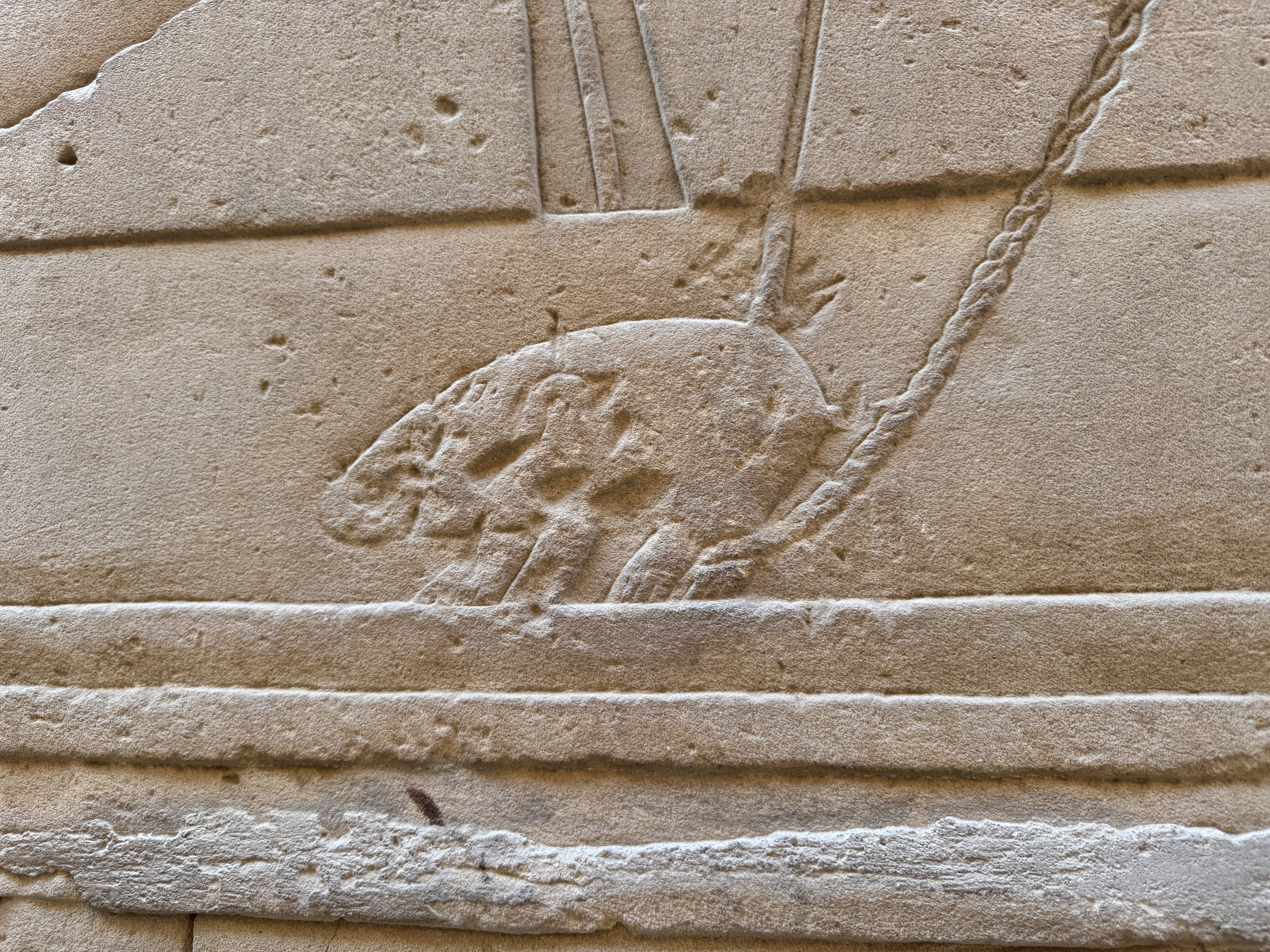
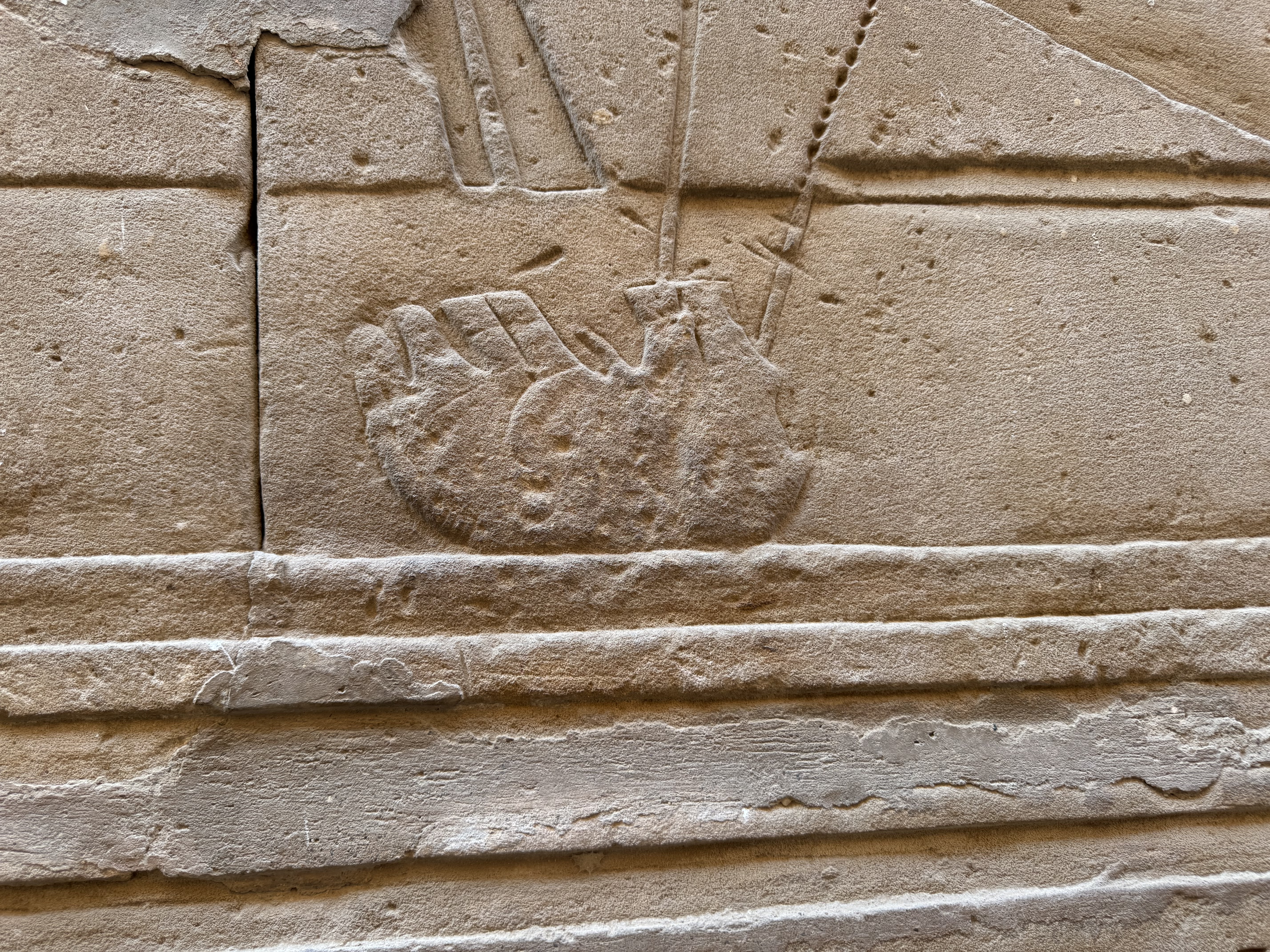
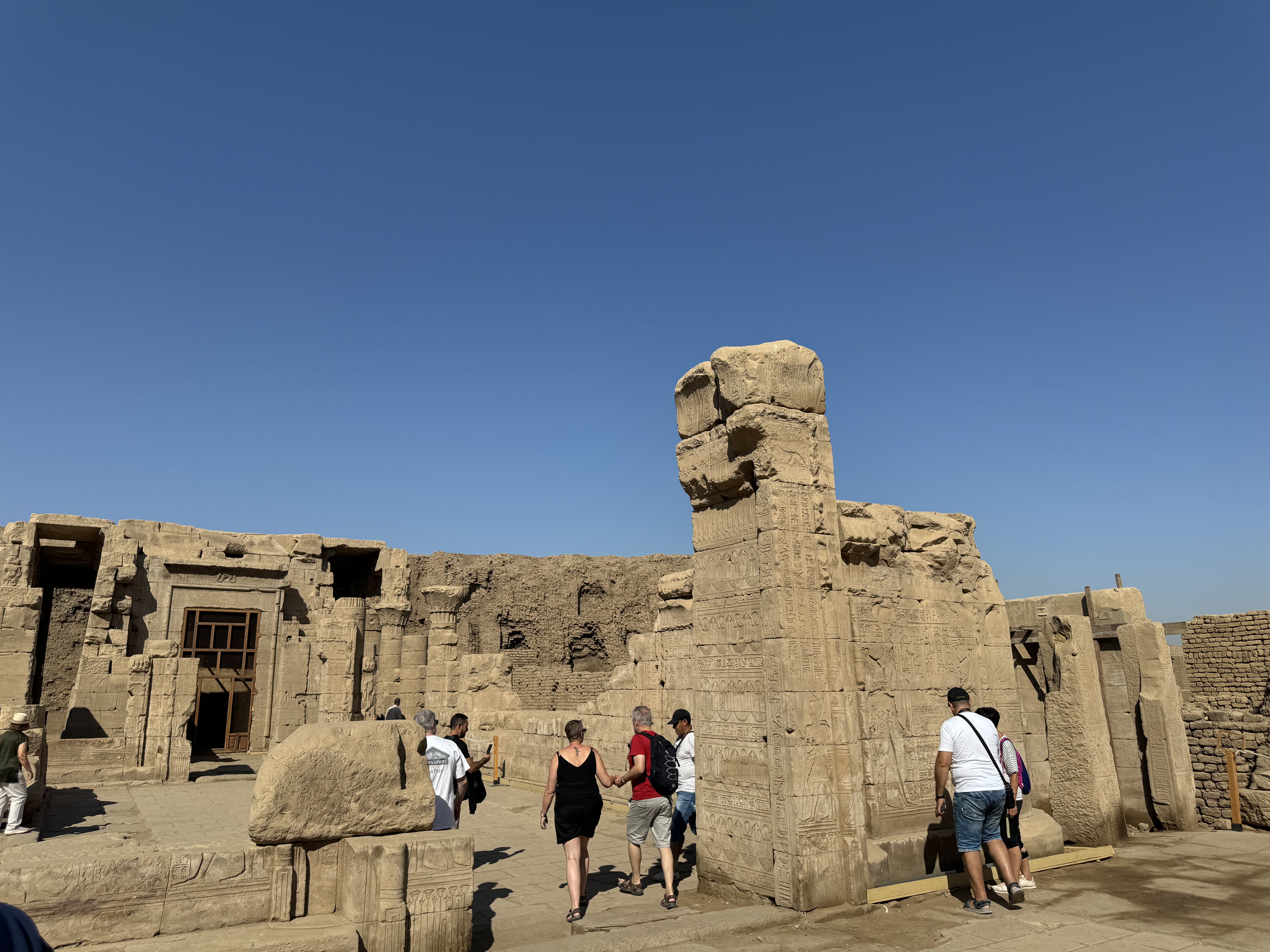
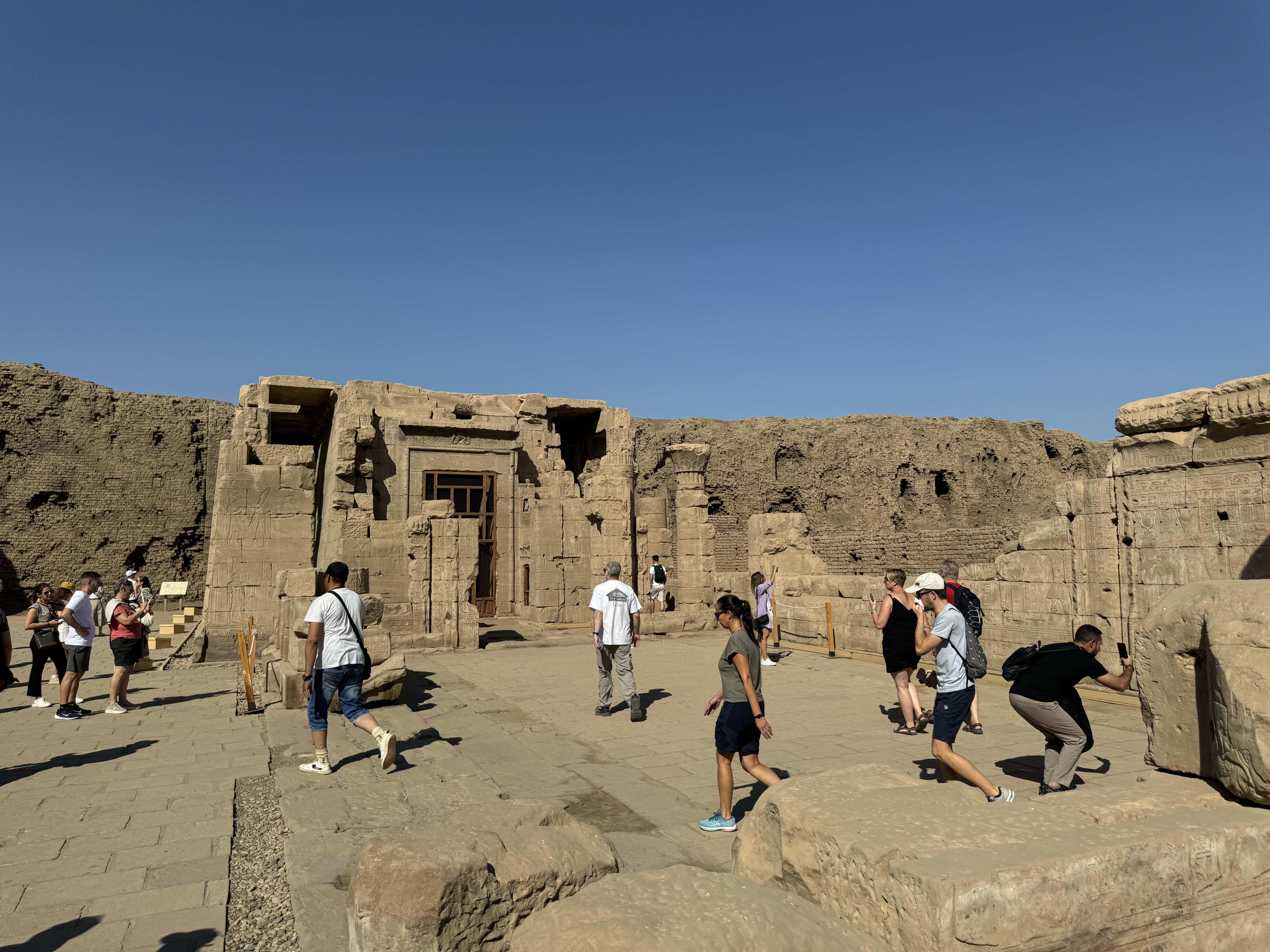
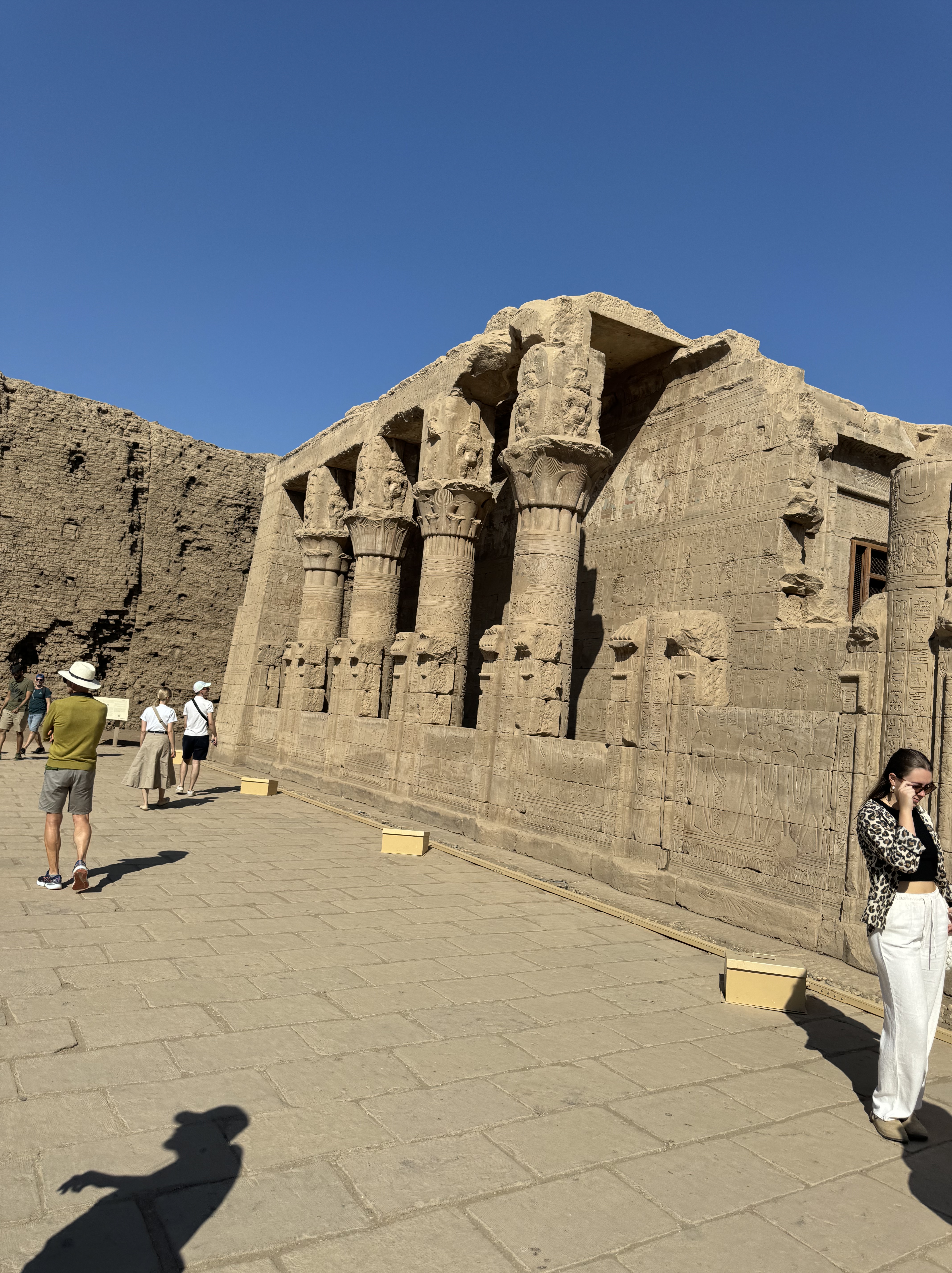
We began this day exploring one of the best preserved temples in Egypt – The Temple of Horus. This is a classic example of Ptolemaic architecture. It has massive stone walls and towering pylons. It is also one of the few temples in Egypt where inscriptions on its walls describe how it was built. They also show how it was used in ancient times.
To realize the size of the structures and to imagine being built without modern machinery is beyond comprehension.
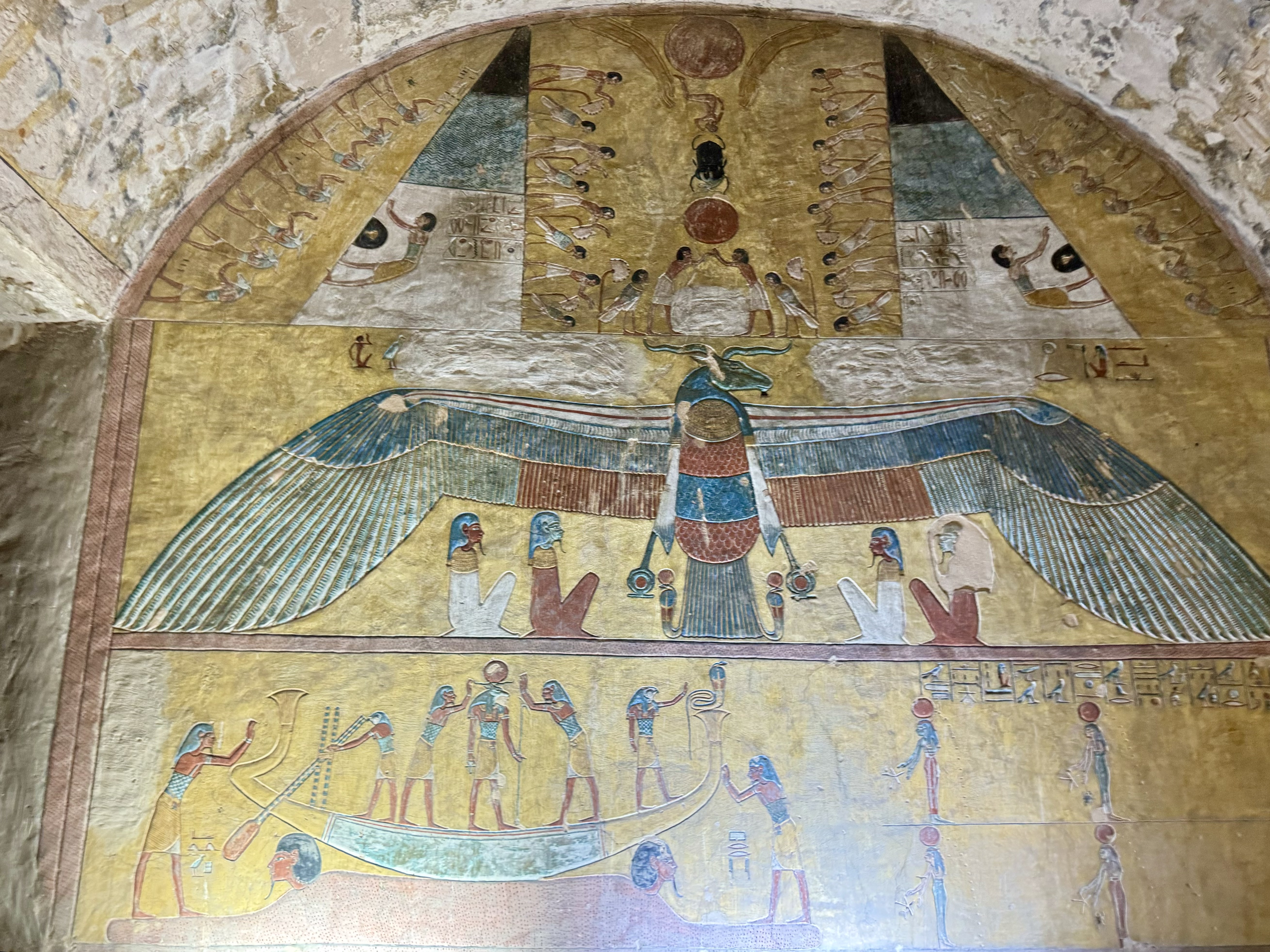
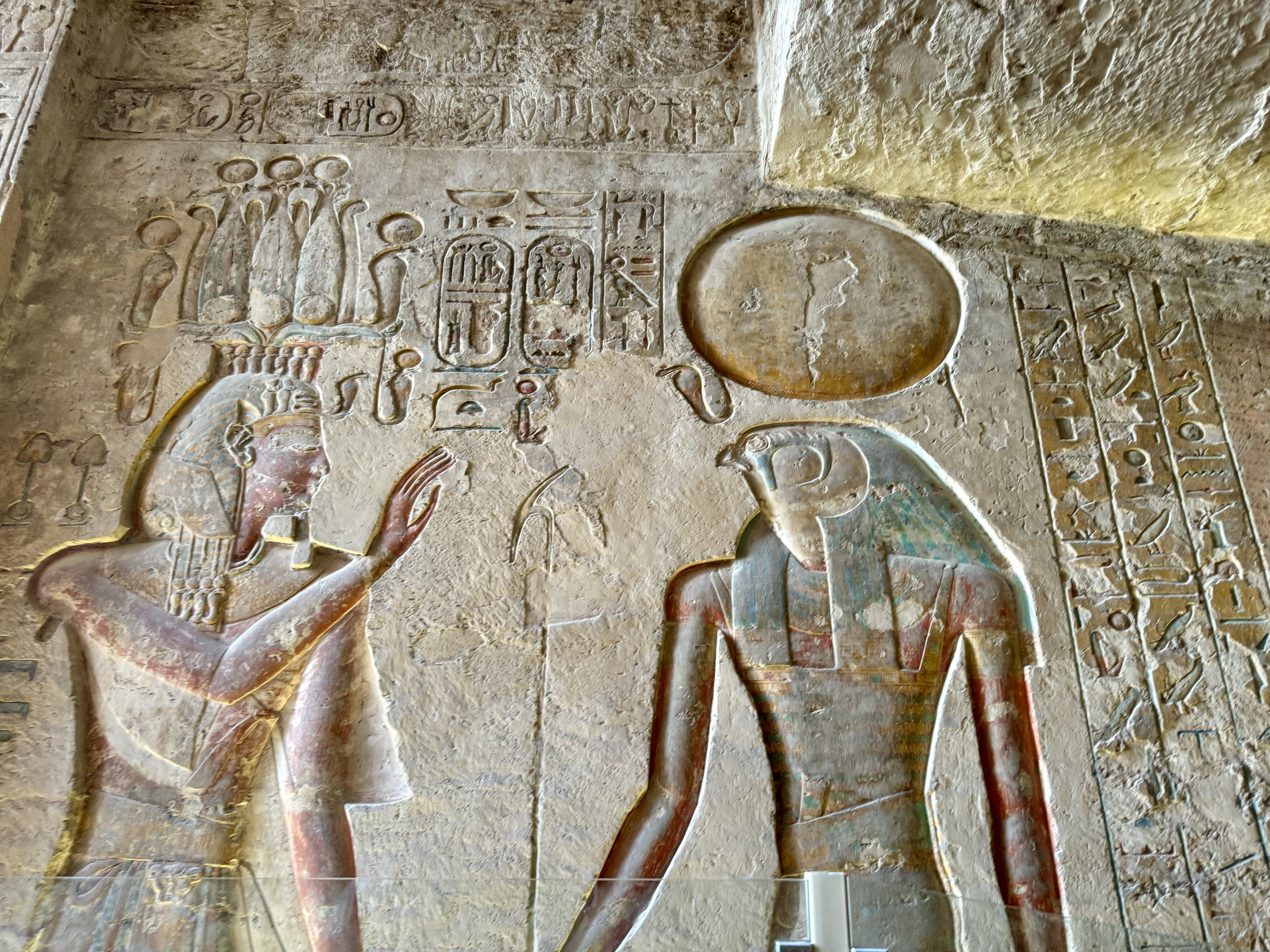
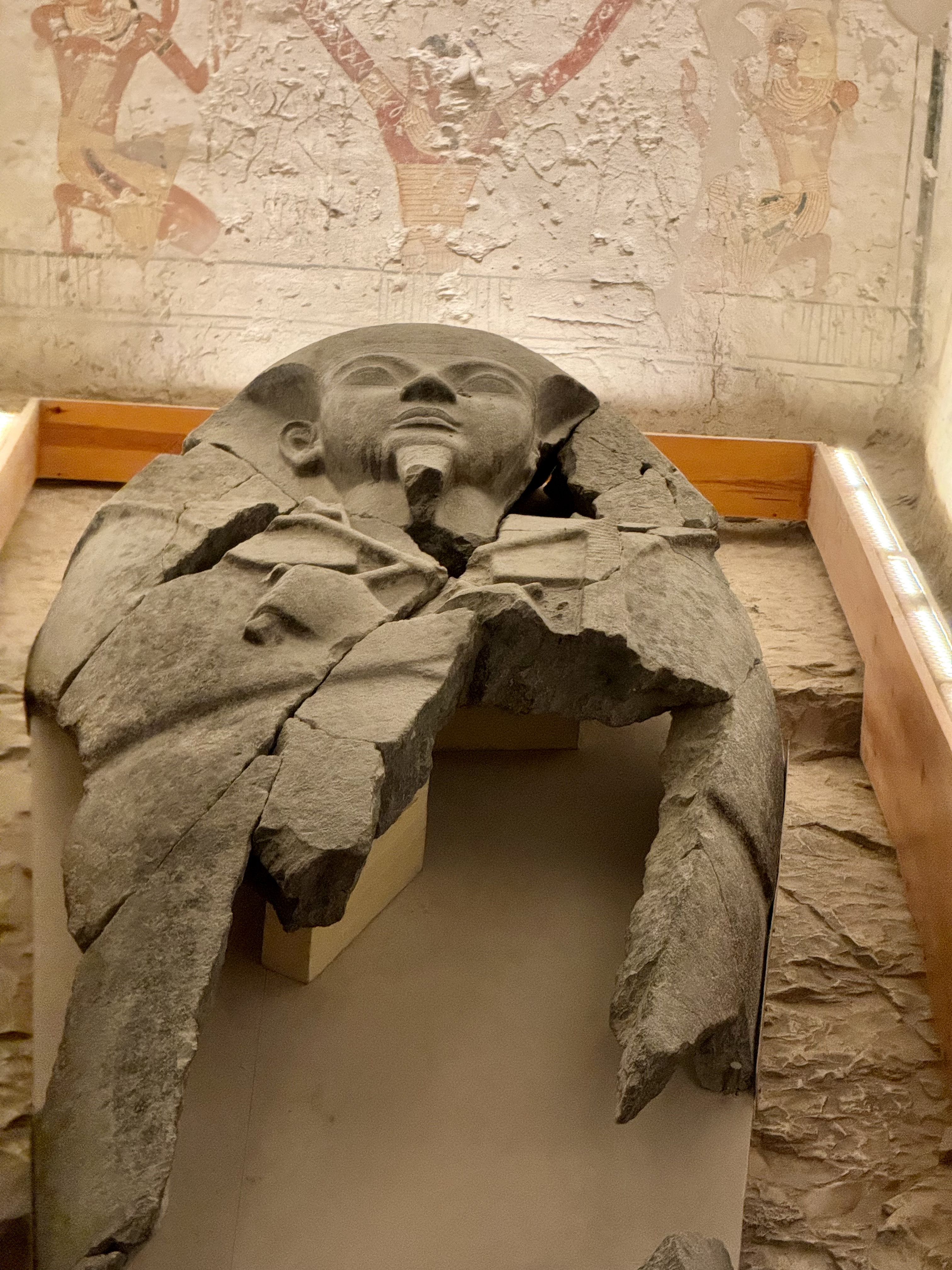
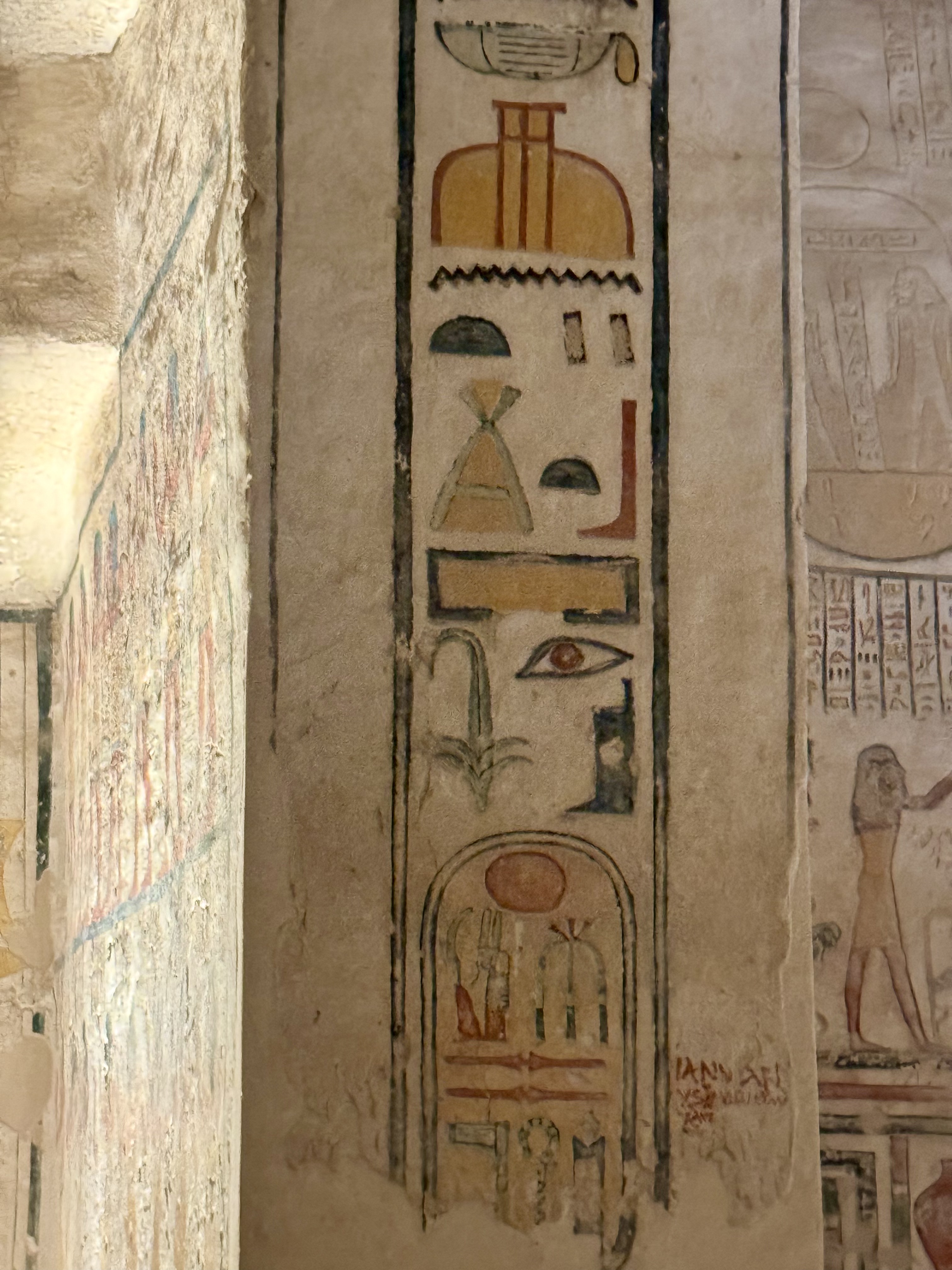
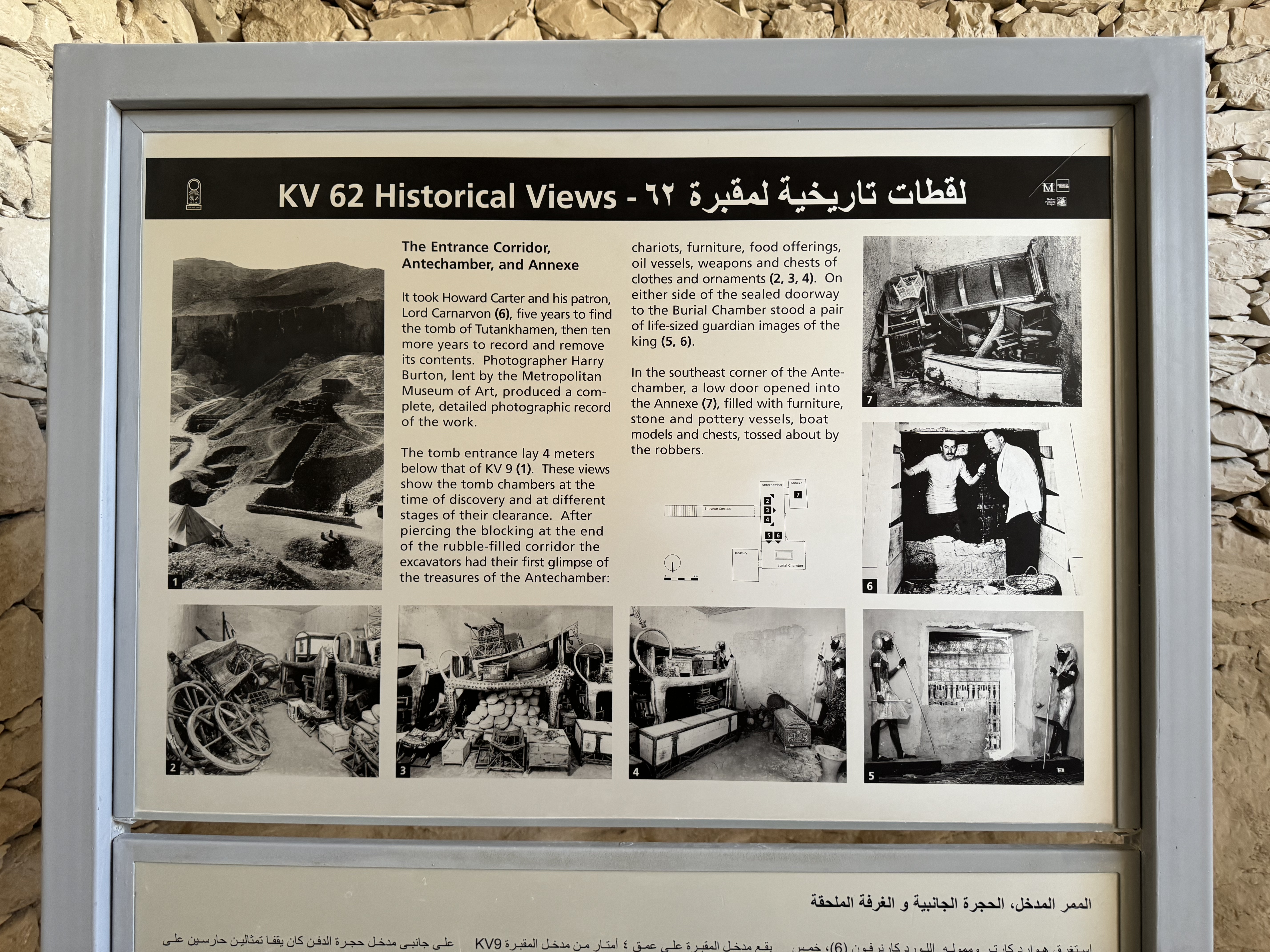
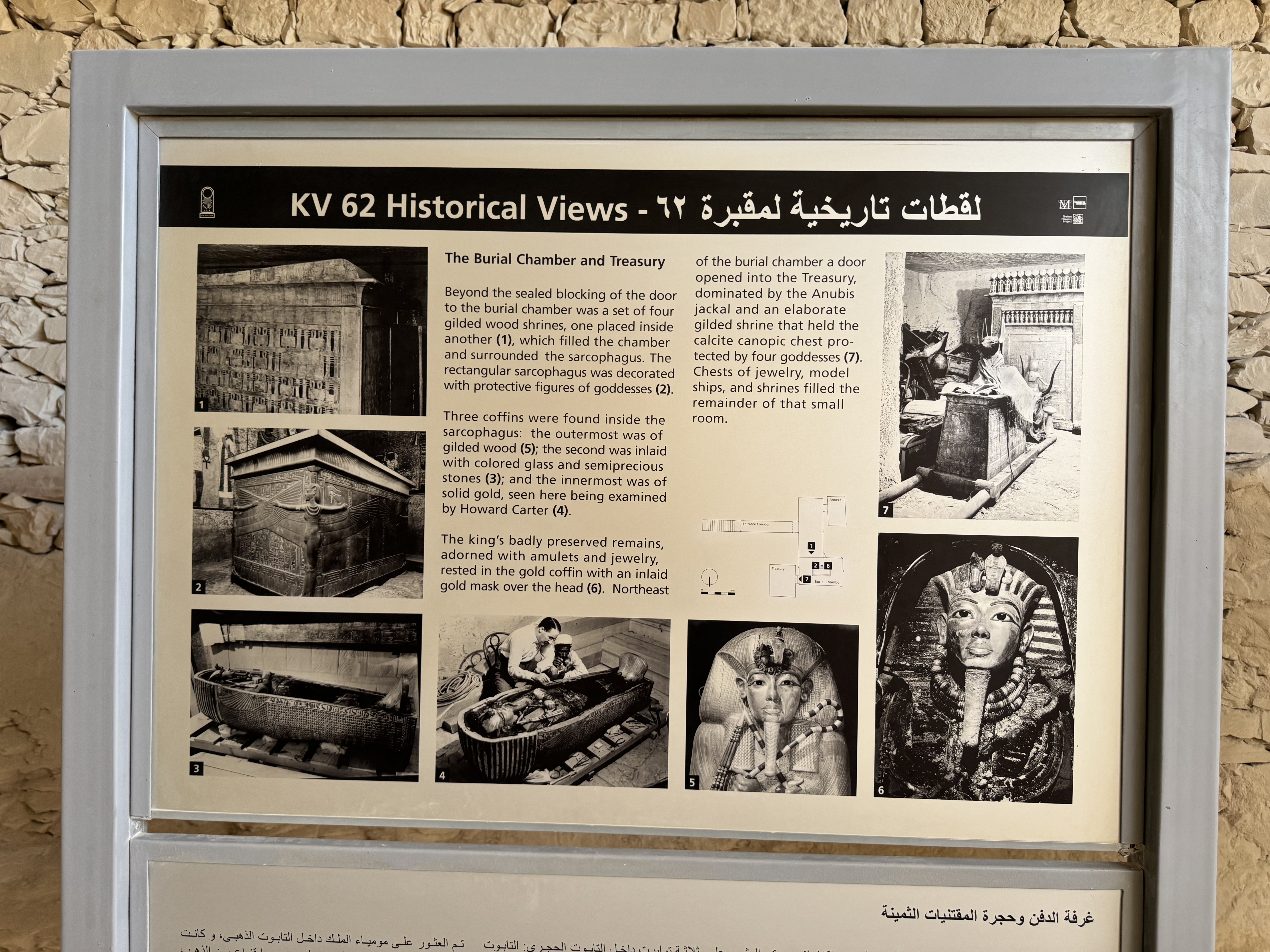
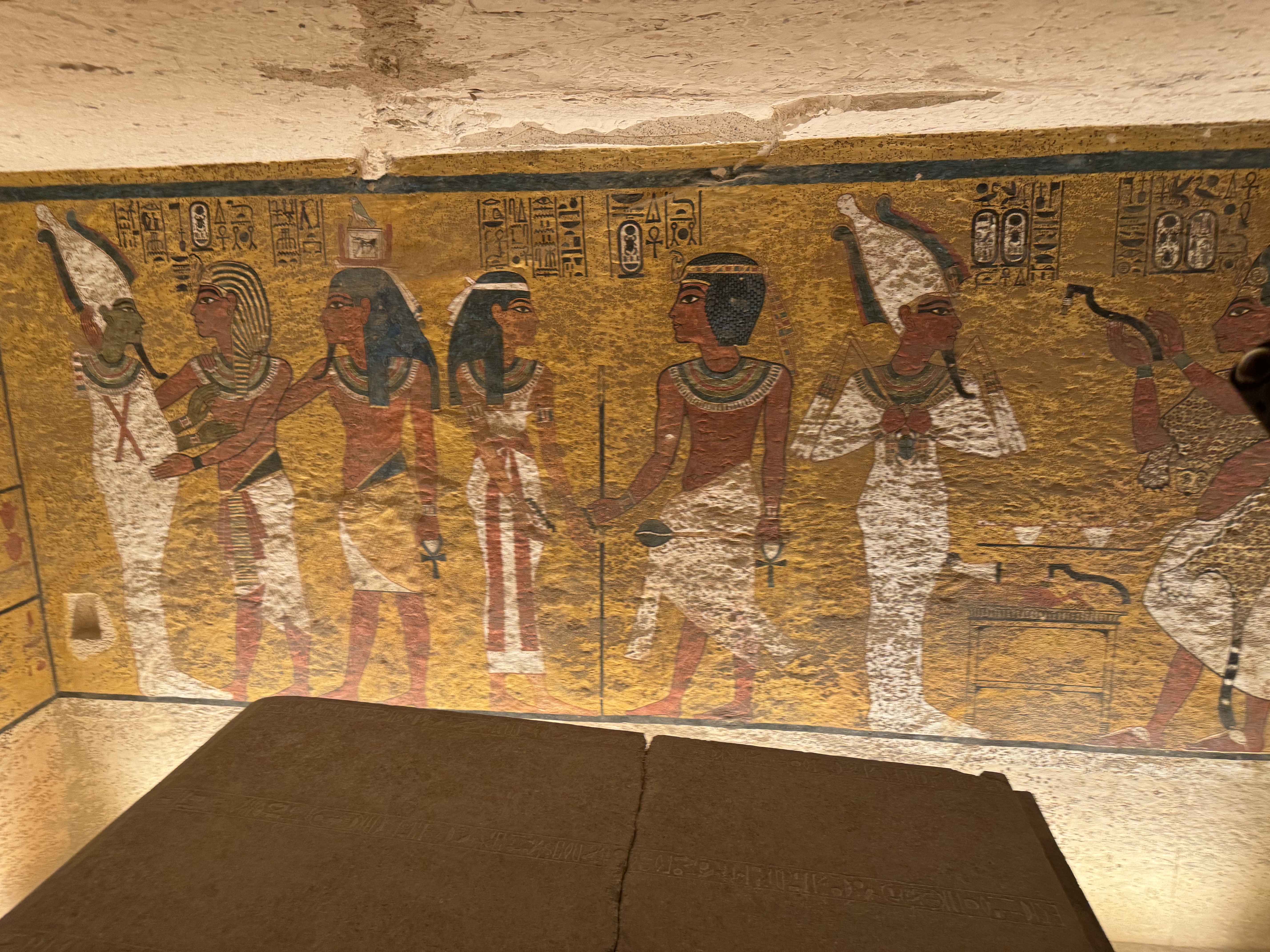
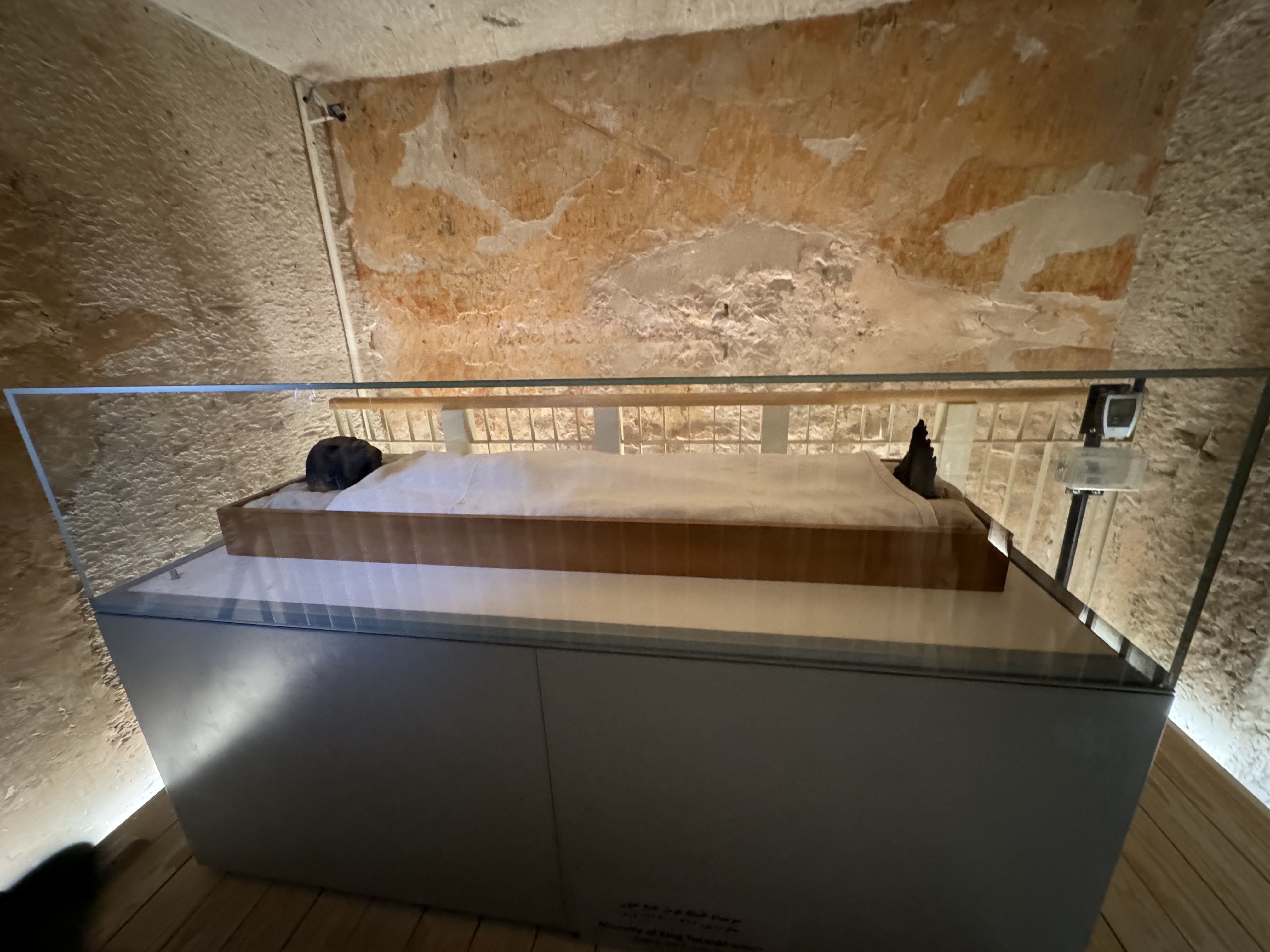
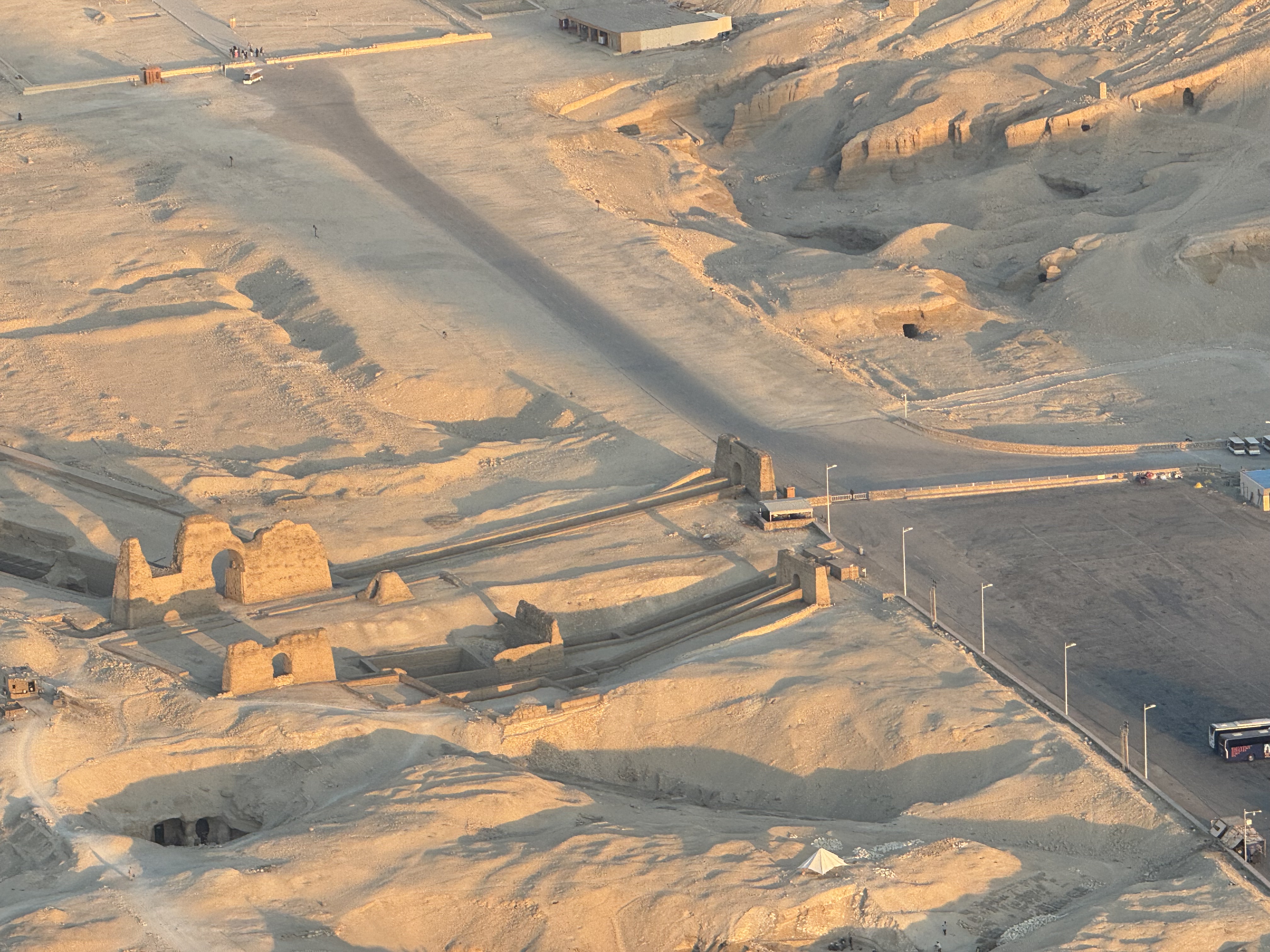
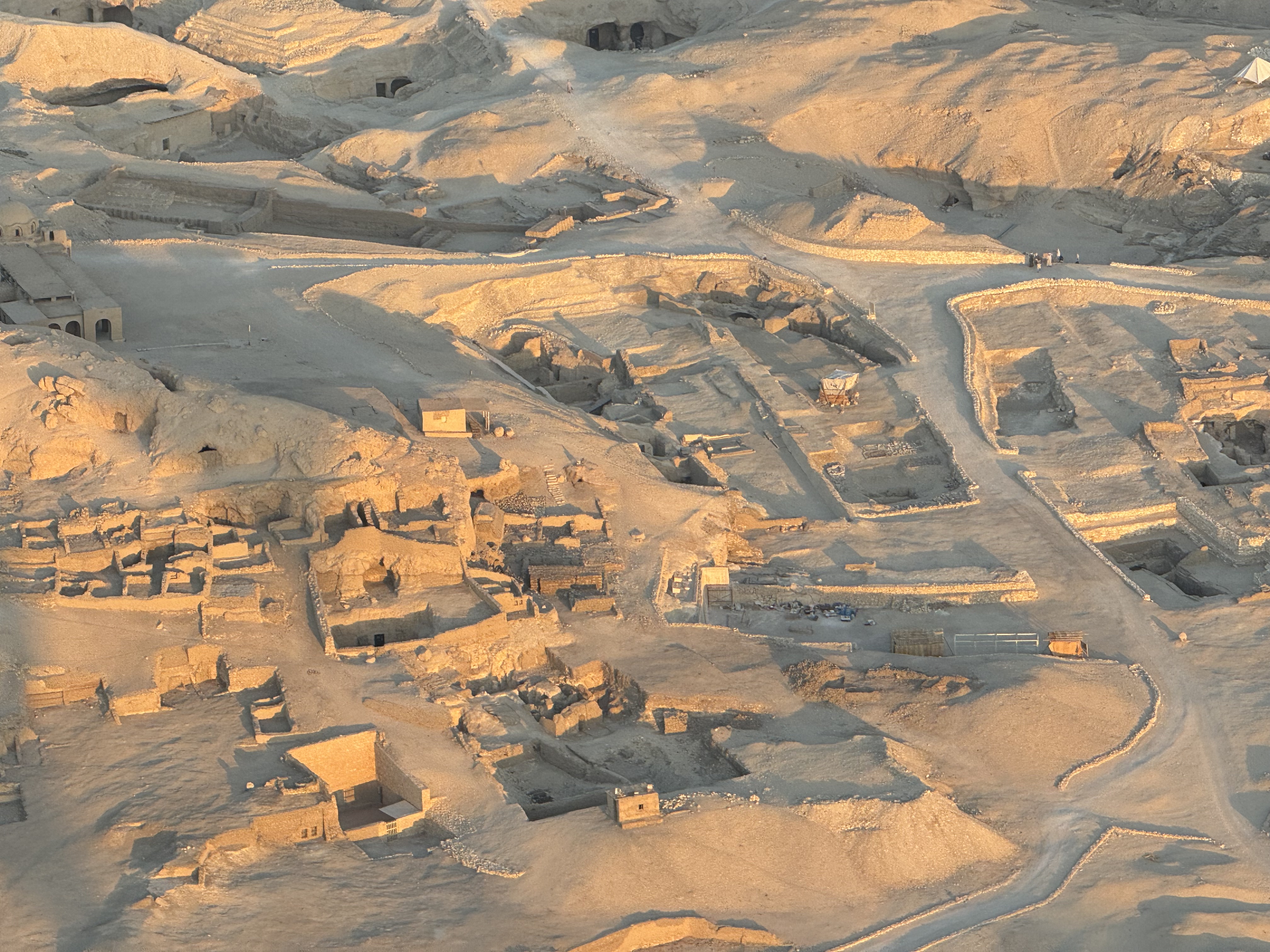
After seeing the Valley of the Kings from the Air we went to explore it closer.. It is a series of tombs nestled between rugged rocky terrain. This setting contrasts with the lush greenery of the Nile’s Eastern bank. We entered King Tut’s tomb, which contained treasures a pharaoh would need in the afterlife. These included clothing, food, chariots, games, and ceremonial items. These precious artifacts have since been relocated and are now seen in the museum. However, the tomb is still resting midst richly adorned walls.
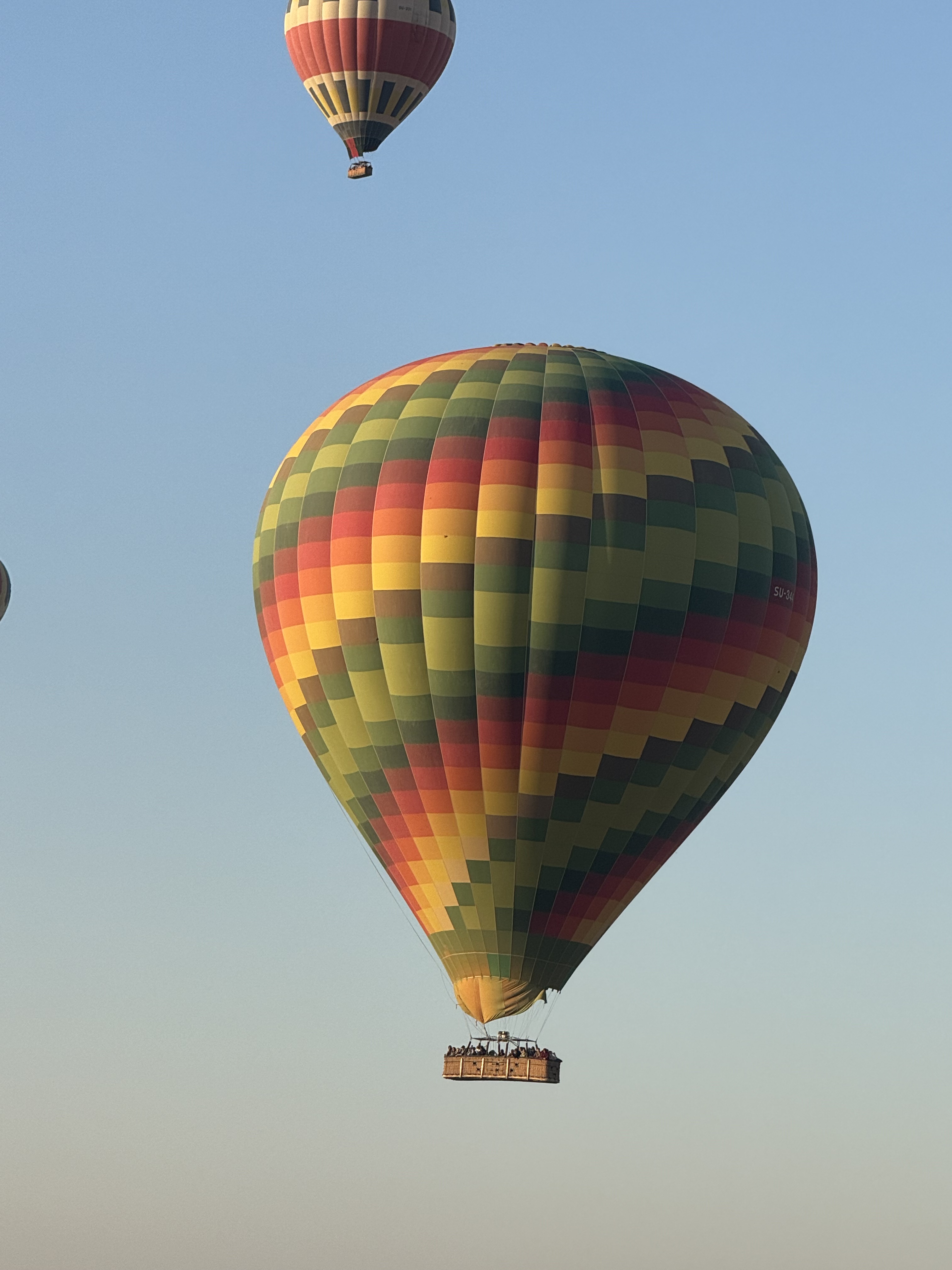
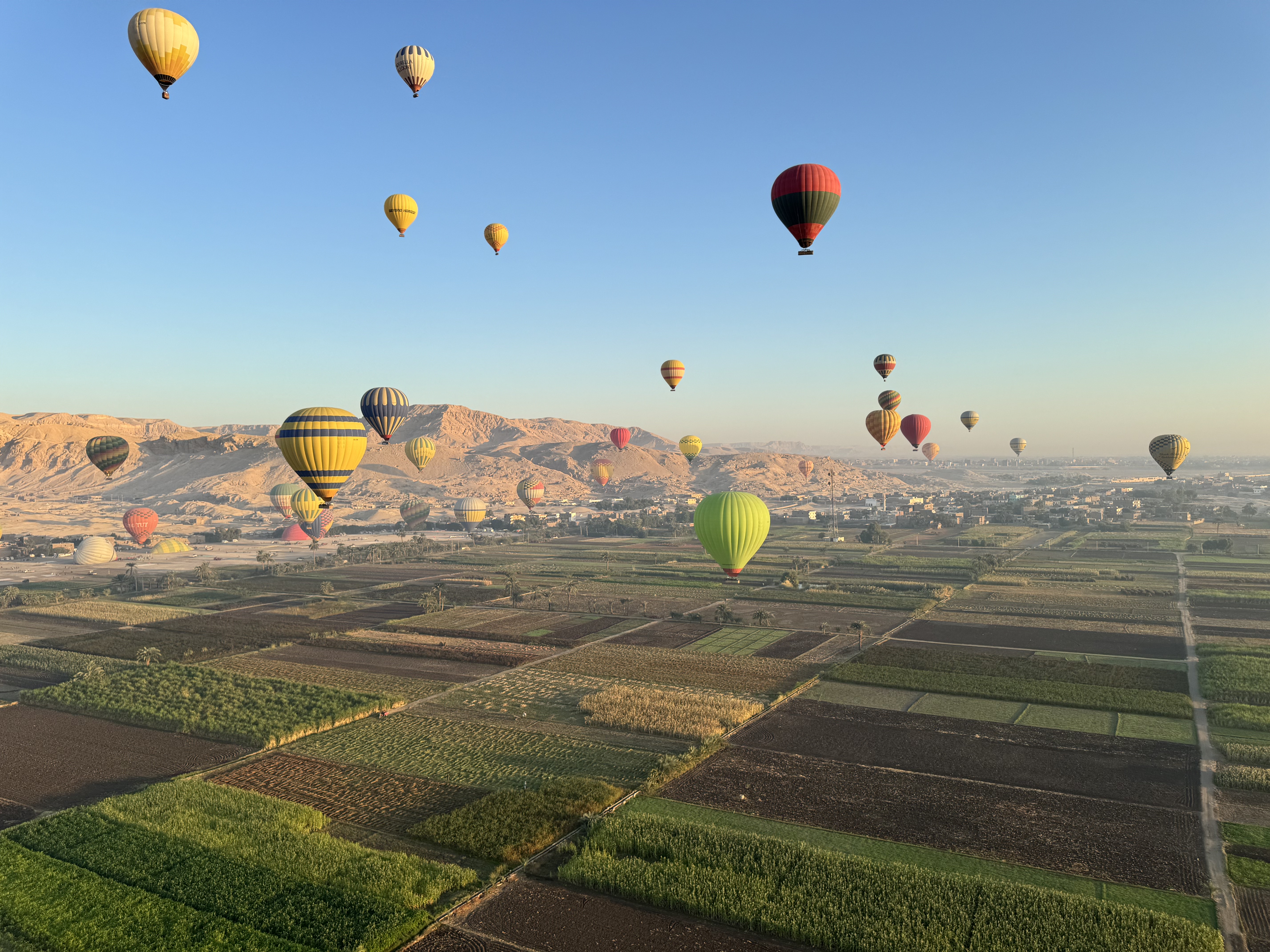
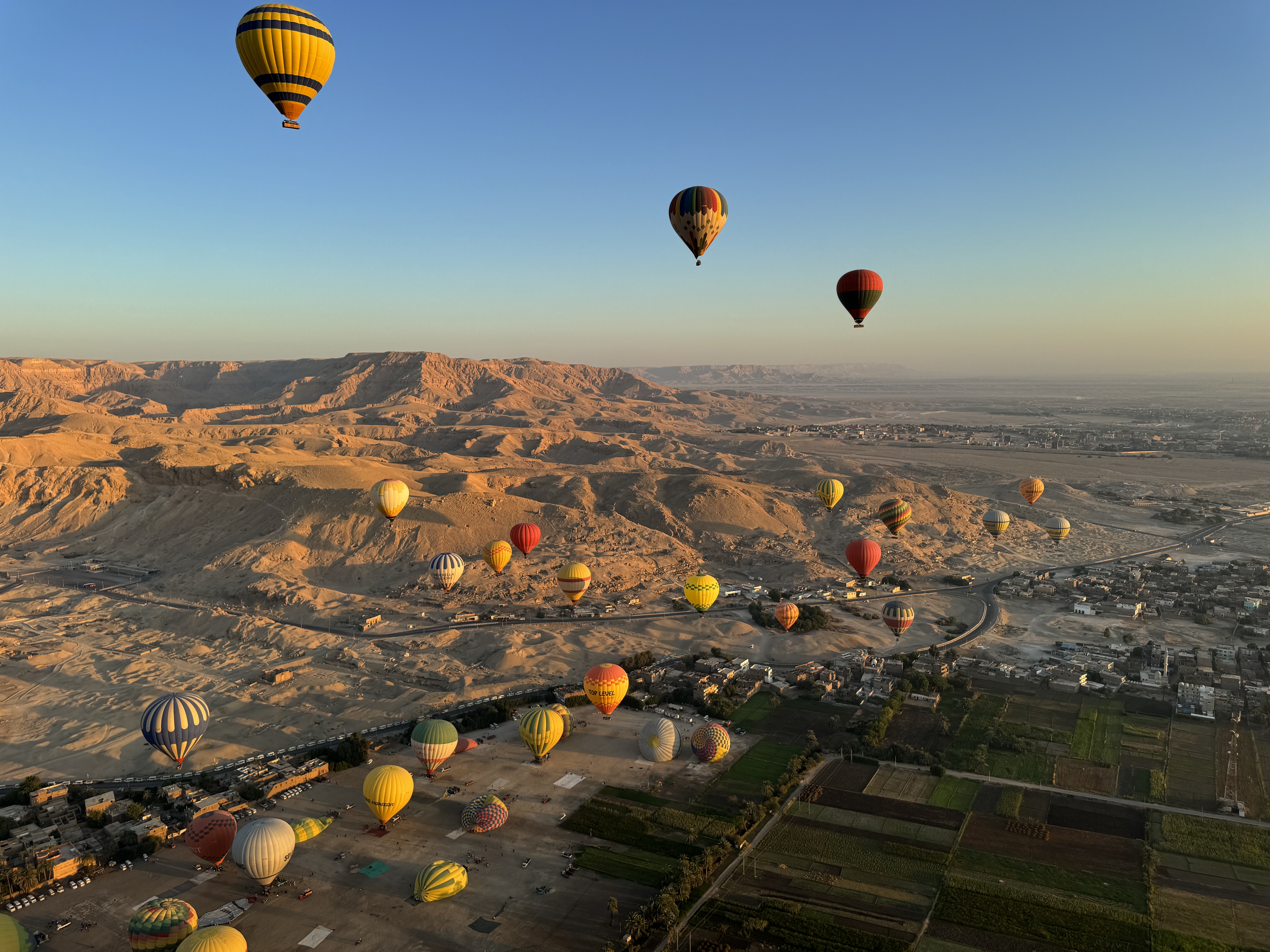
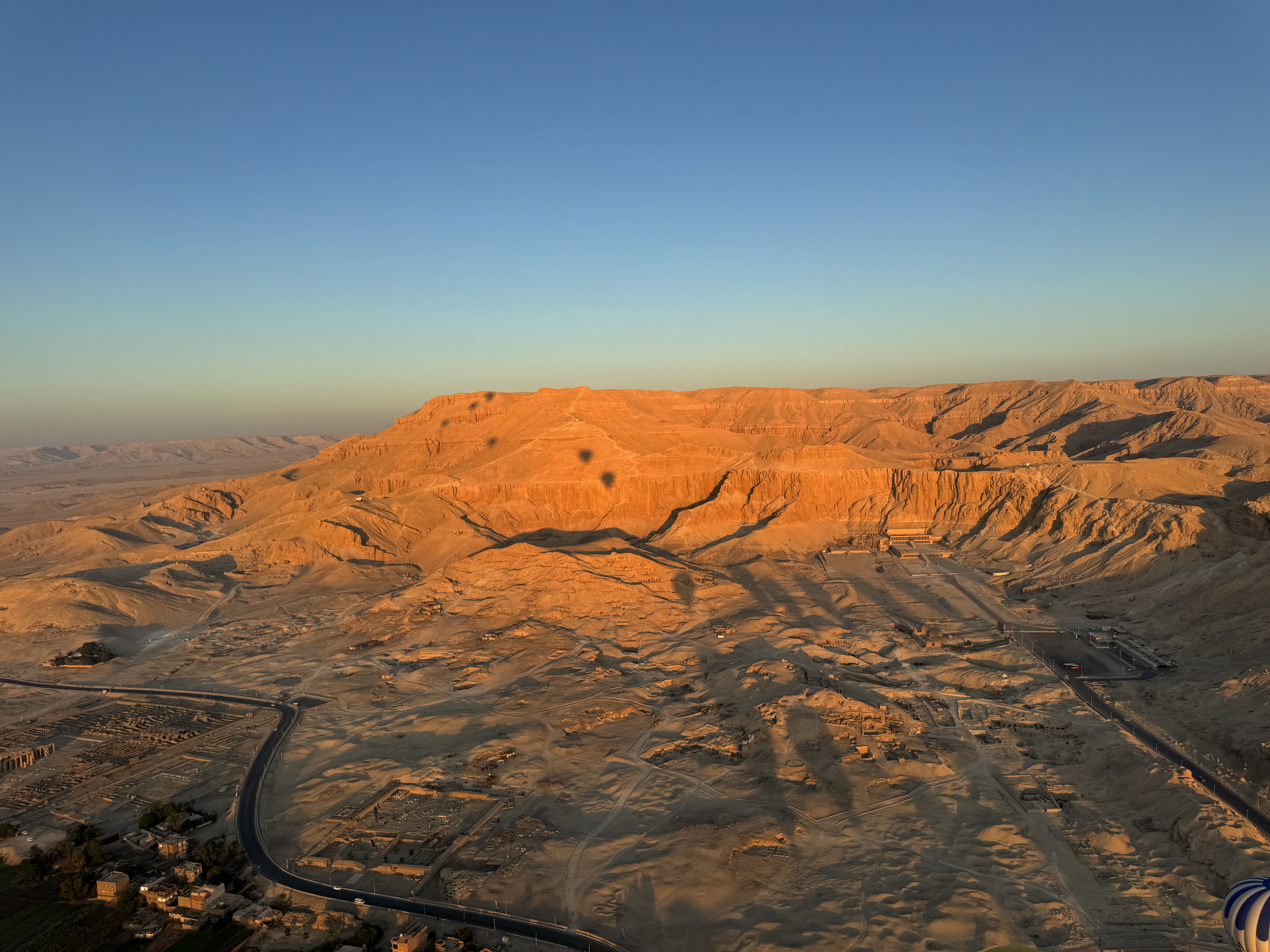
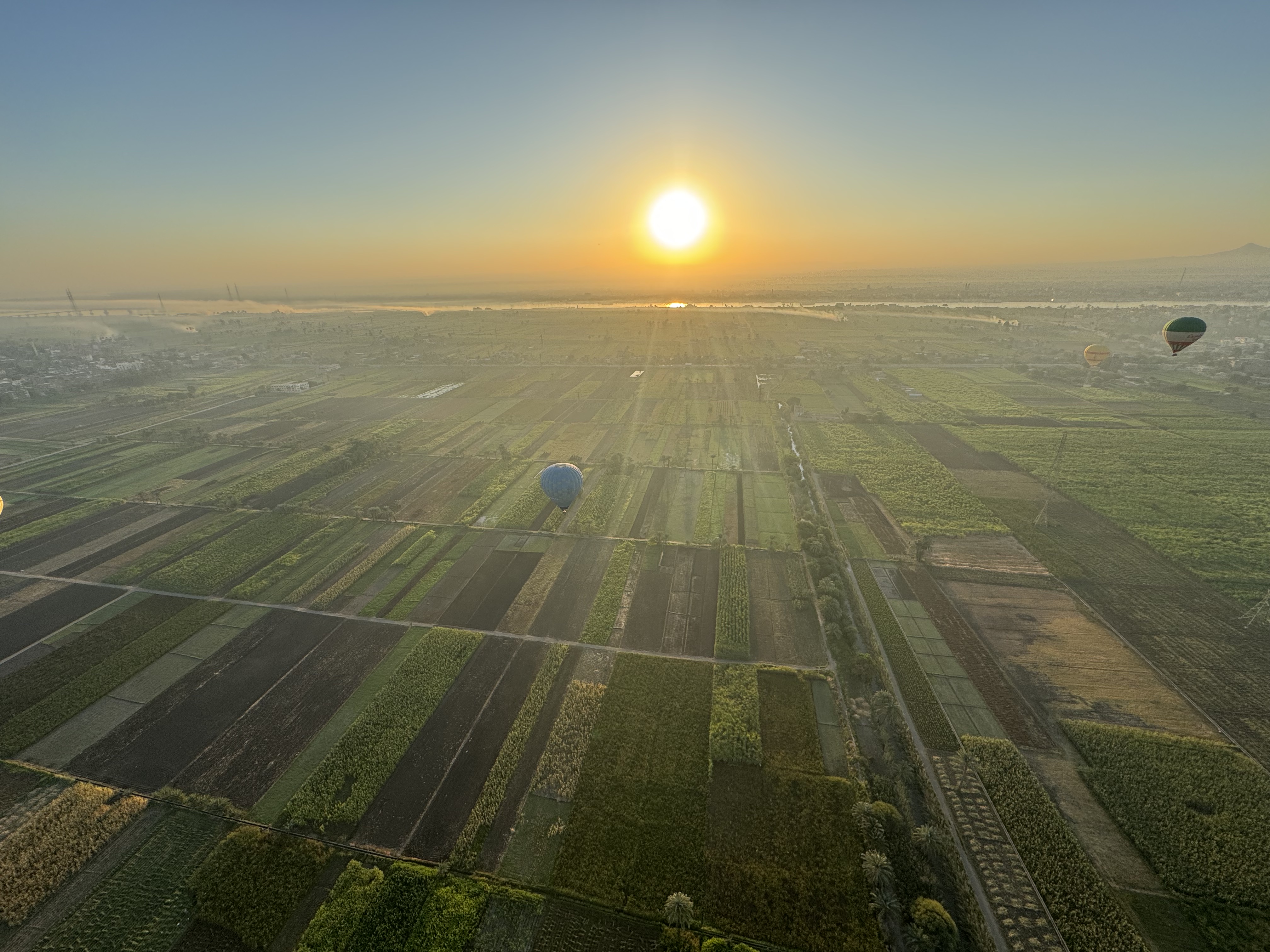
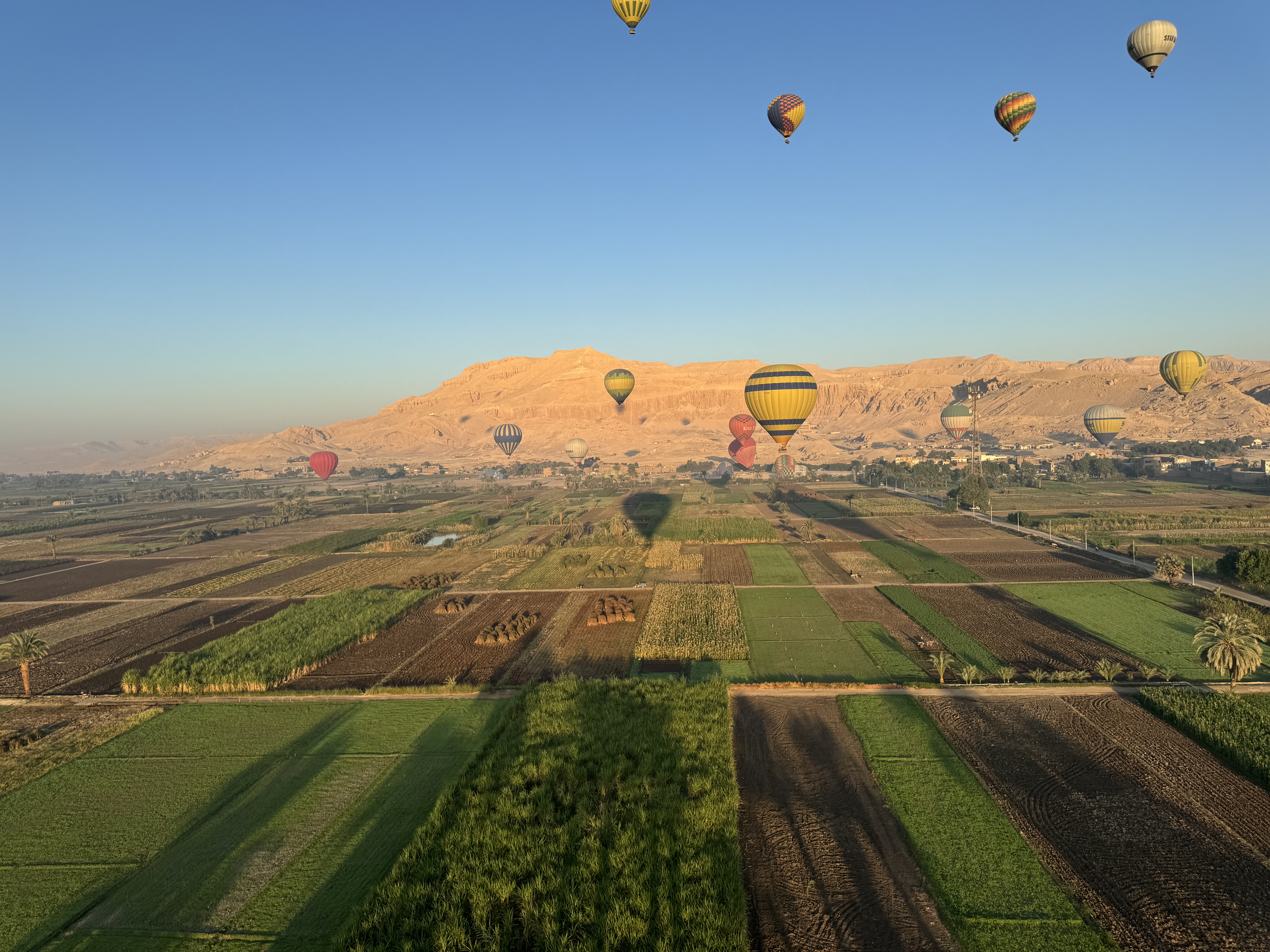
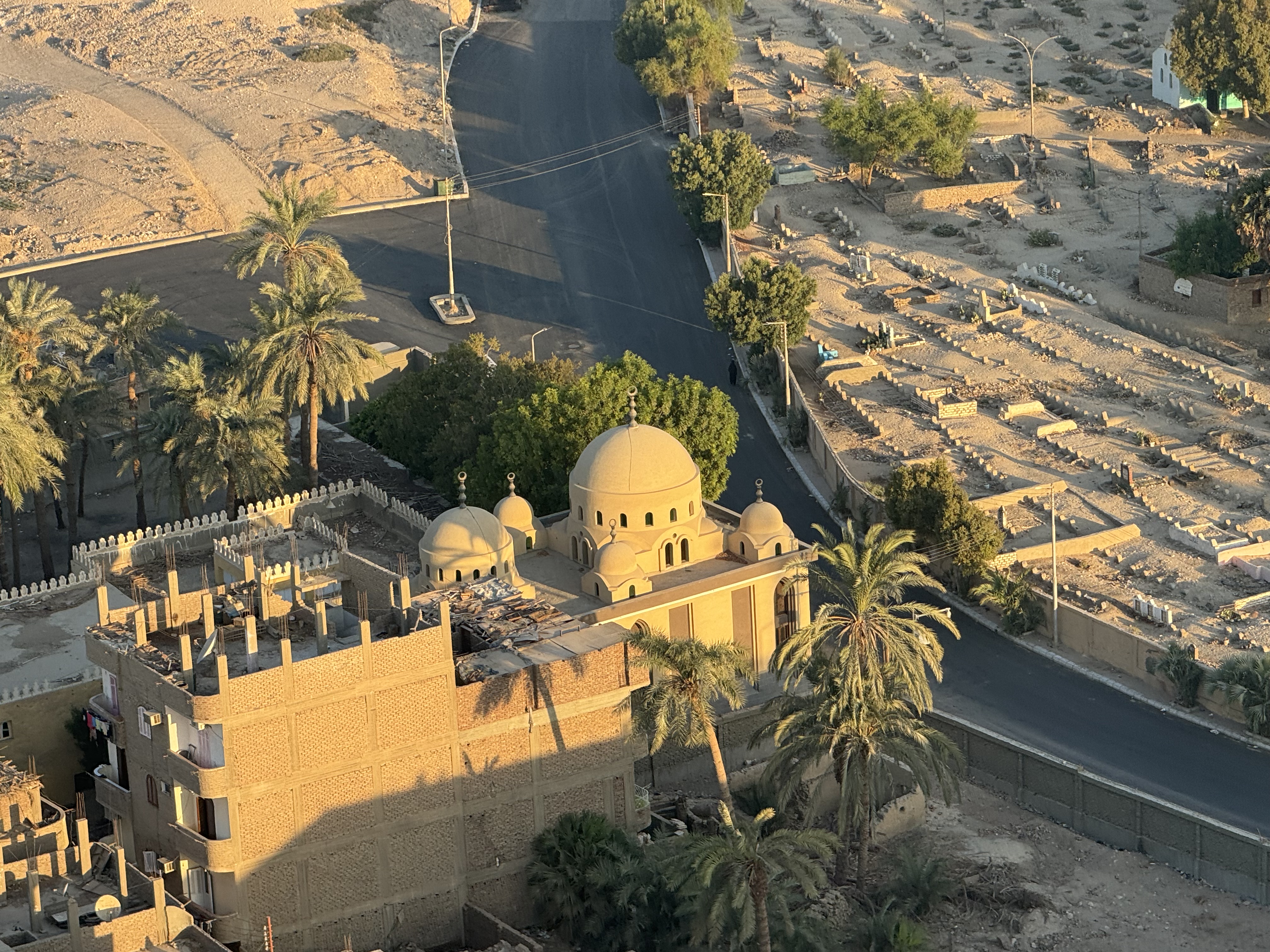
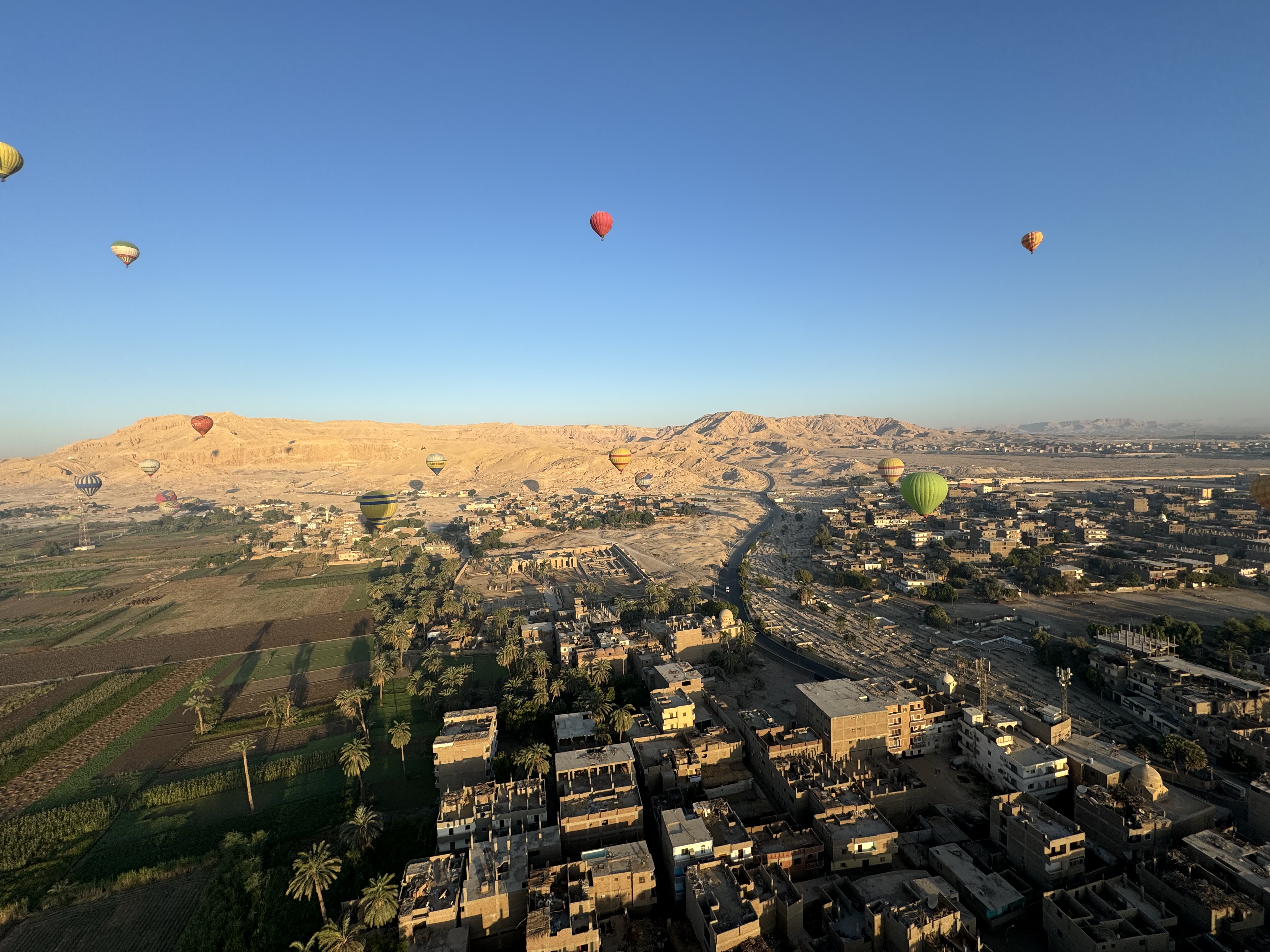
16 of us excitedly gathered before sunrise to go on a hot air balloon ride. One of the most anticipated excursions on our trip. This was a must do on my Bucket List and to experience this in Egypt was beyond imagination. Hundreds of balloons rose in the sky. The sun was just rising. It gave everyone a wonderful view of the Valley of the Kings and the Nile.
Seeing a bird’s eye view of the valley was awesome.
The process of filling the balloon with hot air was more tedious than expected. Until the sun completely got up, the morning was very chilly. Our balloon filled, and we loaded into the huge baskets. We gently arose up into the sky, and the chill was gone. The awe of seeing literally hundreds of balloons floating around you as you soared into the sky. A Morning that will forever be in my heart.
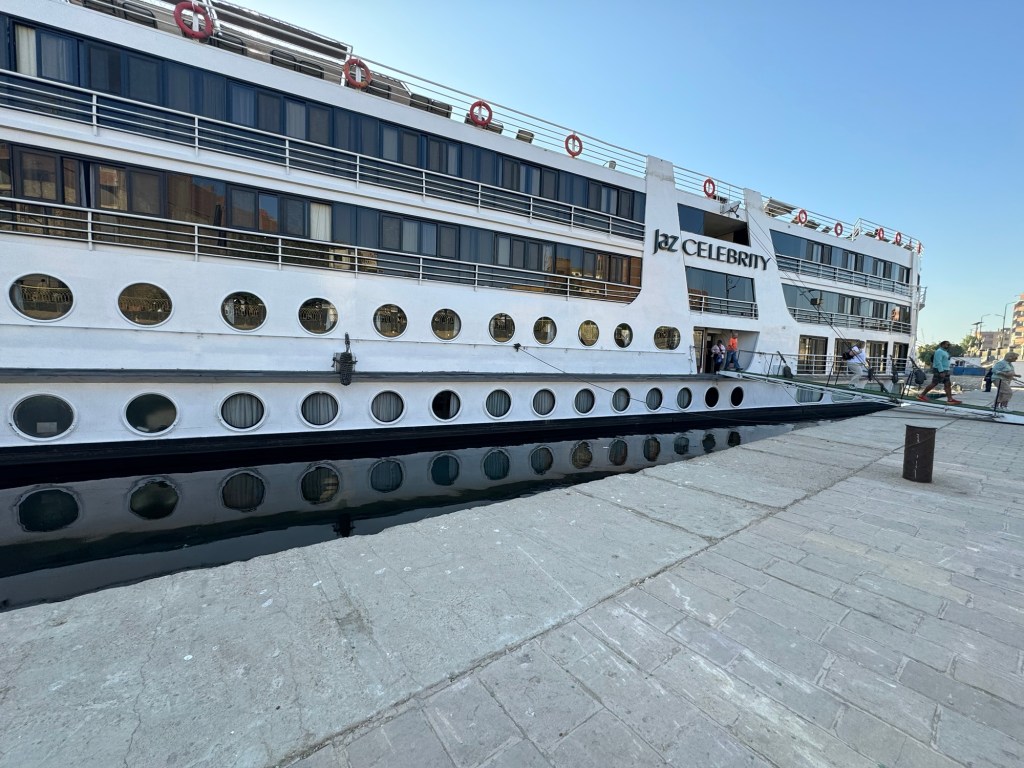
Jaz Celebrity Top deck of cruise ship Lobby of cruise shipDressed for an Egyptian Party
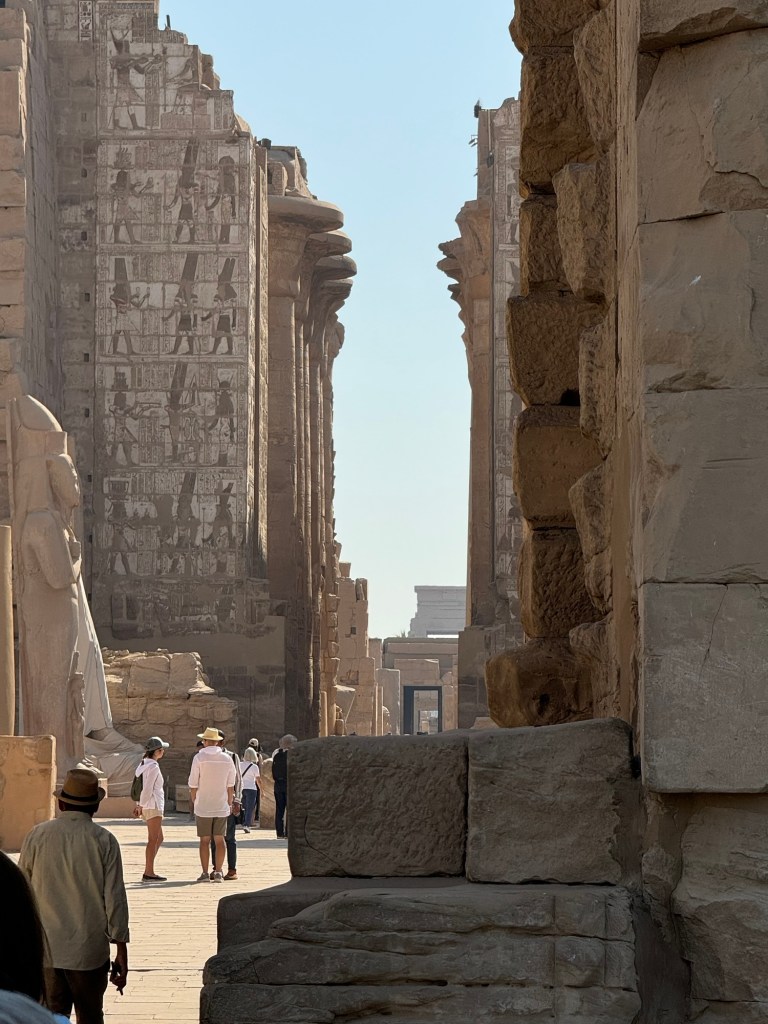
We were up at dawn to fly to Luxor, where we boarded our cruise ship Jaz Celebrity , home for the next four days. After checking in on the ship and grabbing lunch we were off to the temple of Karnak.
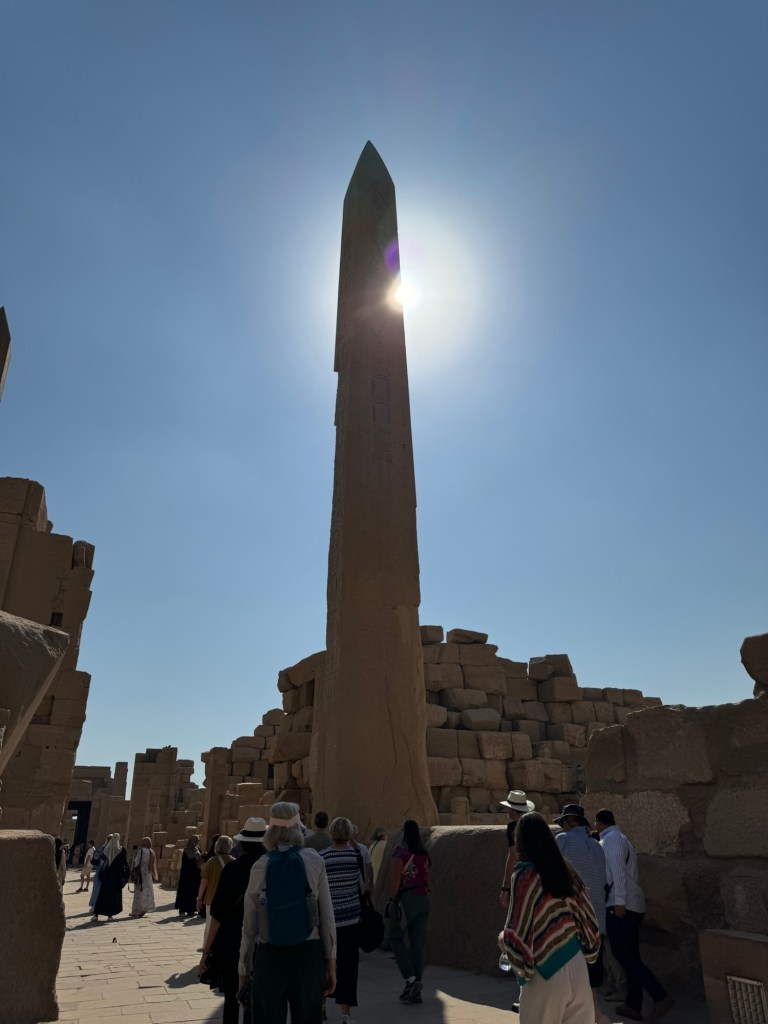
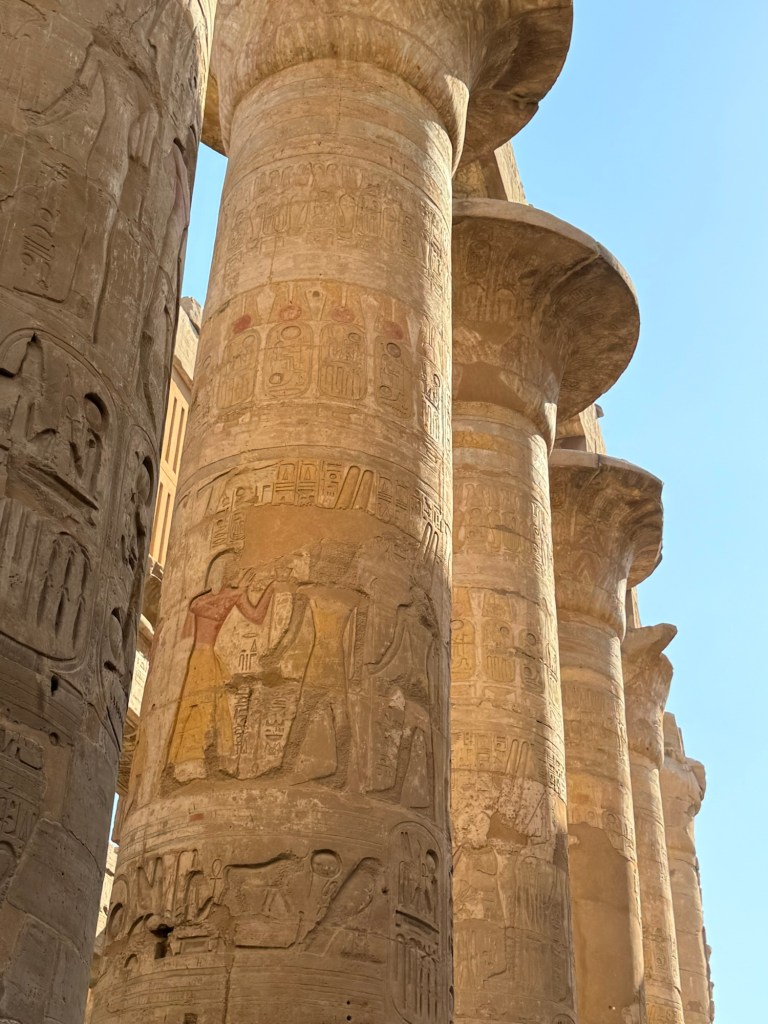
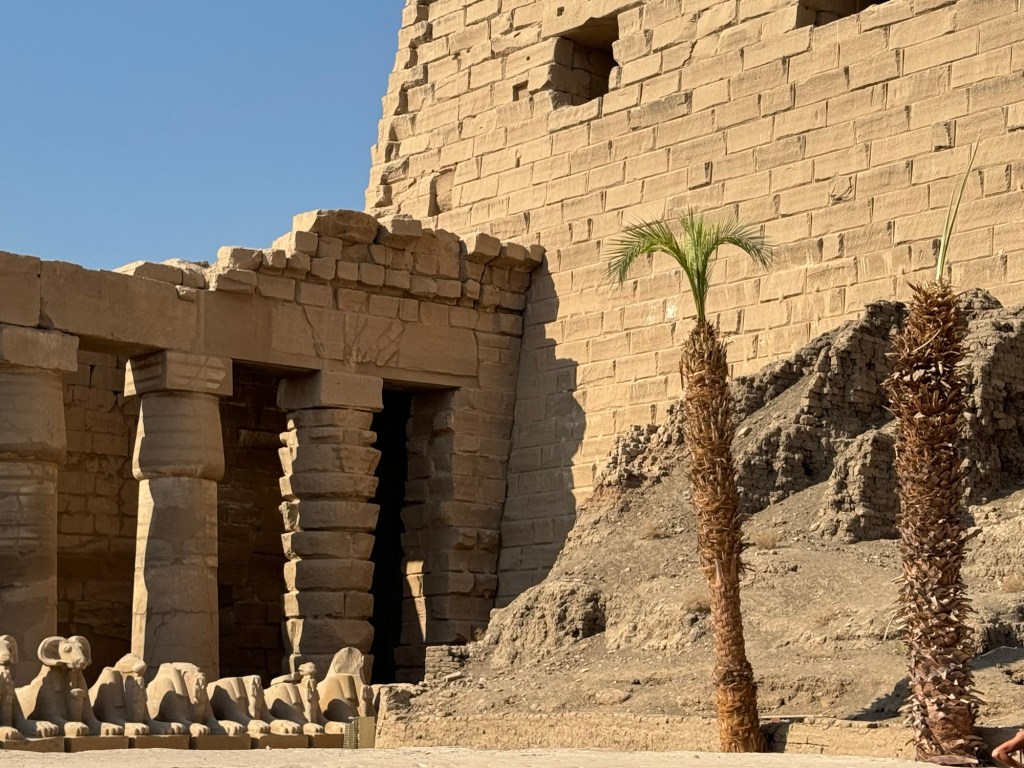
Human-headed sphinxes obelisk Columns with hieroglyphicsOutside the temple
Inside the temple
It’s said that 30 pharaohs presided over the building of the temple, sprawling and vast ancient site. Seeing the Precinct of AmunRe, whose mud brick wall stretched over one and a half miles around. Gaze over extensive hieroglyphic descriptions, marking moments in history and end at the temple of Khonsu. A smaller more intimate temple, dedicated to the god of time and the moon. Then off to explore the complex at the Abu Hagag mosque, although the structure itself only dates to the 13th century, it’s site has been used as a place to worship for more than 3500 years and is still in use today
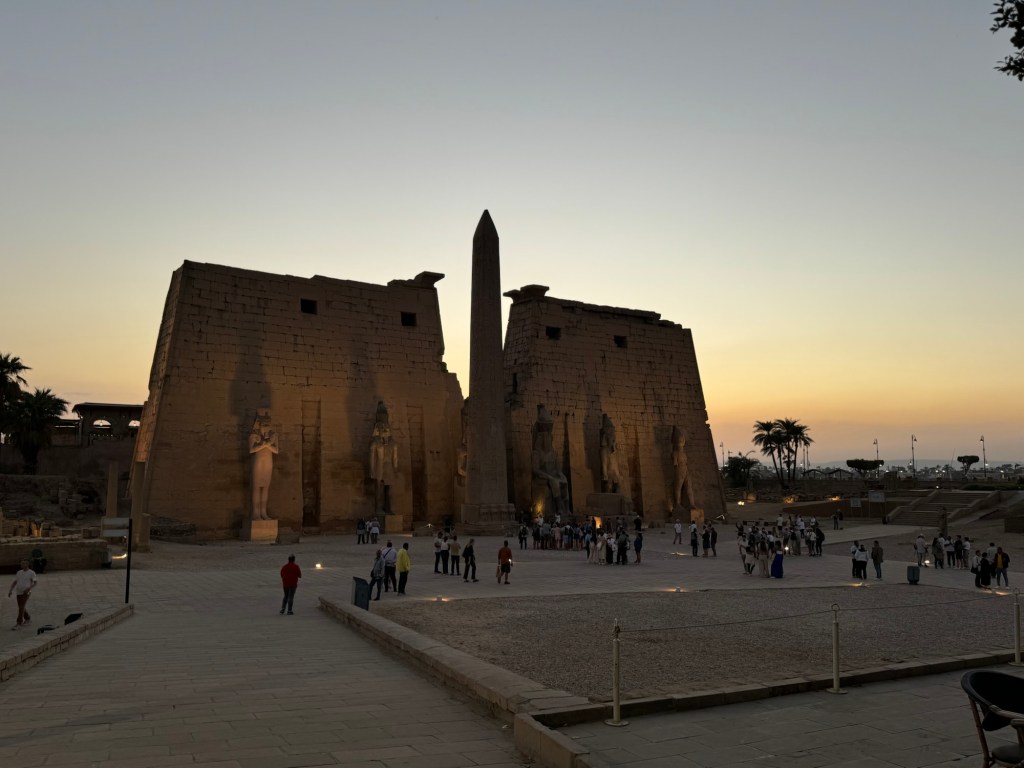
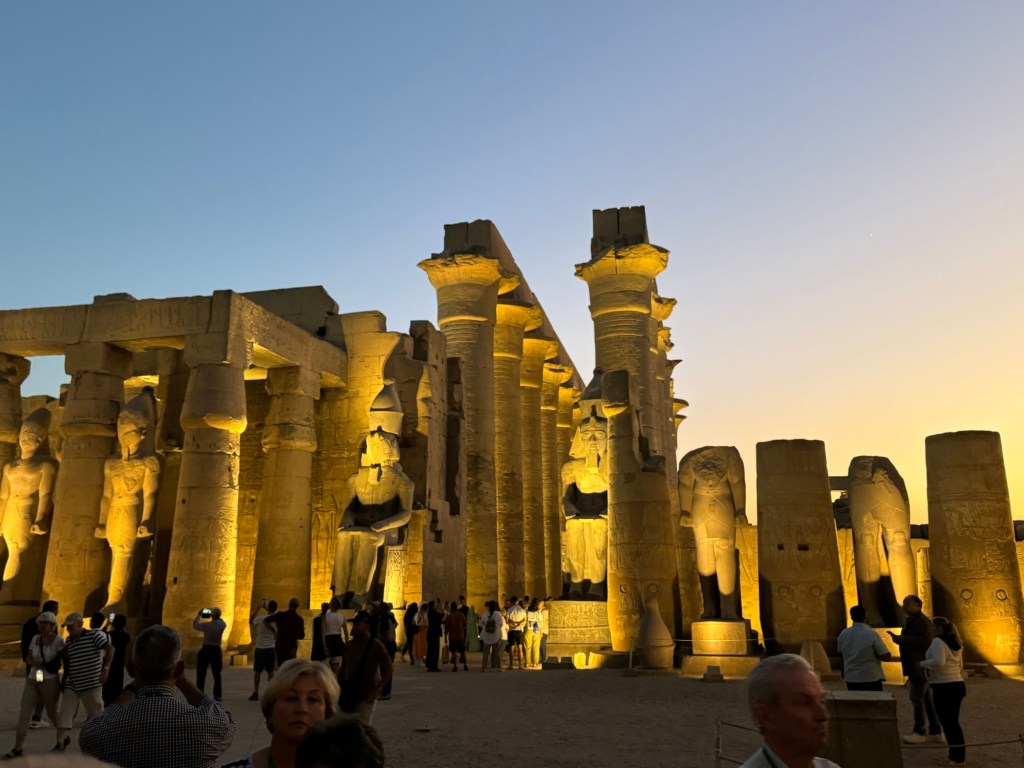
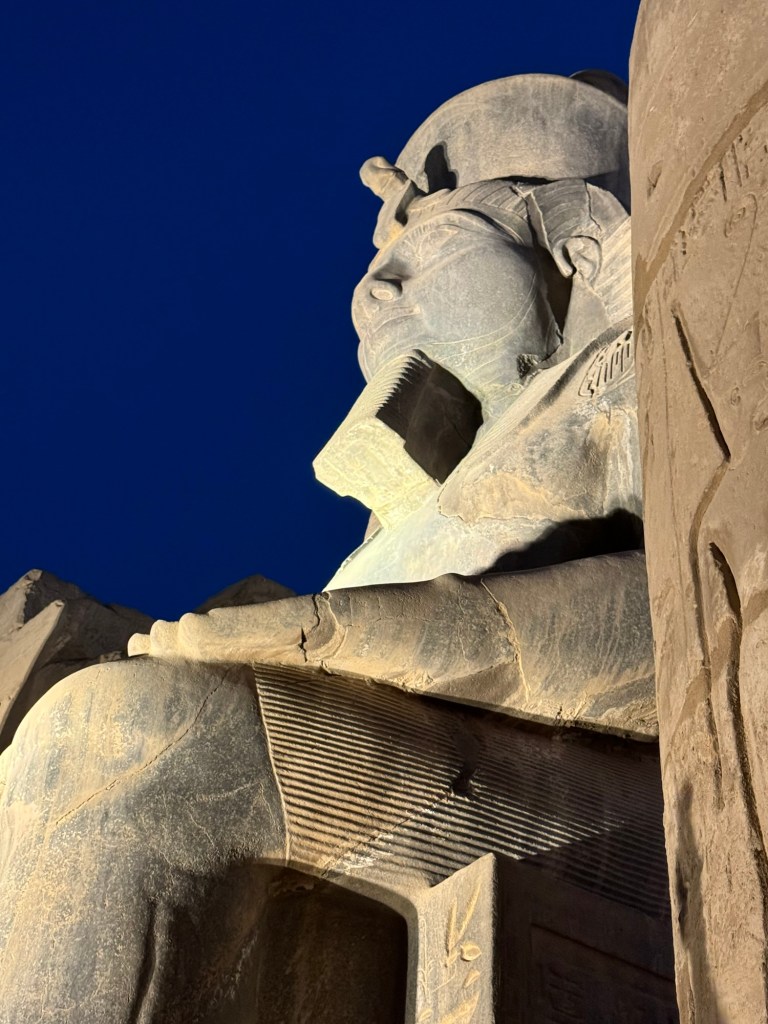
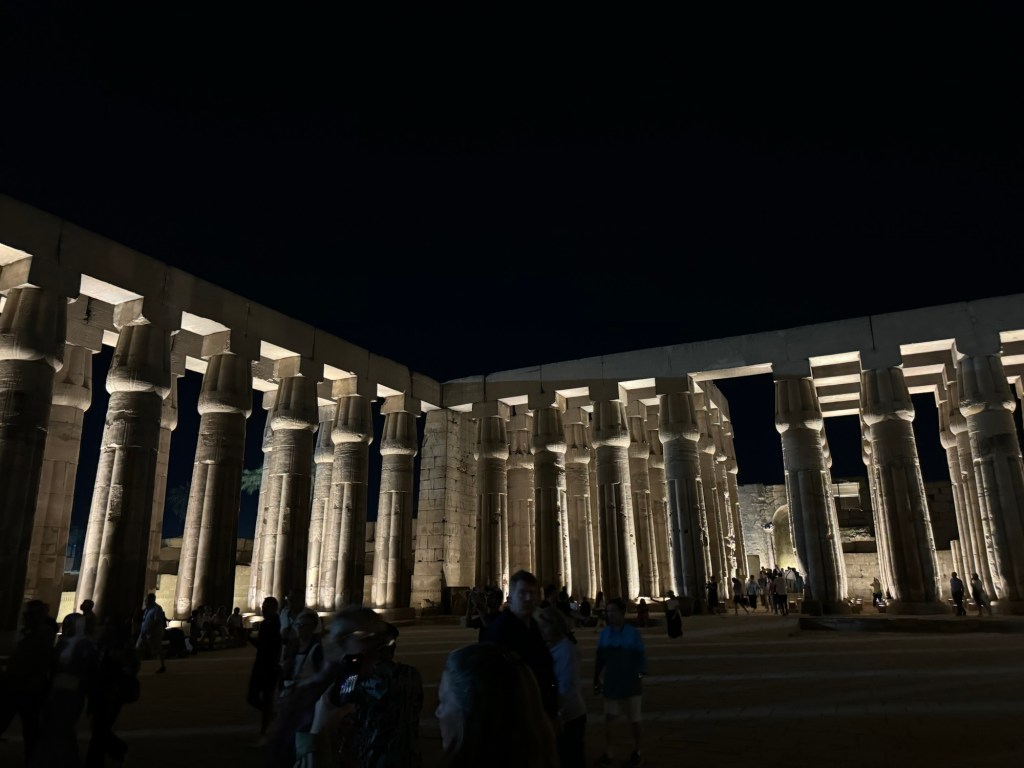
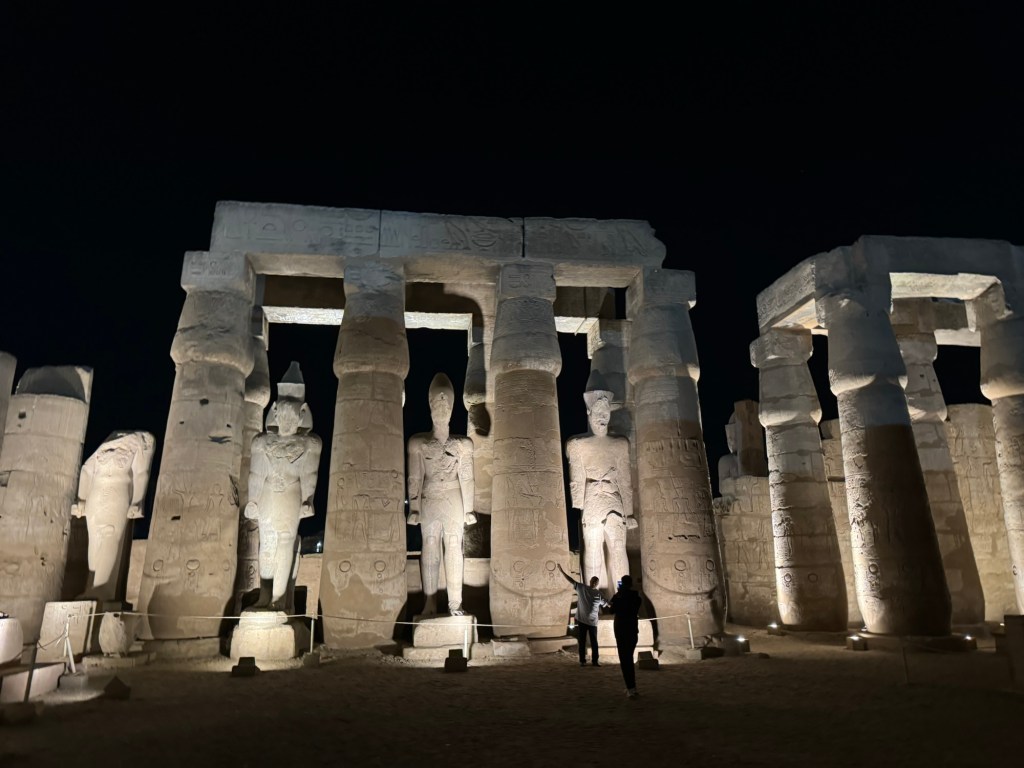
An evening walking tour through Luxor temple located on the banks of the Nile river was beautiful as the sun set. An avenue of human-headed sphinxes created a dramatic and inspiring entrance. The temple unfolds with a series of striking and architectural elements that include massive columns, colossal statues and hieroglyphics.
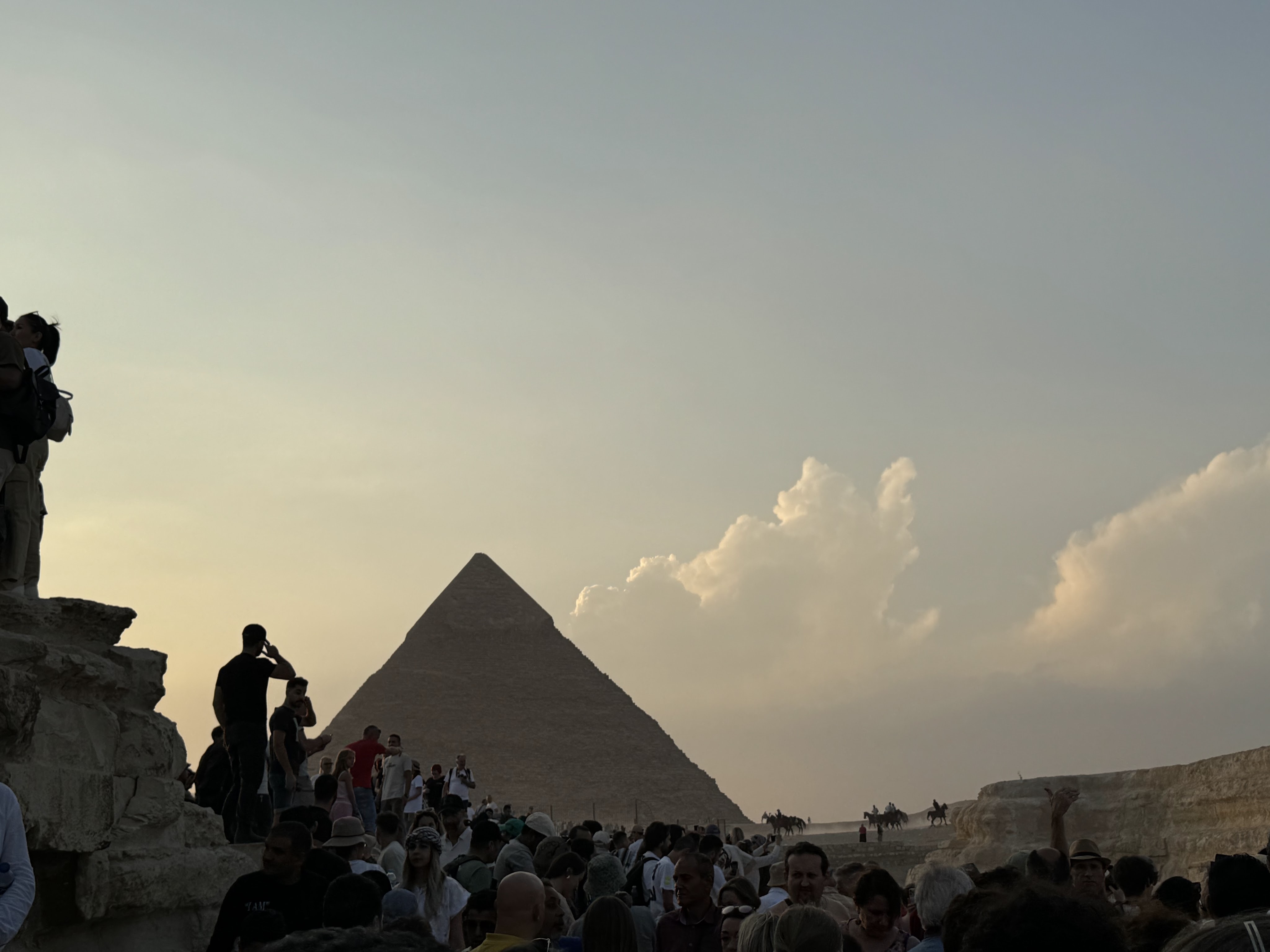
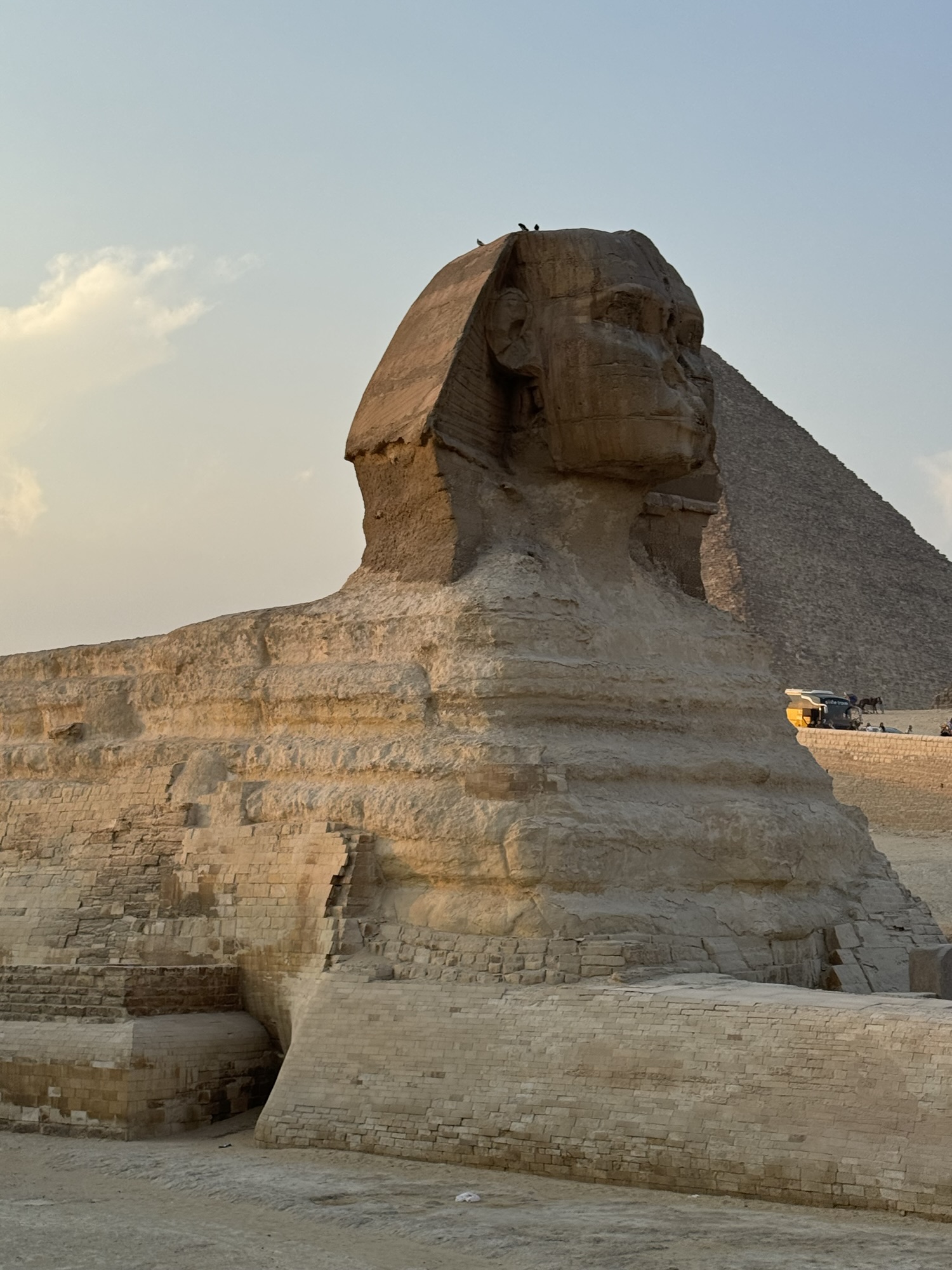
A guided tour of Giza was on the agenda for today. We stood in the shadow of the Pyramids of Giza. They are the only Wonder of the Ancient World to have survived into the modern era. Built to stand as tall as 480 feet, the Great Pyramid of Giza continues to amaze. It impresses with its size and construction precision. Several of us entered the Pyramid where you had to crawl and stoop to get to the main burial room. Once there, we posed for a picture in the burial area. Then, we made our way back out of the tomb. Riding a Camel at the Pyramids has been on my bucket list forever. Today I fulfilled that dream! The 4,500 year old Great Sphinx was next. It is the largest monolithic statue in the world. It was carved from a single limestone bedrock.
We walked 55 miles * took 132,000 steps * climbed 156 flights of stairs * stayed in 6 hotels * was on 4 continents (North America, Europe, Africa and Asia) * drank approximately 30 bottles of water * took 10 flights from start to finish * Traveled by car, plane, bus, balloon, motorboat, cruise ship, sailboat, camel and horse!
Day 1 & 2 ( Oct 29 & 30) started with our flight out of Little Rock to Dallas and then Cairo we didn’t arrive in Cairo until 11:30PM the next day. A very long trip.
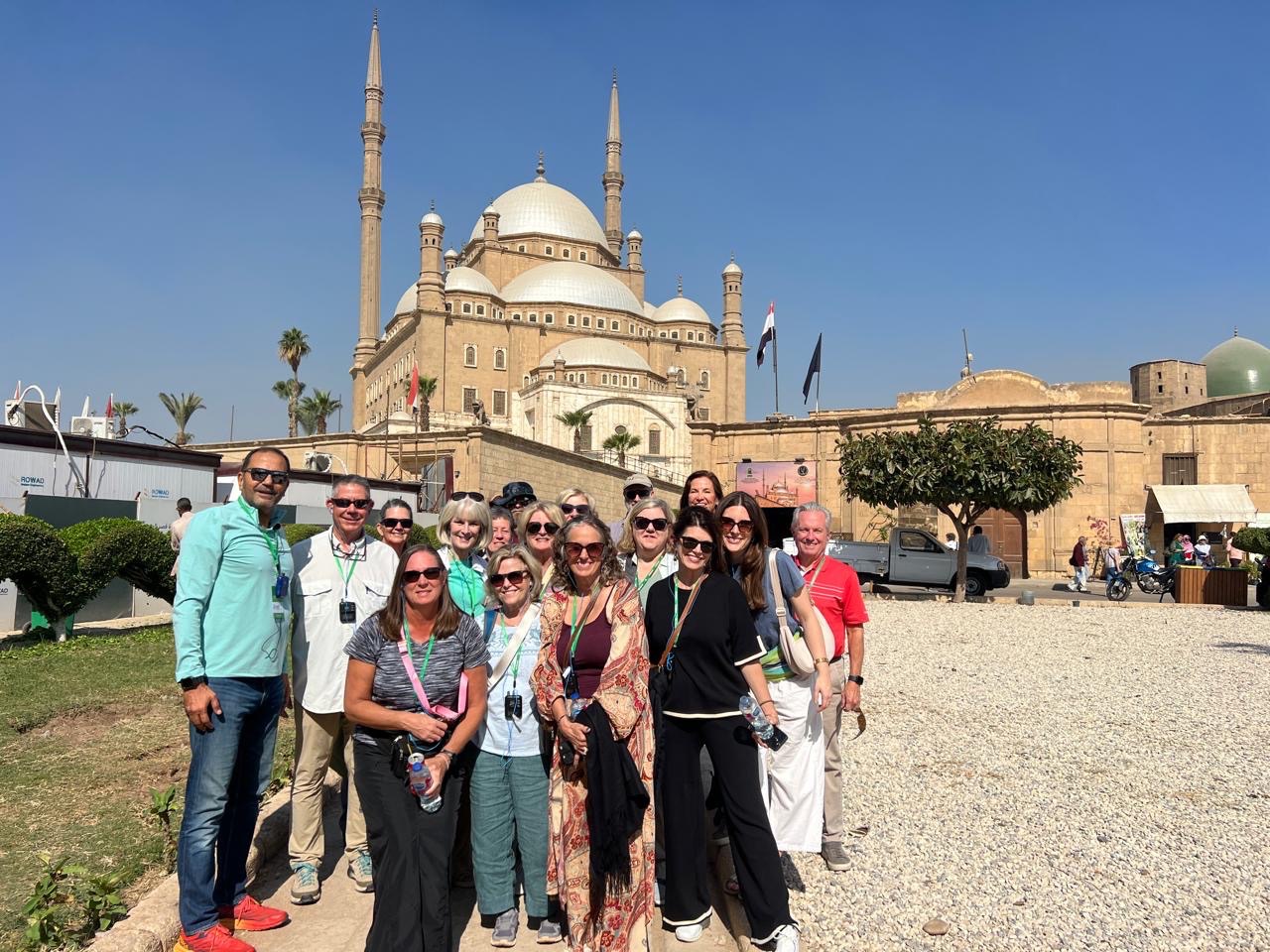
Day 3 (Oct 31) We set off on a guided tour of Cairo, by Amr Shamala, our Egyptologist for the next week. We visited the Cairo Citadel. Built in the 12 century by the mighty Saladin and originally used as a fortress, it remained the seat of the Egyptian government until the 19th Century.
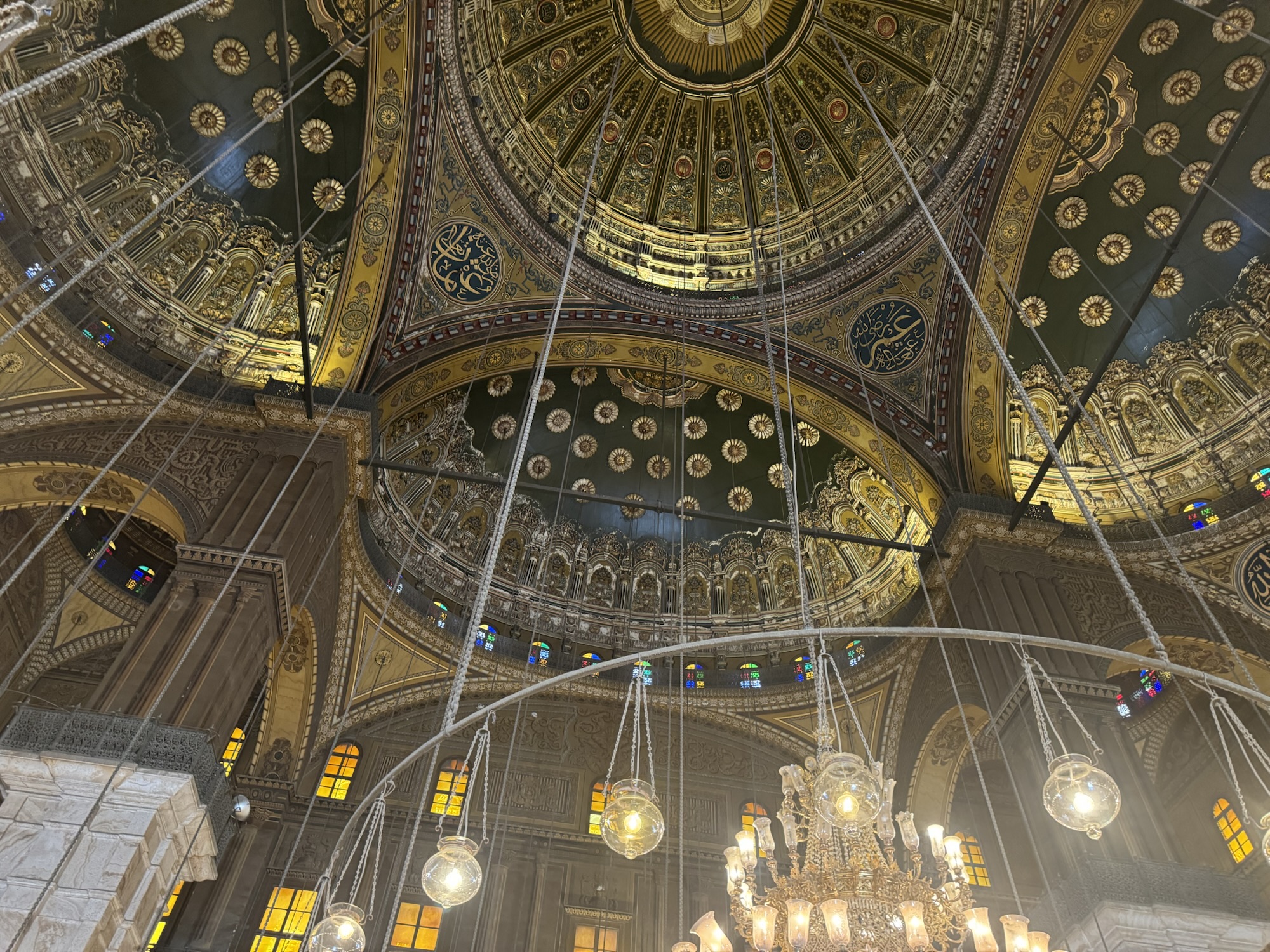
Next stop was the Muhammad Ali Mosque, built in the Ottoman stye and known as the Alabaster Mosque for its extensive marble paneling. Its twin minarets make it one of the most striking structures in Cairo’s cityscape.
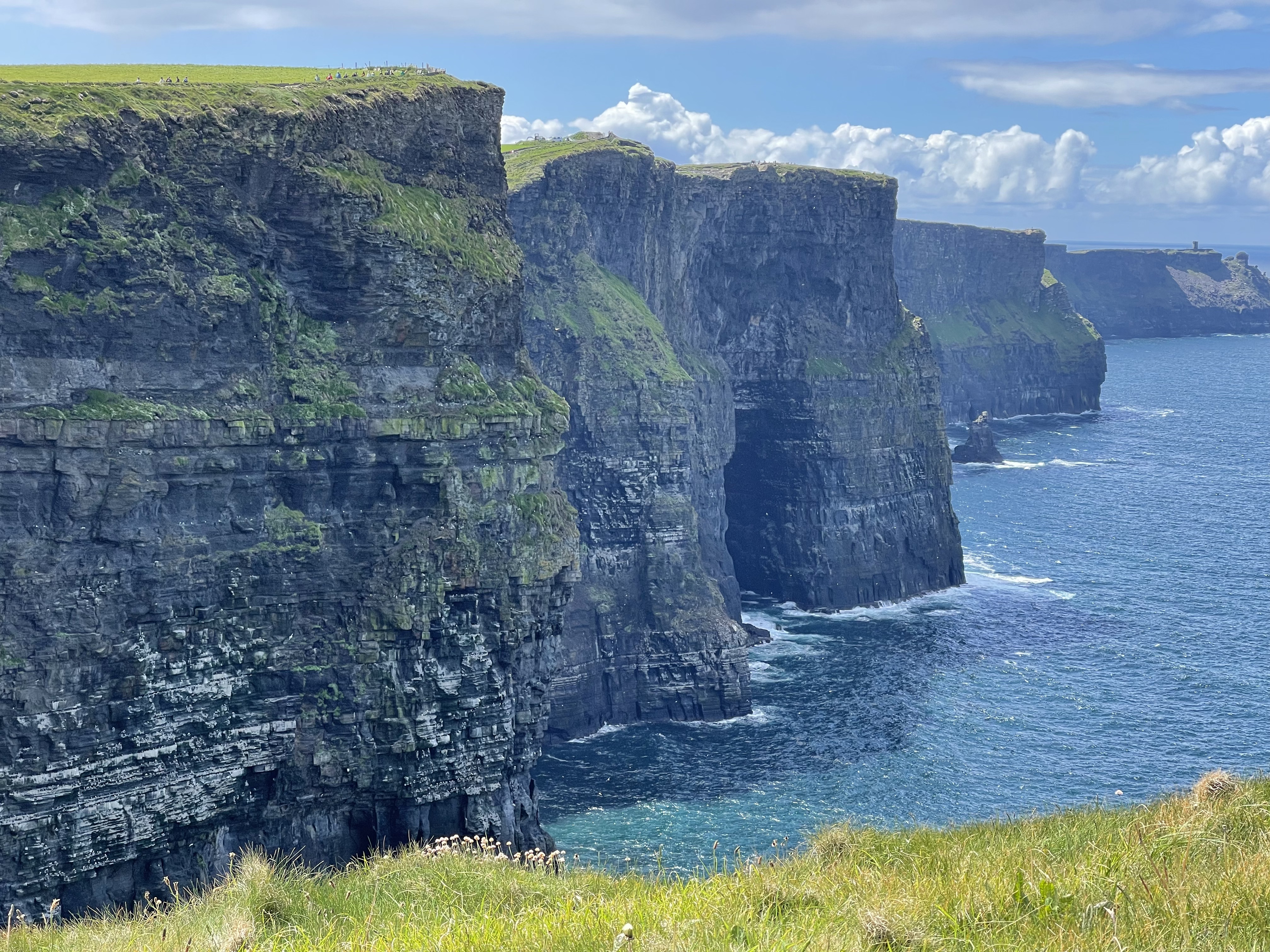
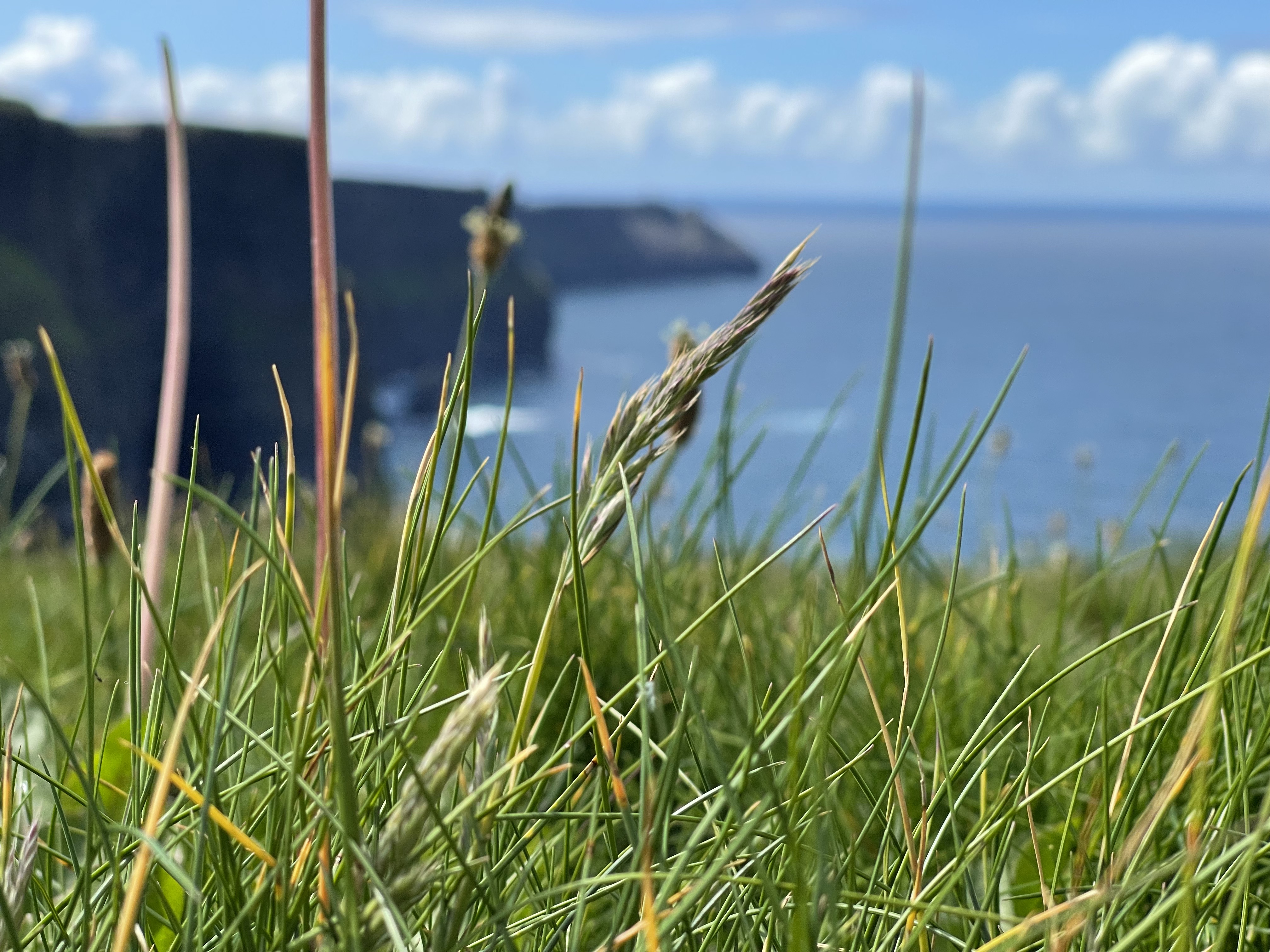
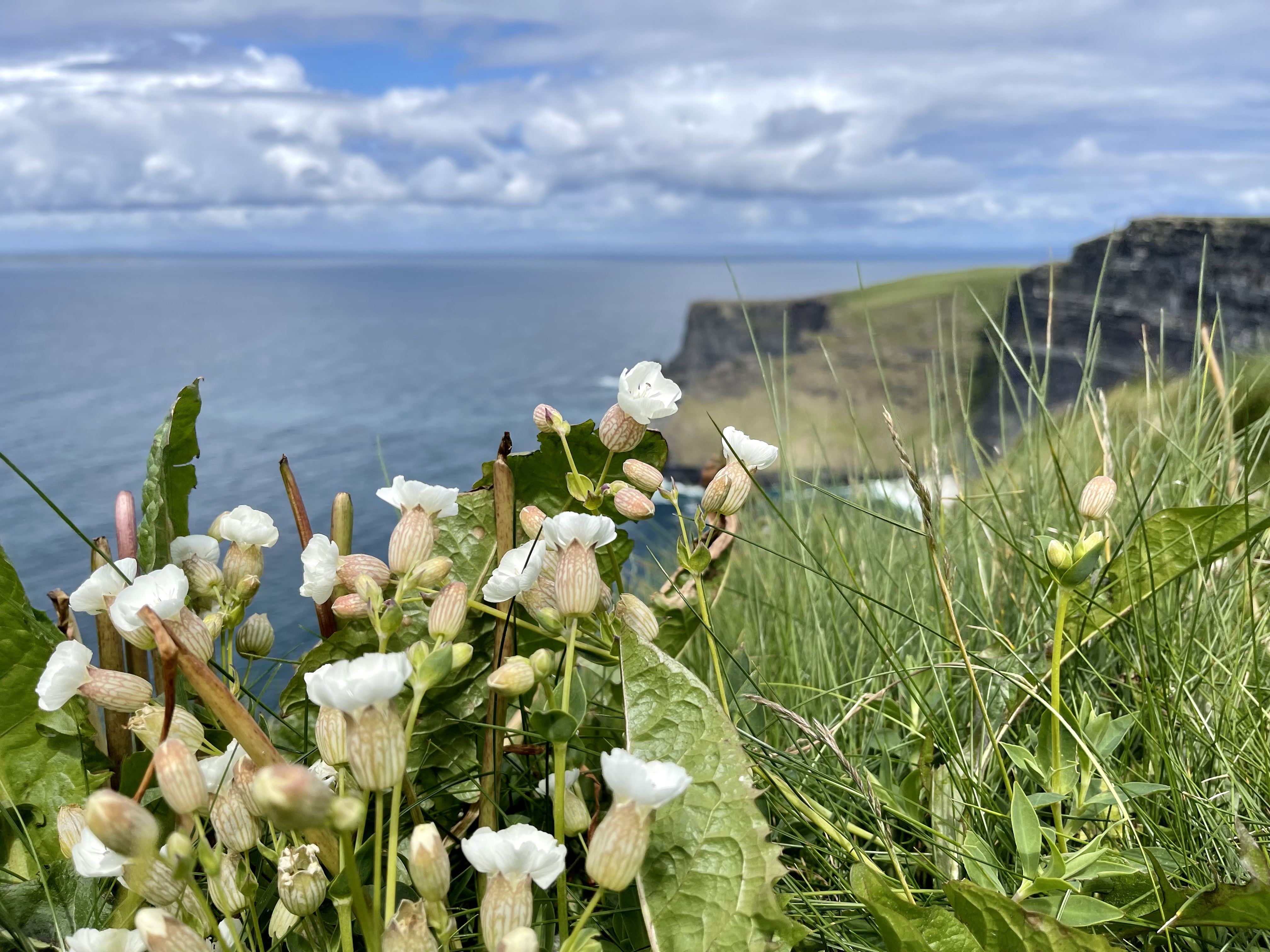
The Cliffs of Moher tower over the rugged west Clare Coast. They are the most famous cliffs in Ireland. The Cliffs stretch for 5 miles as the crow flies and at the highest point is 702 feet above sea level.
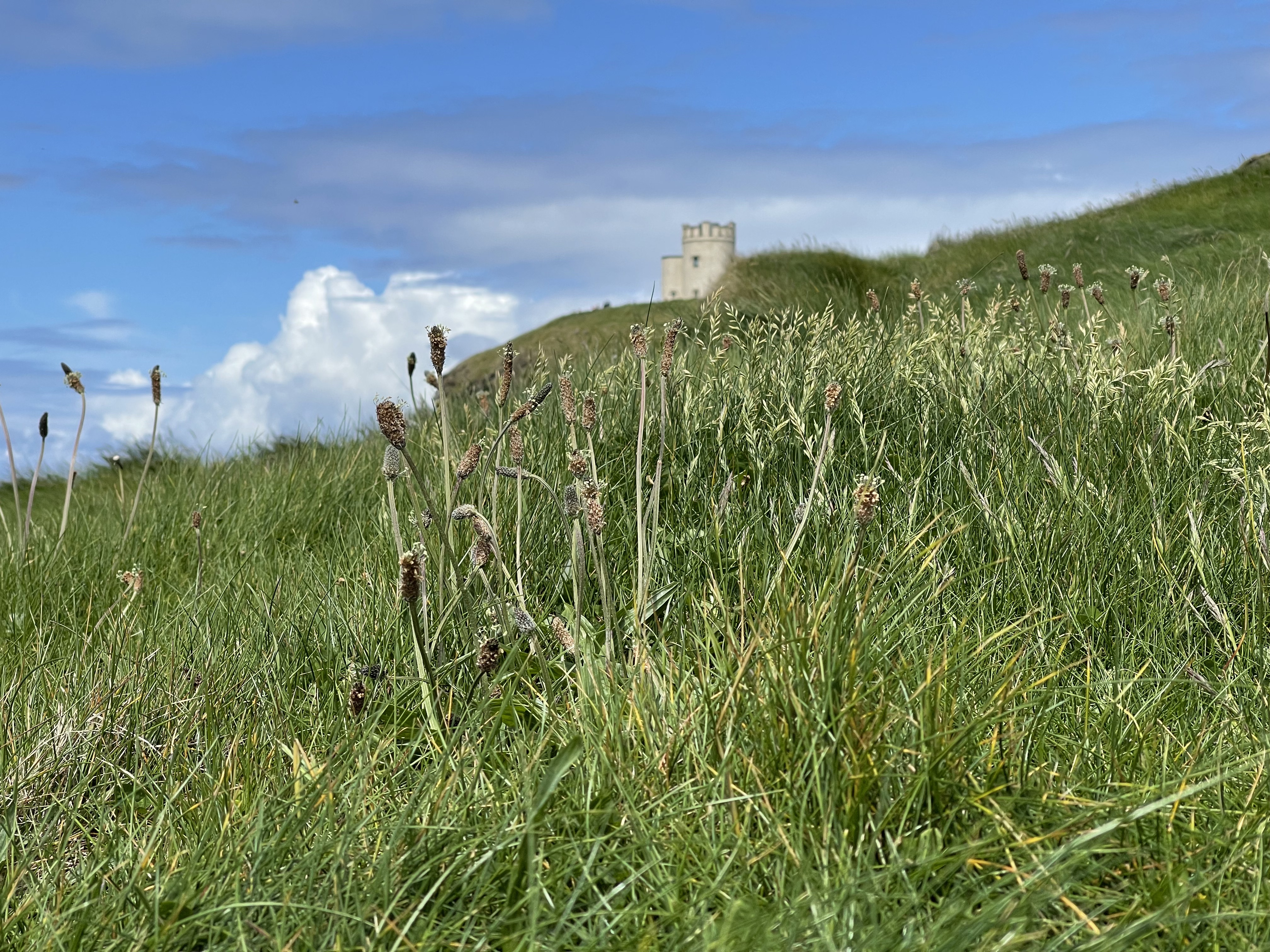
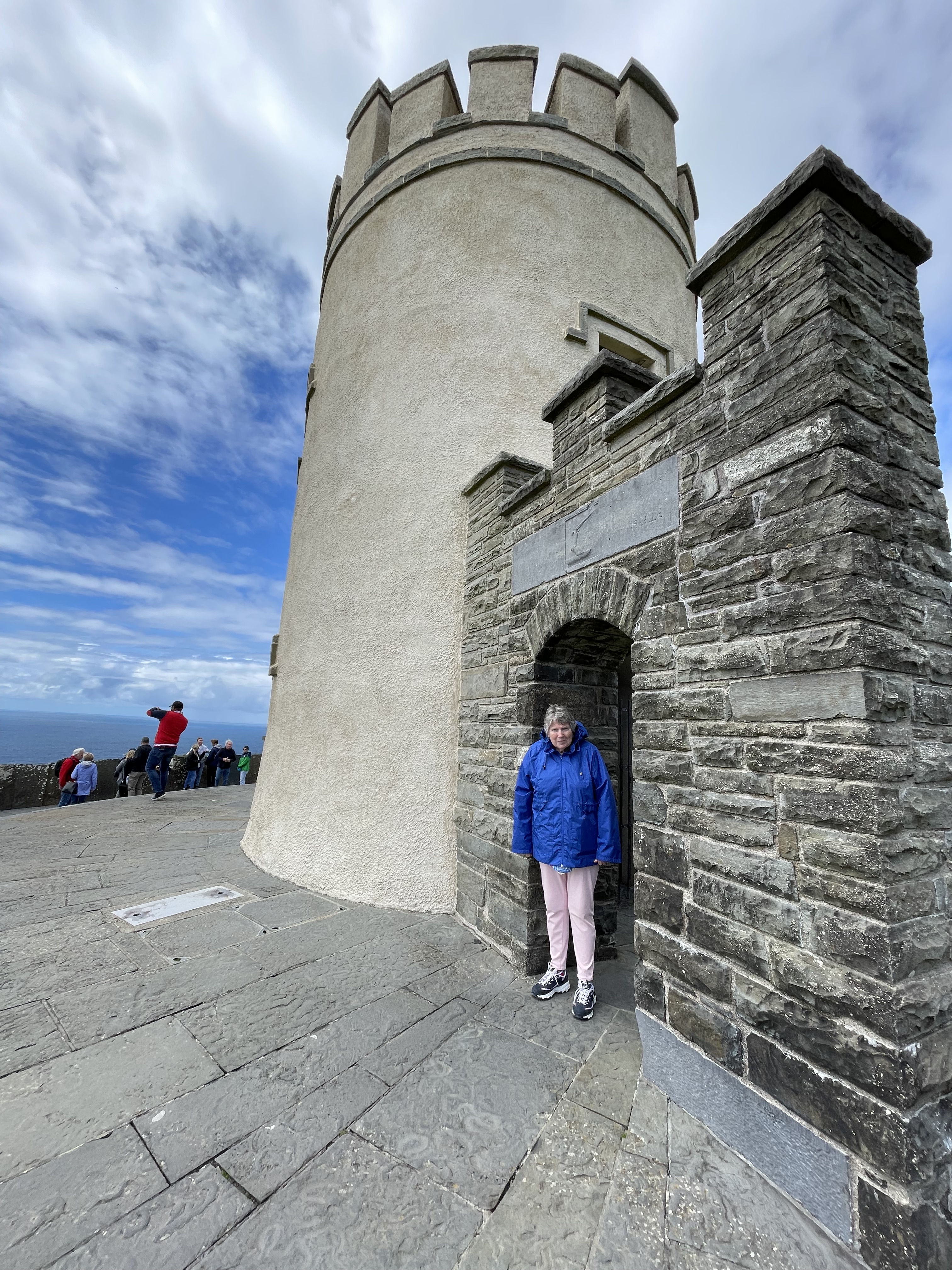
The Cliffs of Moher got their name from a ruined promontory fort “Mothar” which was demolished during the Napoleonic Wars in the early 1800’s to make room for the Signal Tower or O’Brien’s Tower at Hag’s Head point.
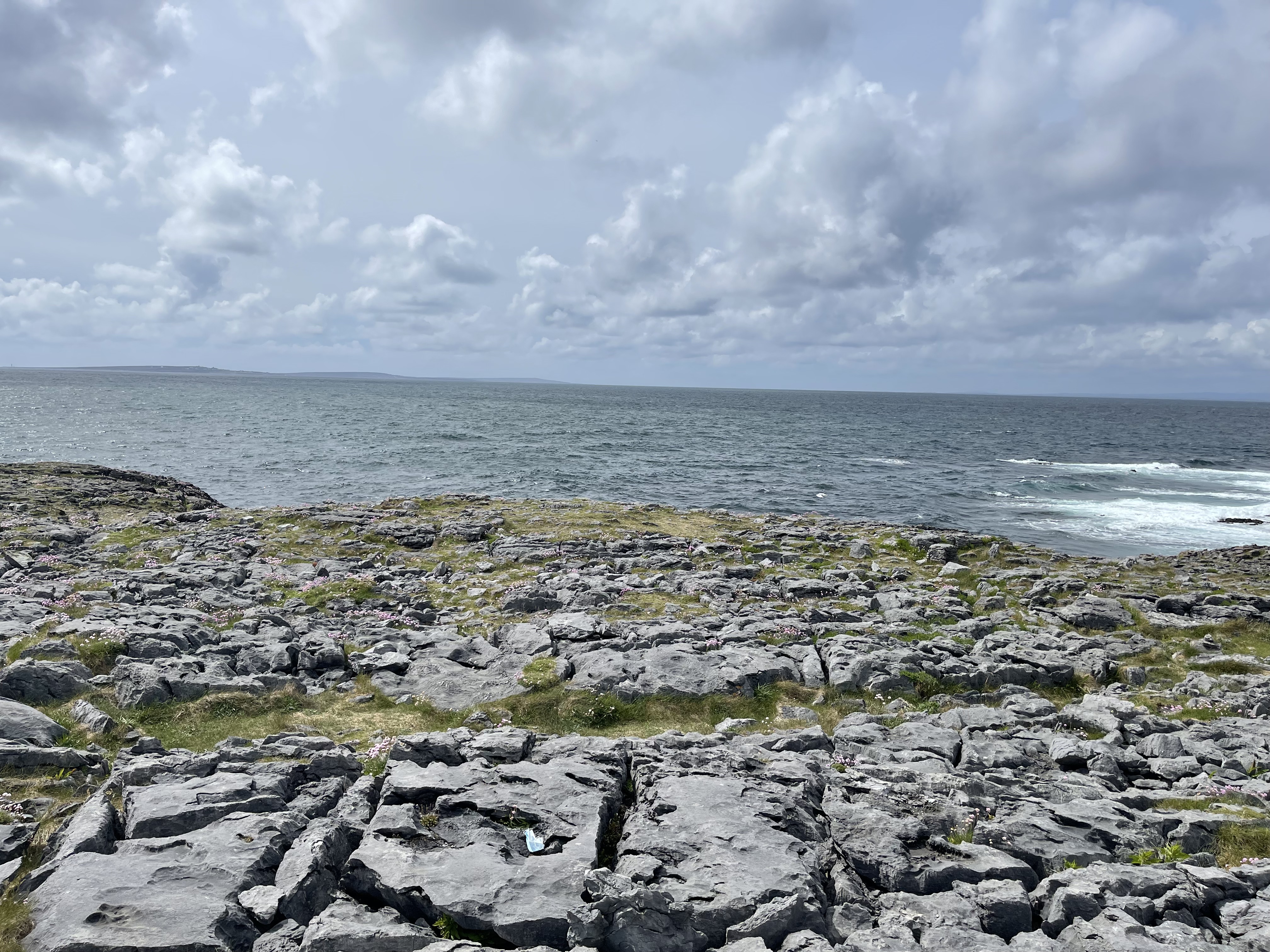
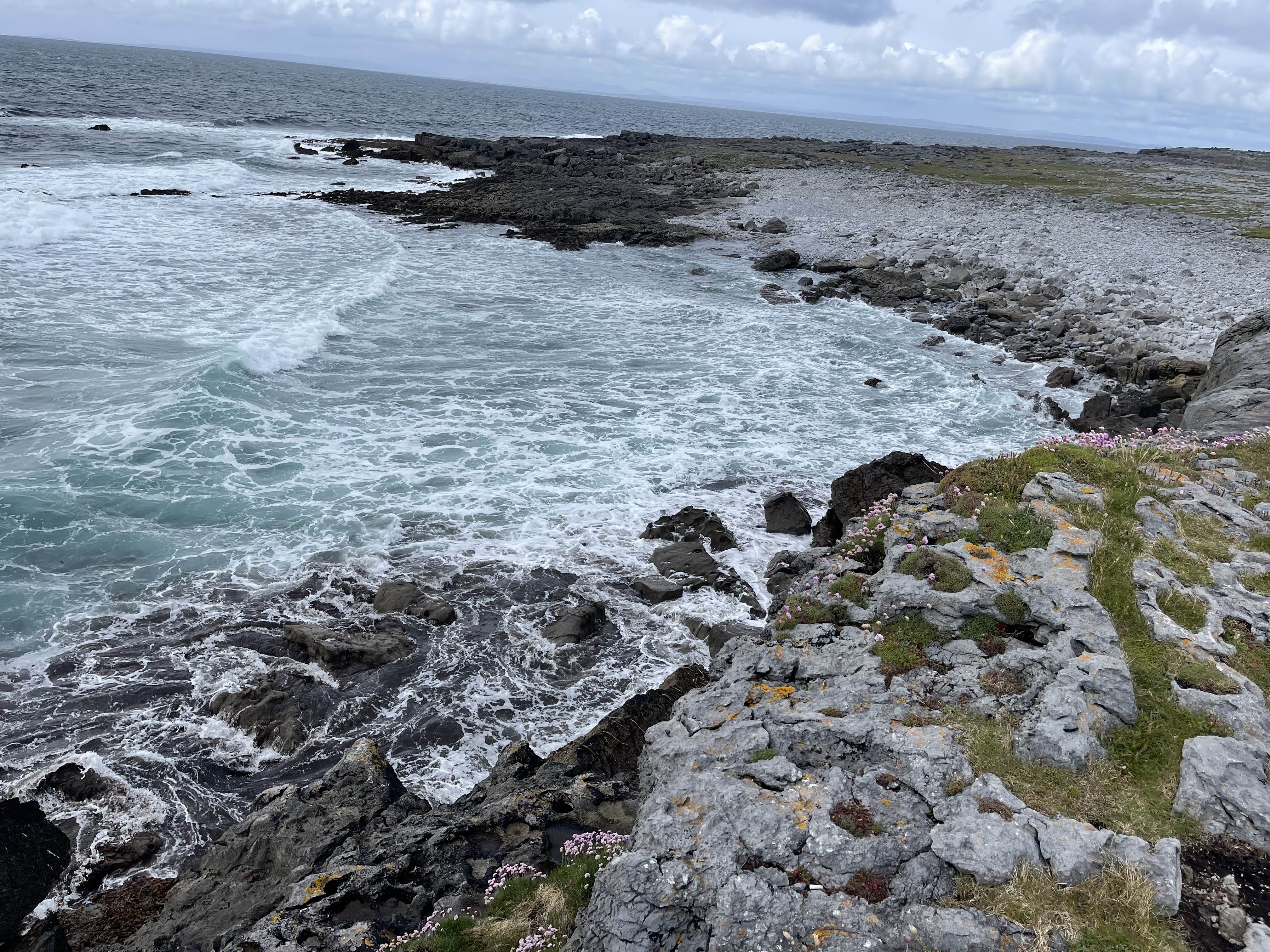
After spending a couple of hours at the cliffs we traveled the coast stopping at villages and seaside spots such as Burren with its limestone
Next was a small fishing village called Kinvara.
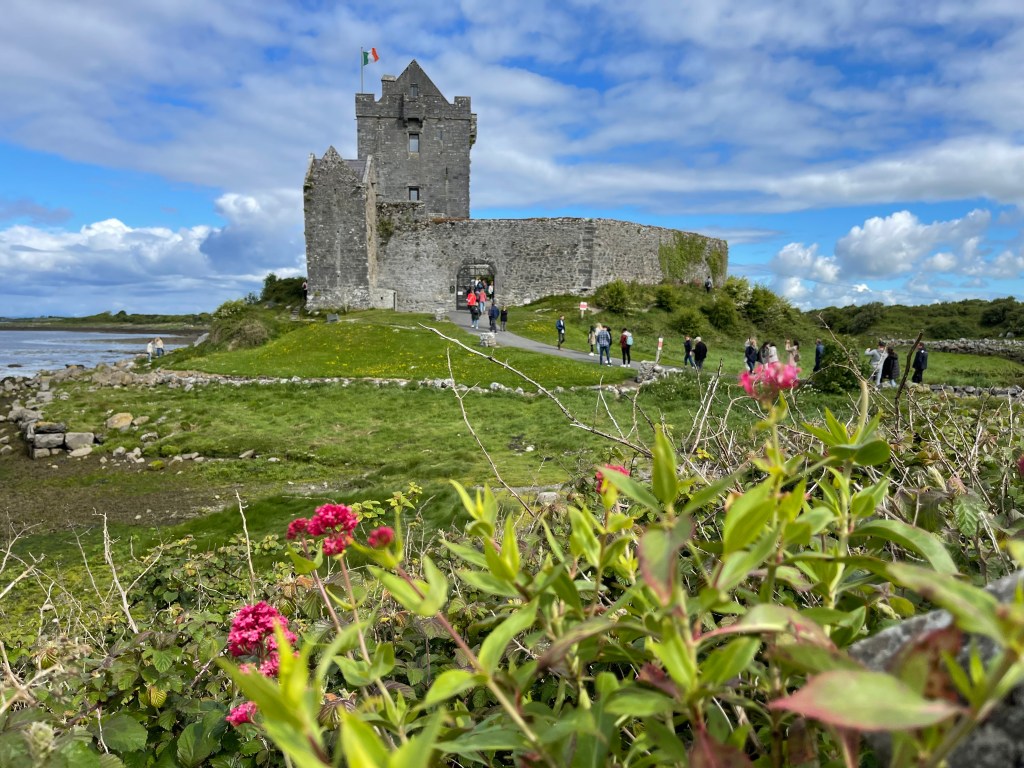
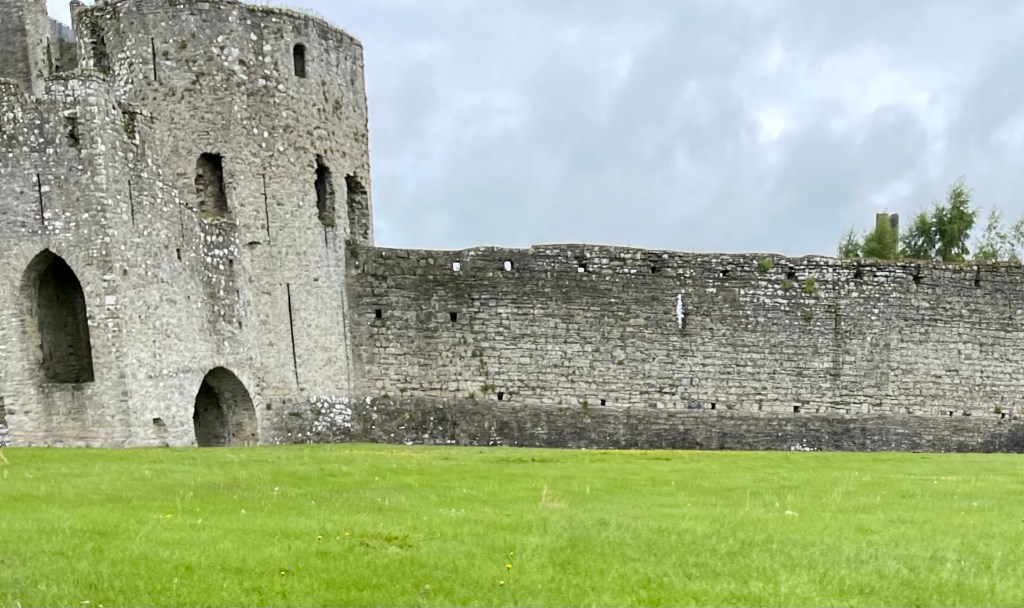
Last stop was Dunguaire Castle. They have banquets and parties there if you ever want to rent it out.
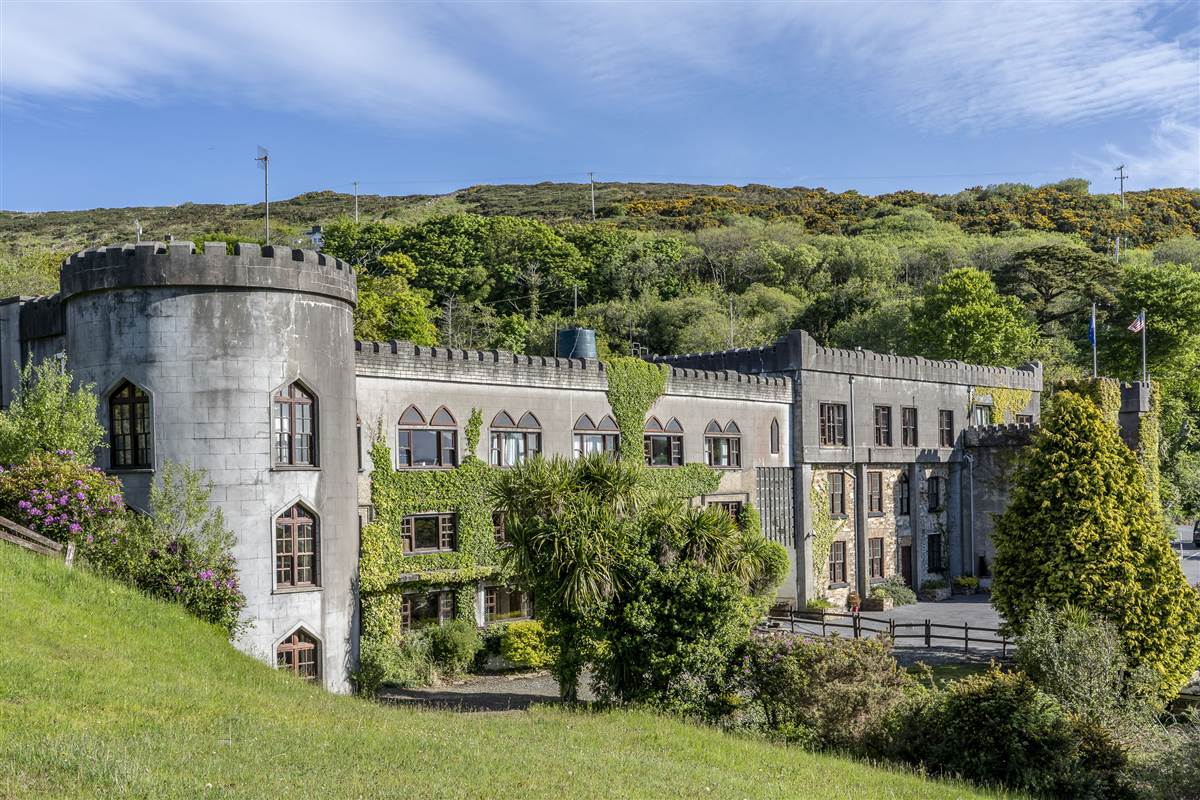
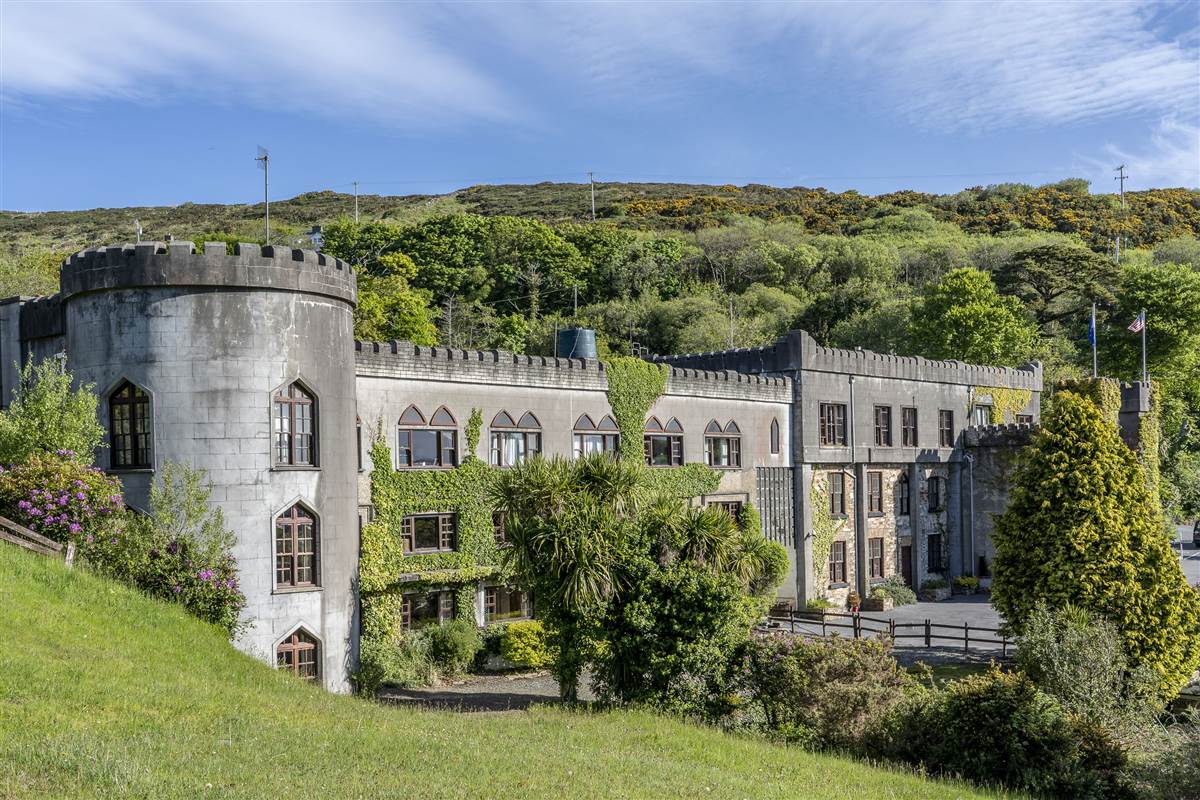
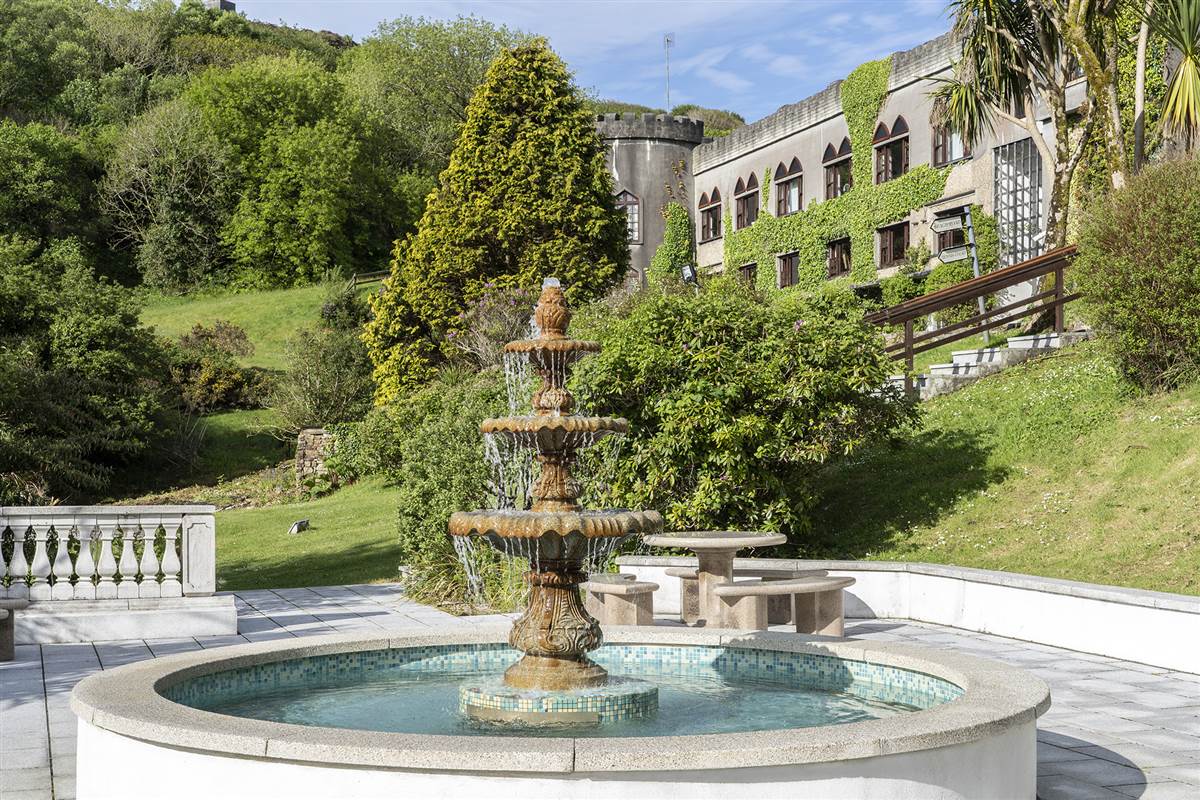
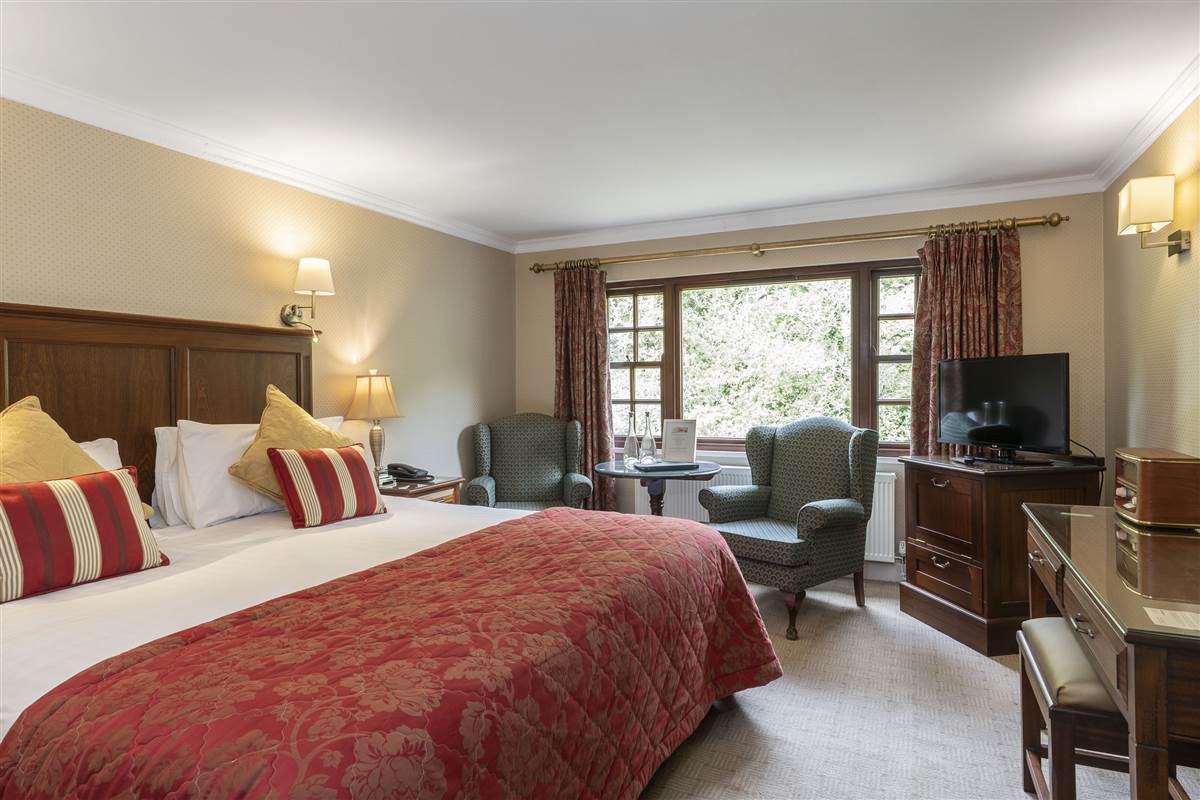
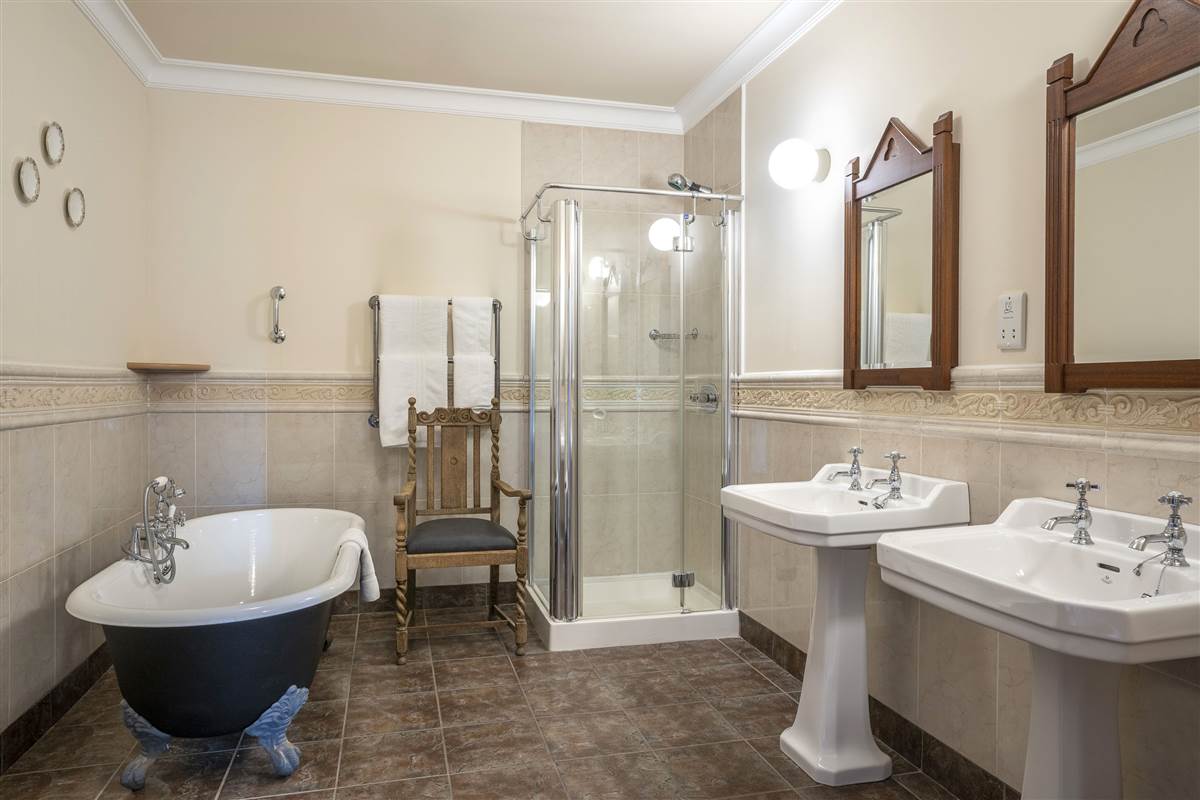
After a full day of sightseeing and exploring castles and parks we headed to AbbeyGlen Castle
Yes, Mr. Jim I do believe I will have a nice cold beverage before retiring for the night!.
With all our sightseeing and running around we hardly had time to enjoy our castle stays. But each night’s lodging was grander and better than we could have ever expected. I highly recommend paying the extra for the Castles and Grand Estates.
Day Five was a long day but so full of fun and sights. We checked out of Kenmore Park Estates and headed to Galway. Bunratty Castle and Park were our first stop as documented in the previous post.
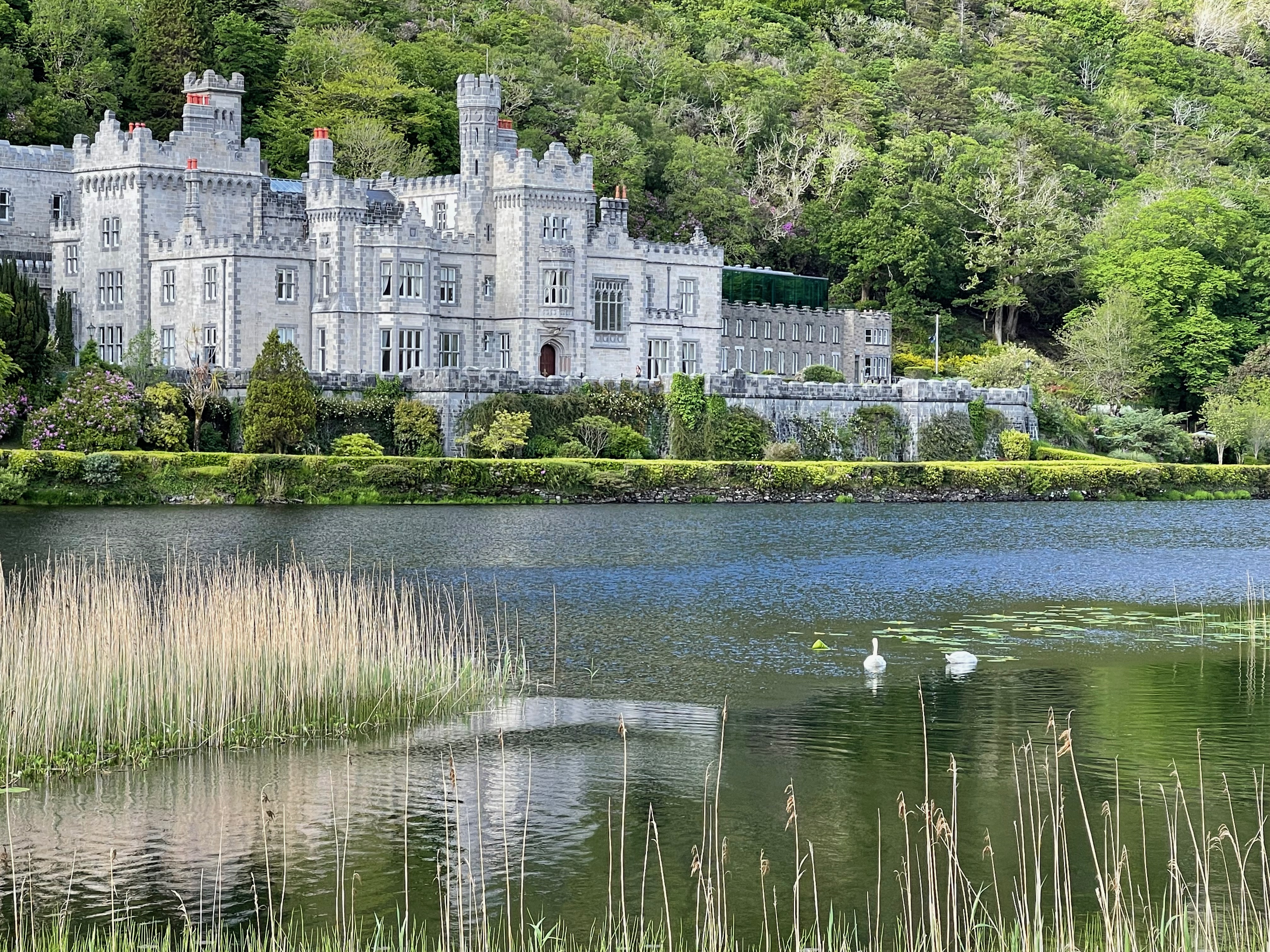
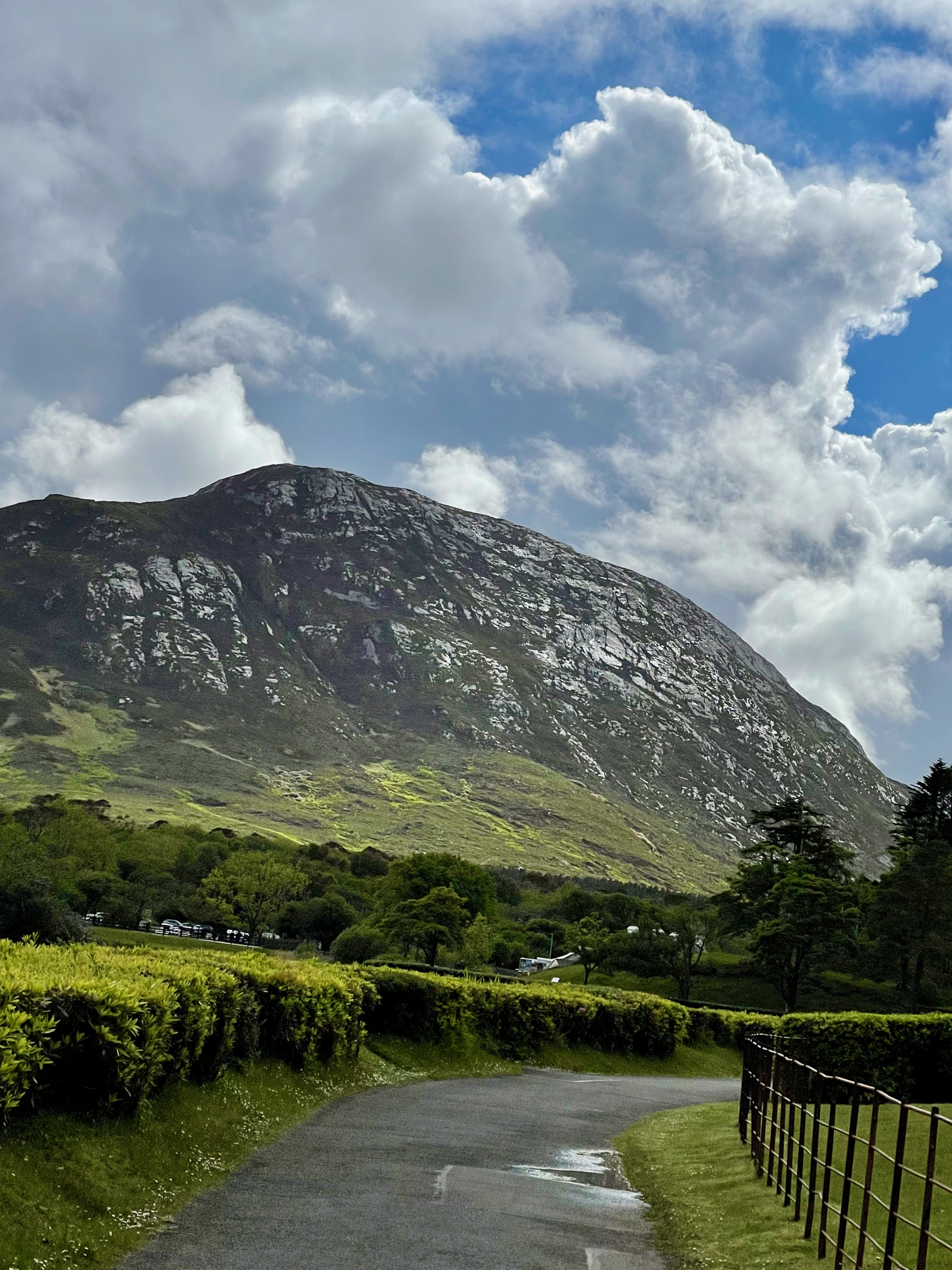
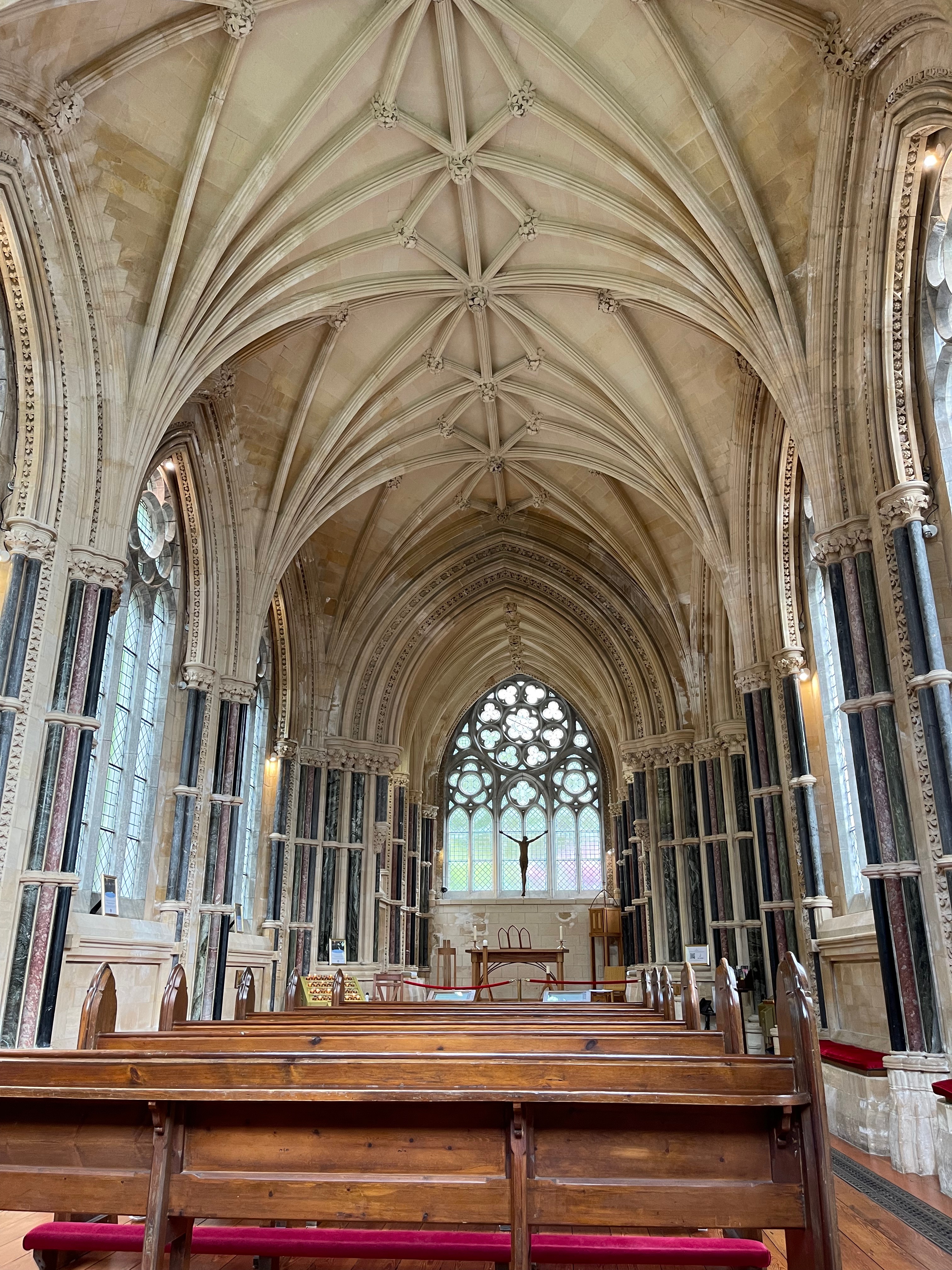
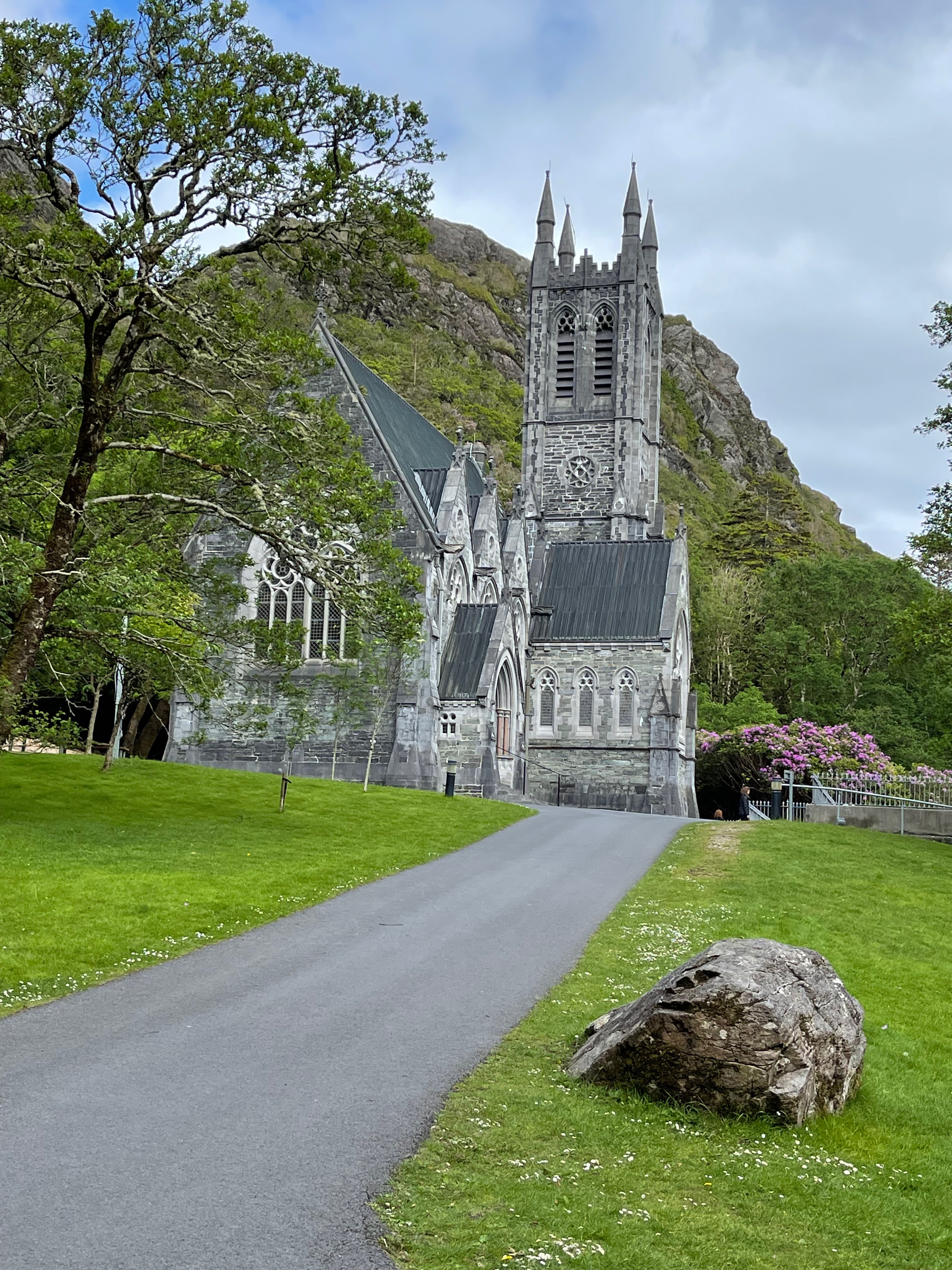
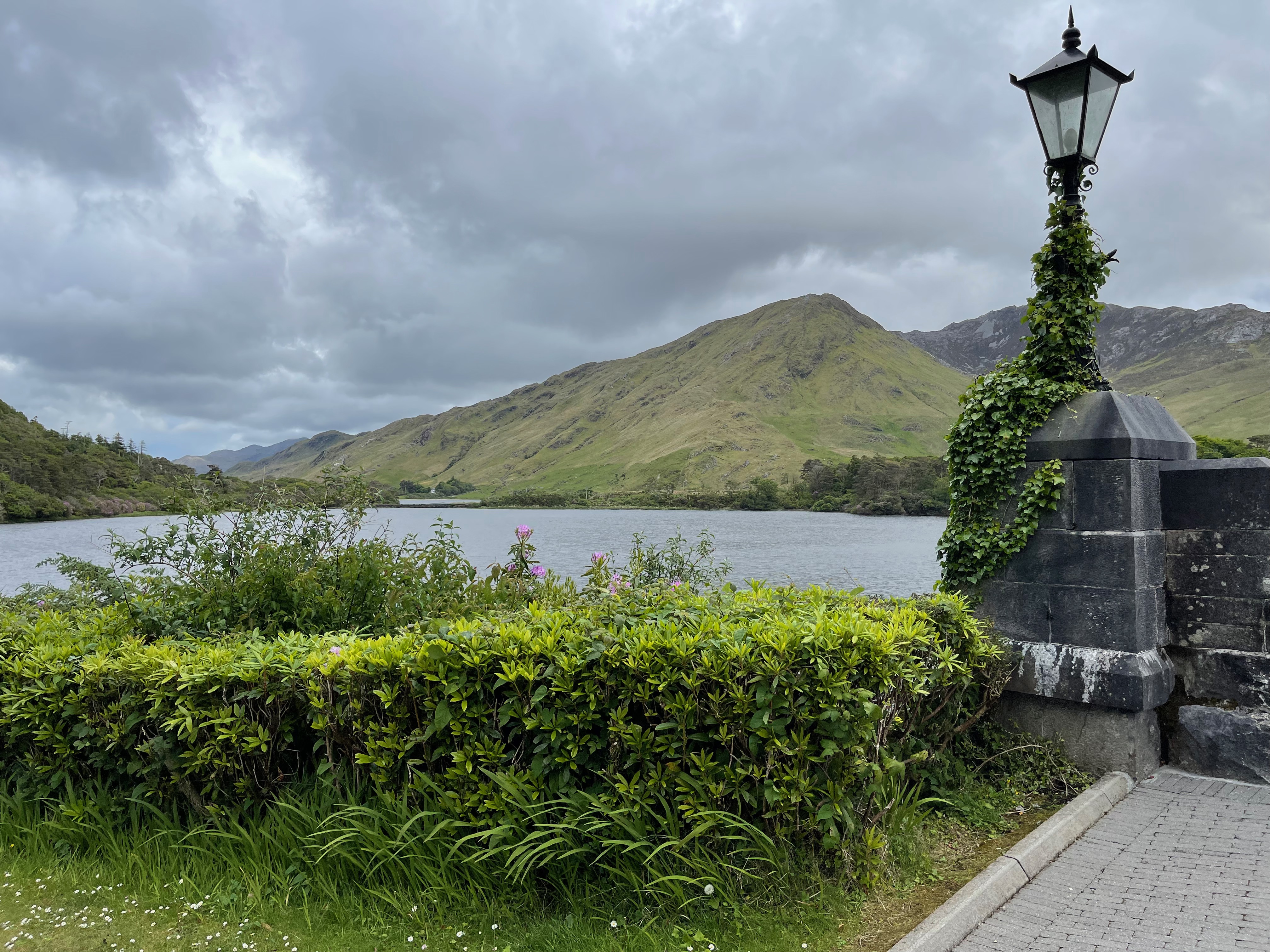
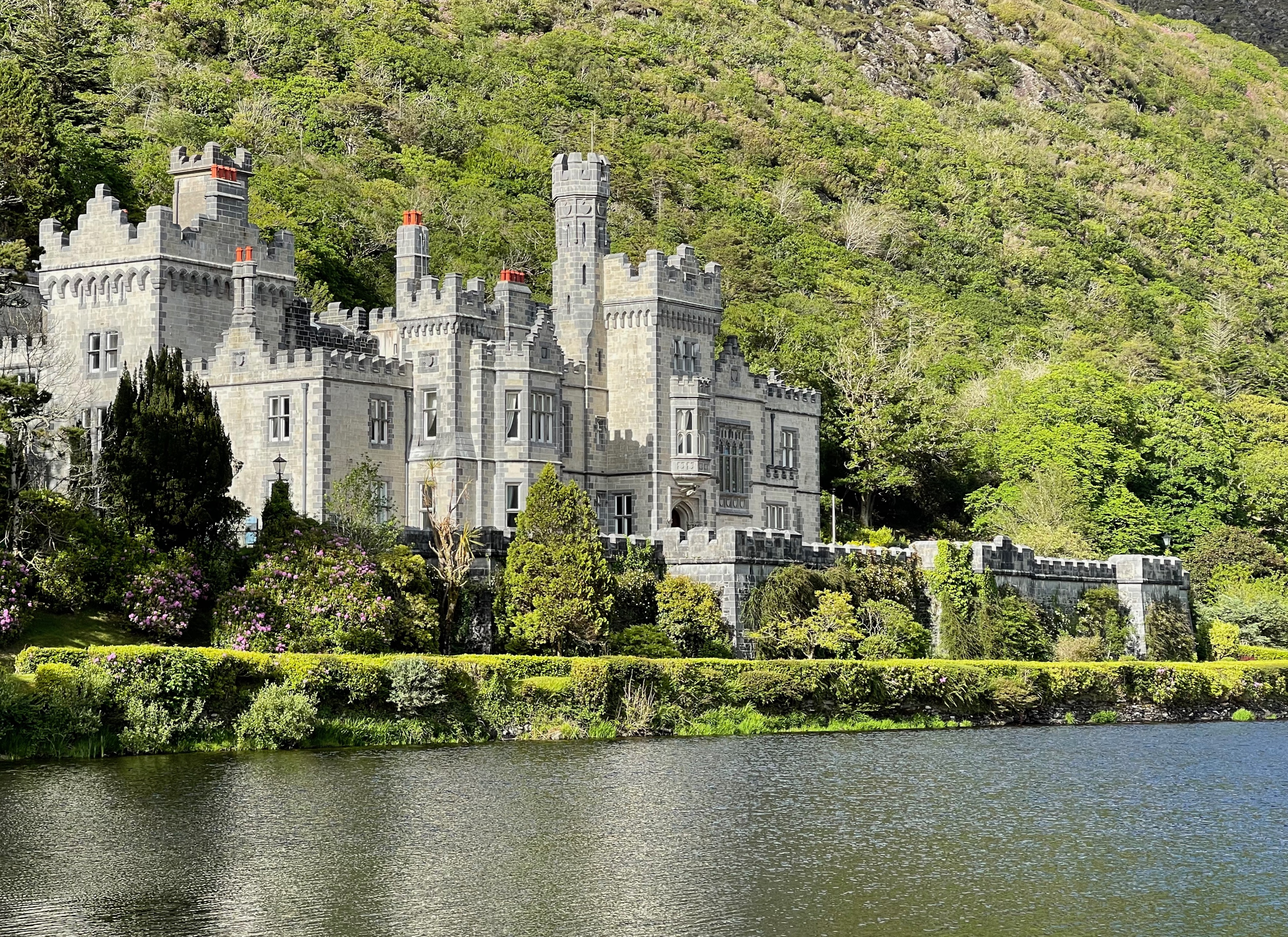
Then we were off to Kylemore Abby and Victorian Walled Garden.
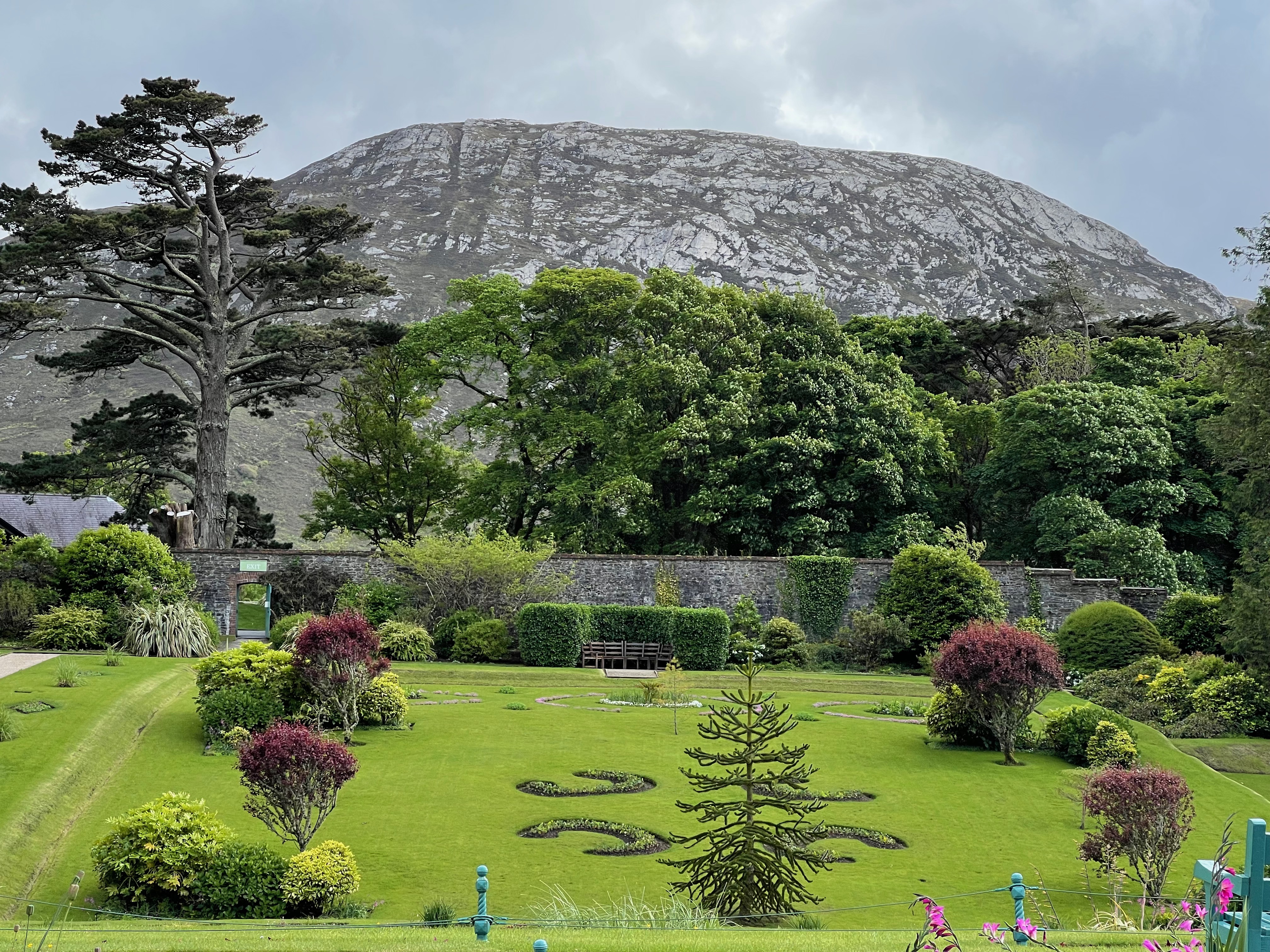
Kylemore Abbey, Castle, Church and Walled Victorian Gardens are what dreams are made from.
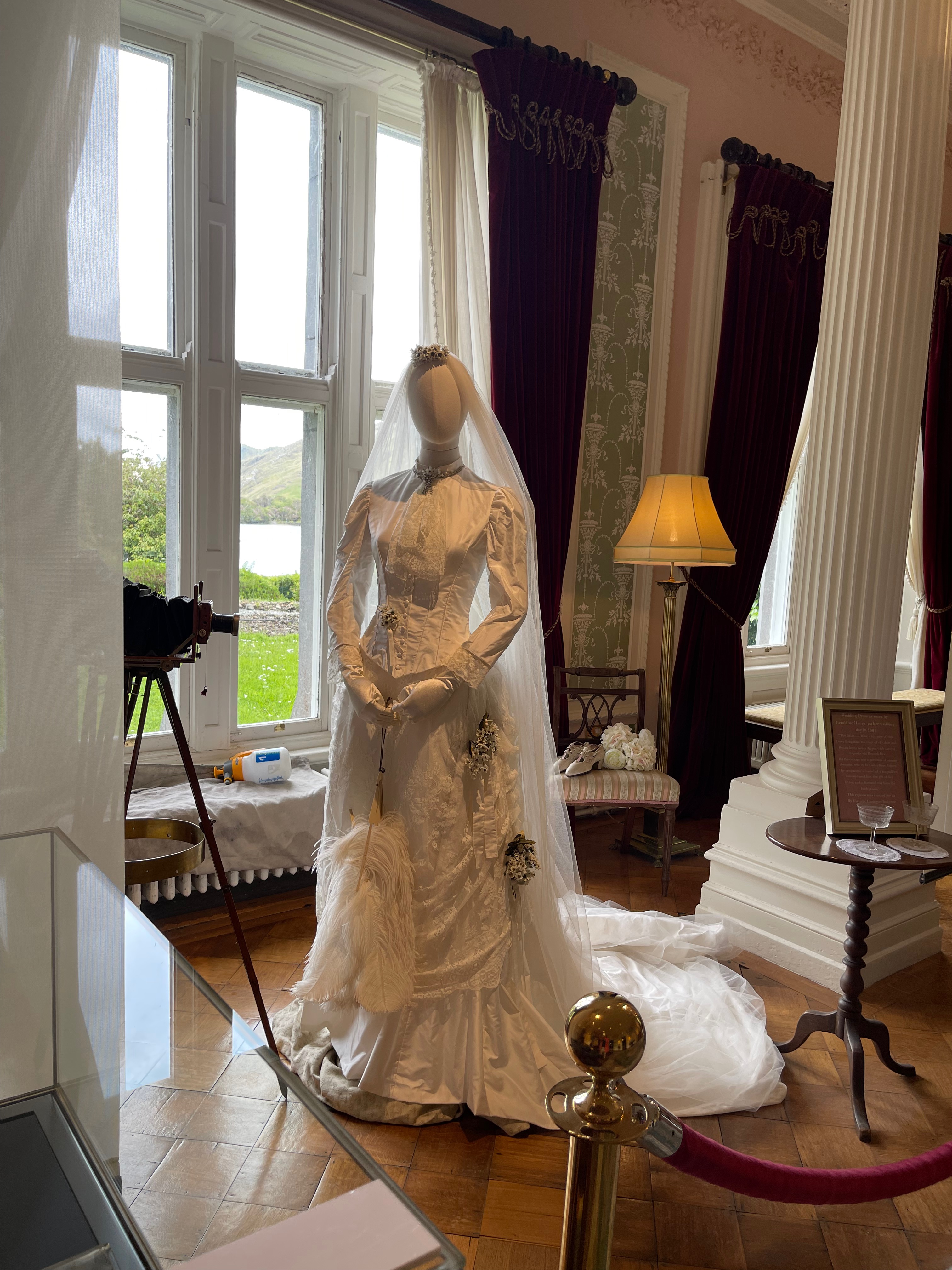
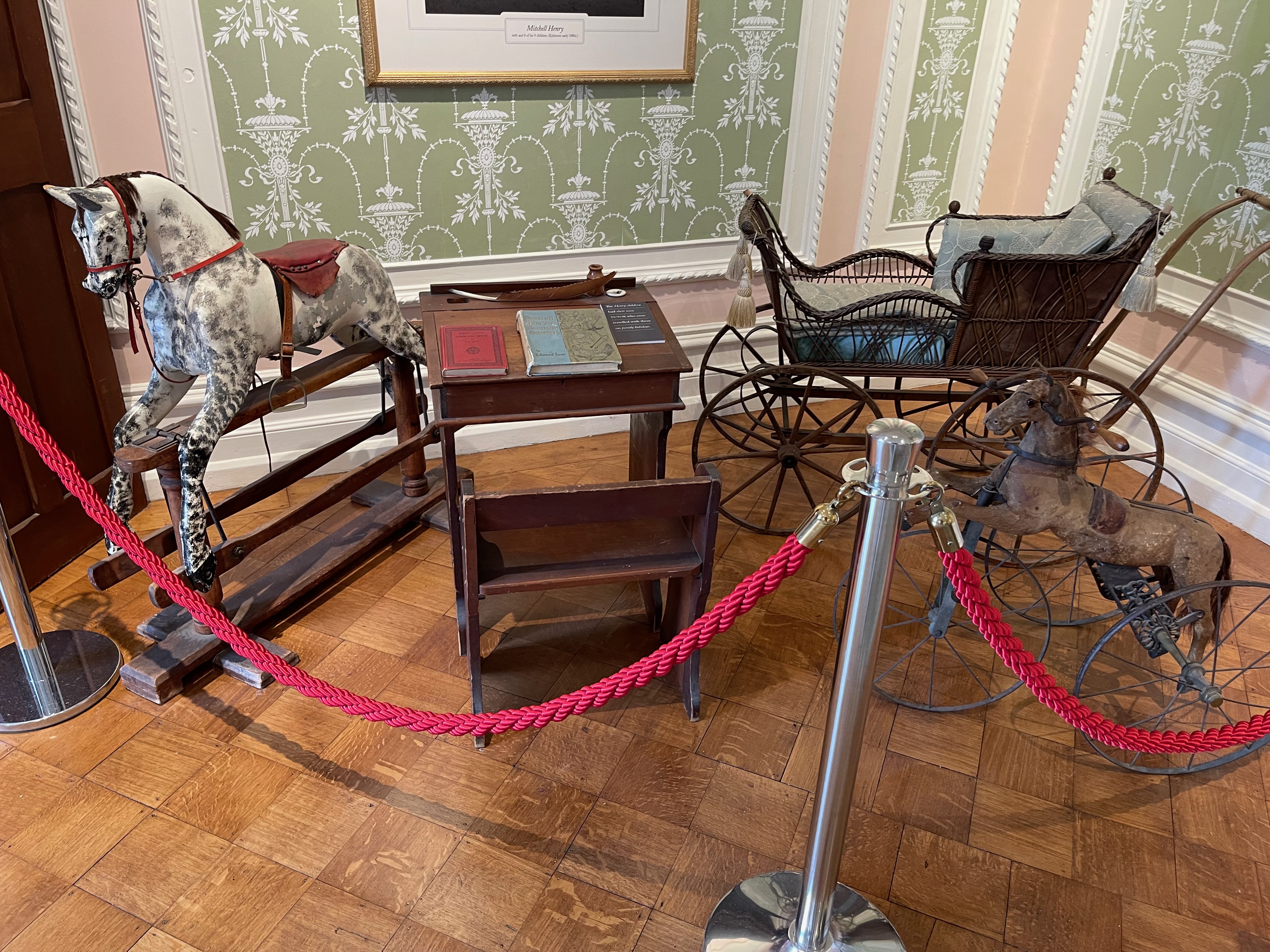
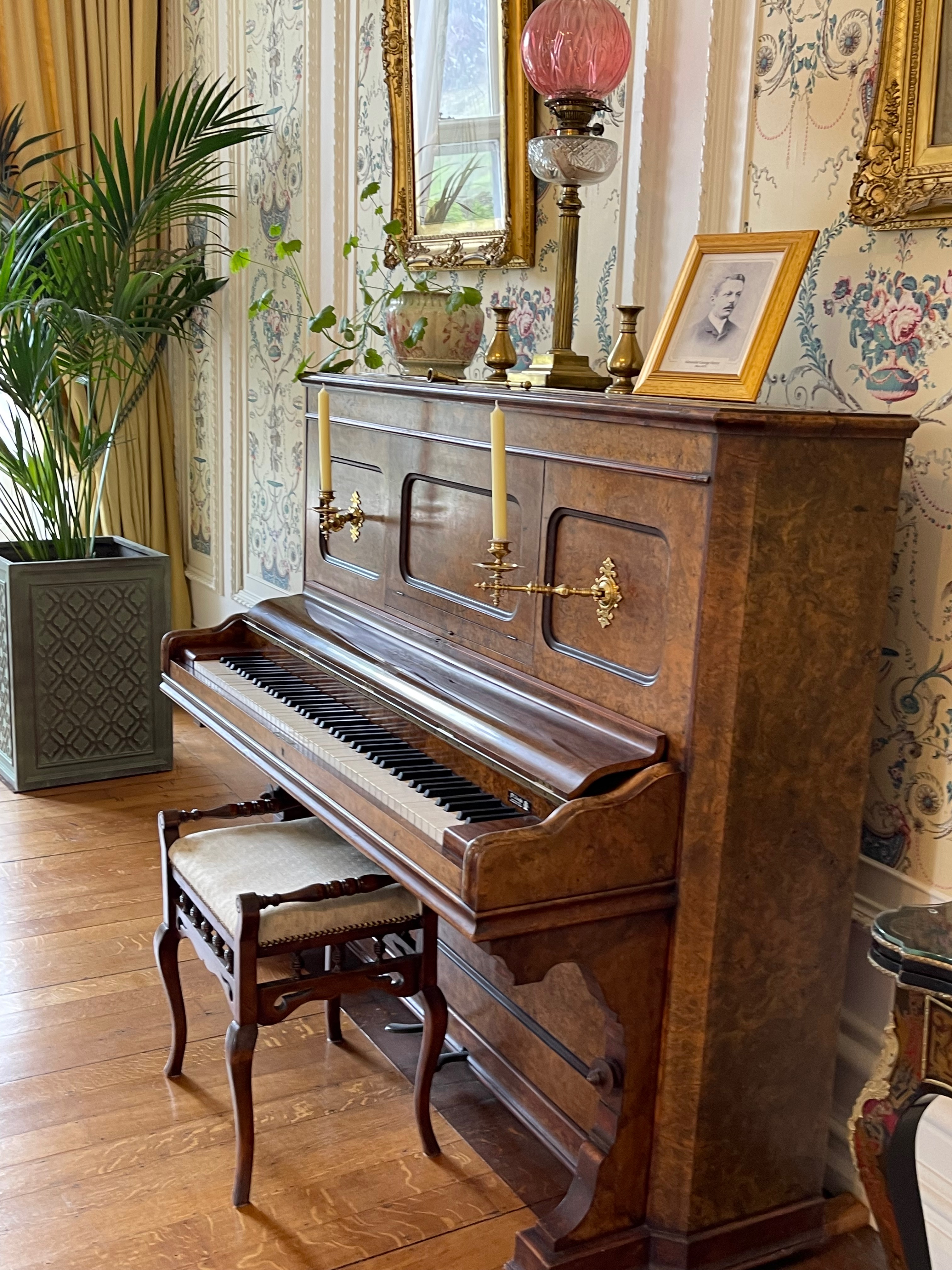
The Castle was built in the late 1800s by Mitchell Henry. The son of a wealthy cotton merchant. Henry was a skilled pathologist and eye surgeon. On his father’s death he inherited the family business and became one of the youngest wealthy man of his time. Henry purchased Kylemore Lodge and began construction of the castle. Forty years under Henry’s guiding hand the locals were able to turn the wasteland into productive acres.
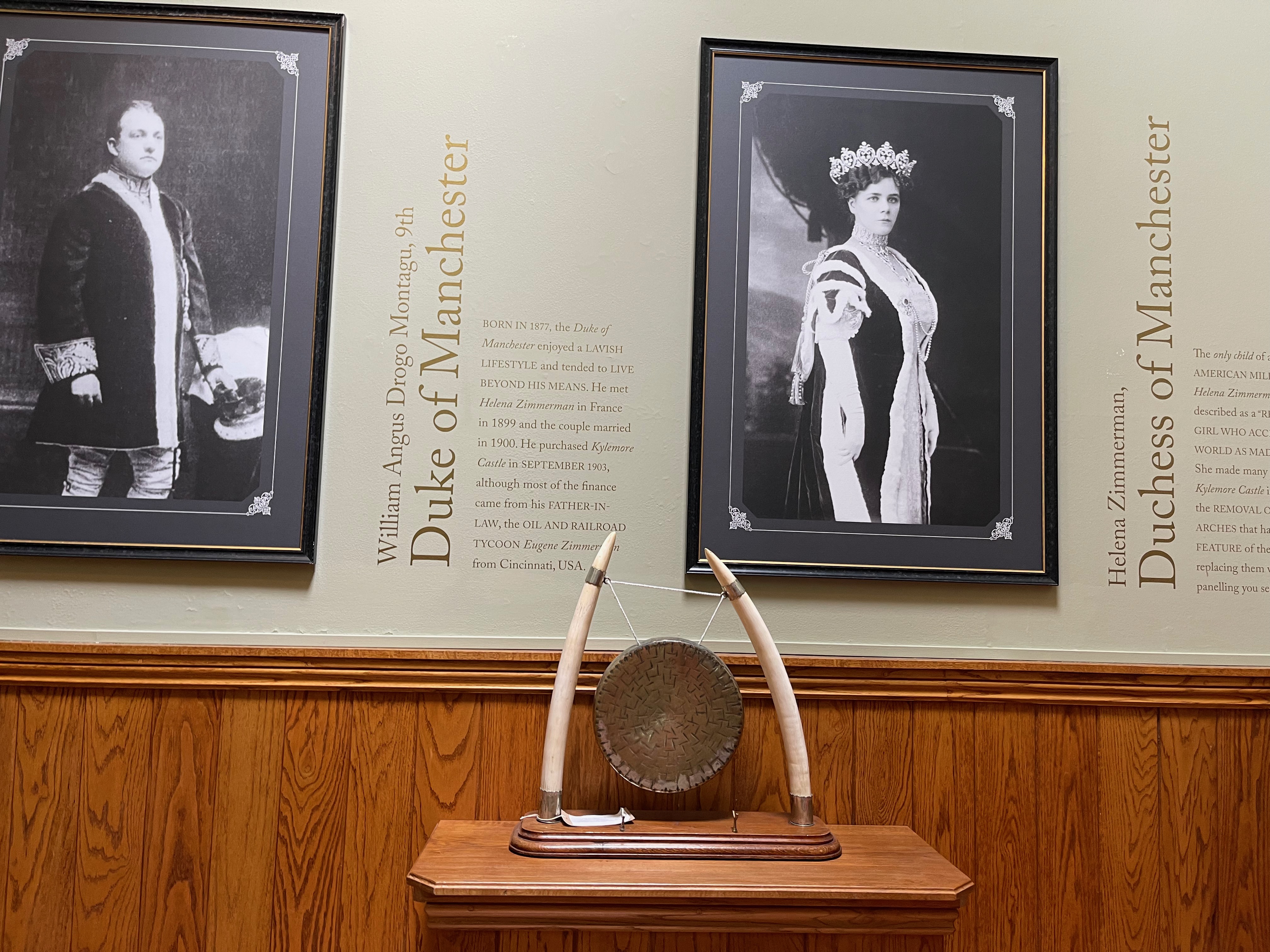
The Henry family eventually left Kylemore in 1902 when the estate was sold to the Ninth Duke of Manchester.
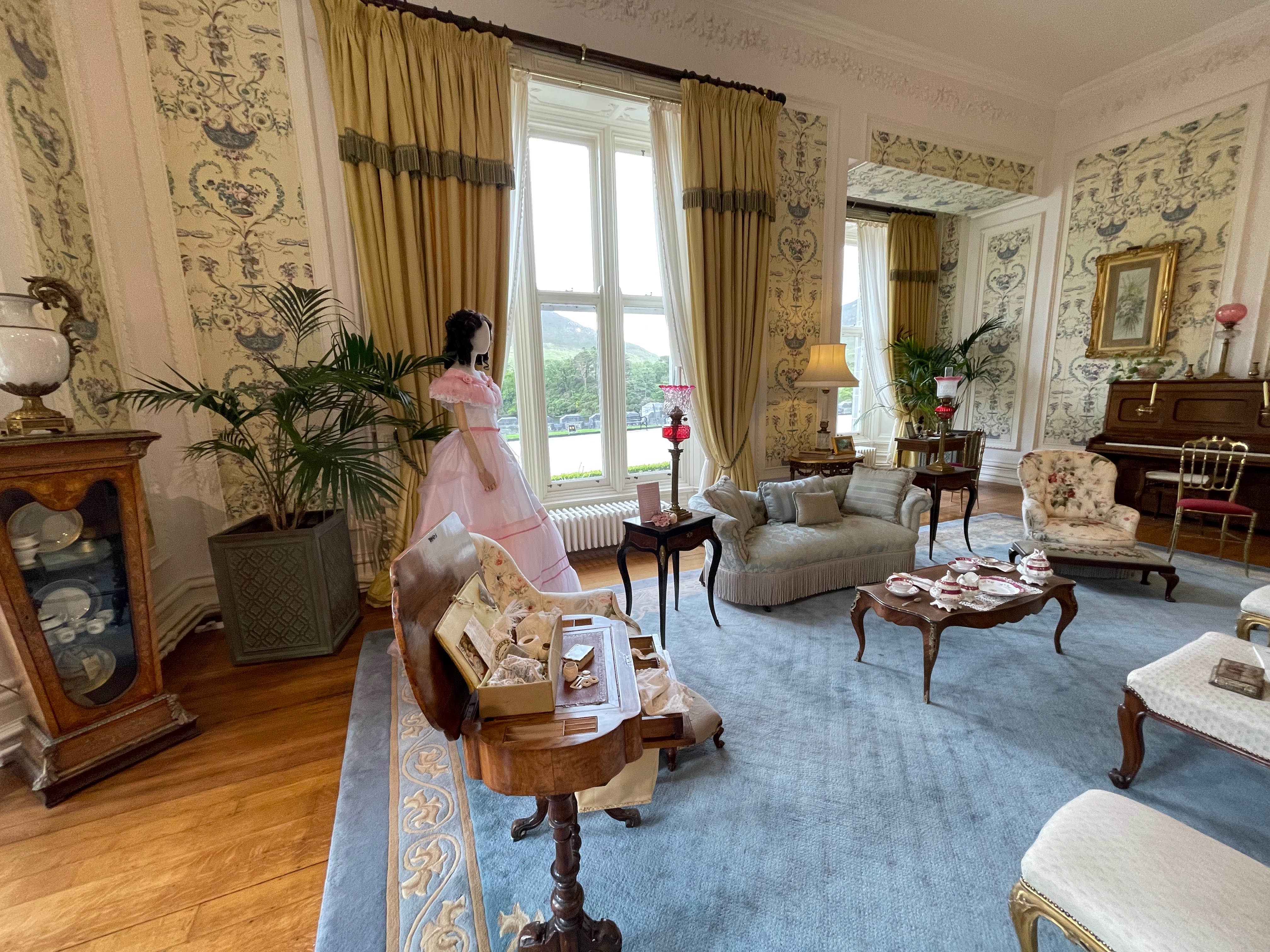
The Duke and Duchess lived a lavish lifestyle financed by the Duchess’s father, a wealthy American. Helen Zimmerman- The Duchess, was referred to in the English and American press as a “dollar princess”, the title was given to weathy American heiresses who married into the British royal line.
In December 1920 a community of nuns known as the “Irish Dames of Ypres” settled into Kylemore. The nuns turned the estate into a boarding school and a day school for girls. The principal reception rooms and bedrooms in the Abbey were converted into classrooms with other rooms being converted into dormitories. The nuns maintain the main floor of the castle as a tourist attraction and a profitable income to help sustain the Abbey.
The garden boast one of the first glass greenhouses of Ireland.
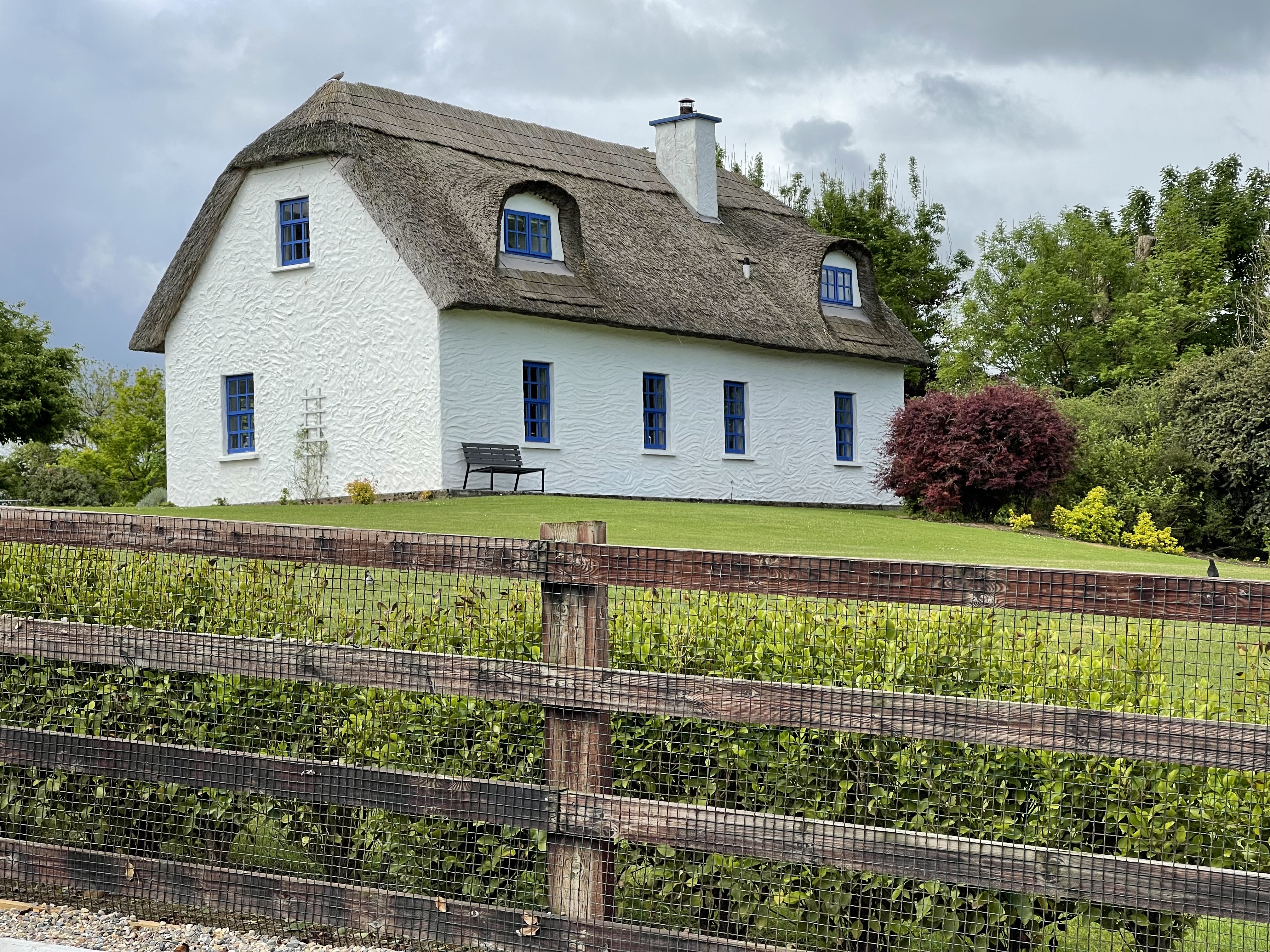
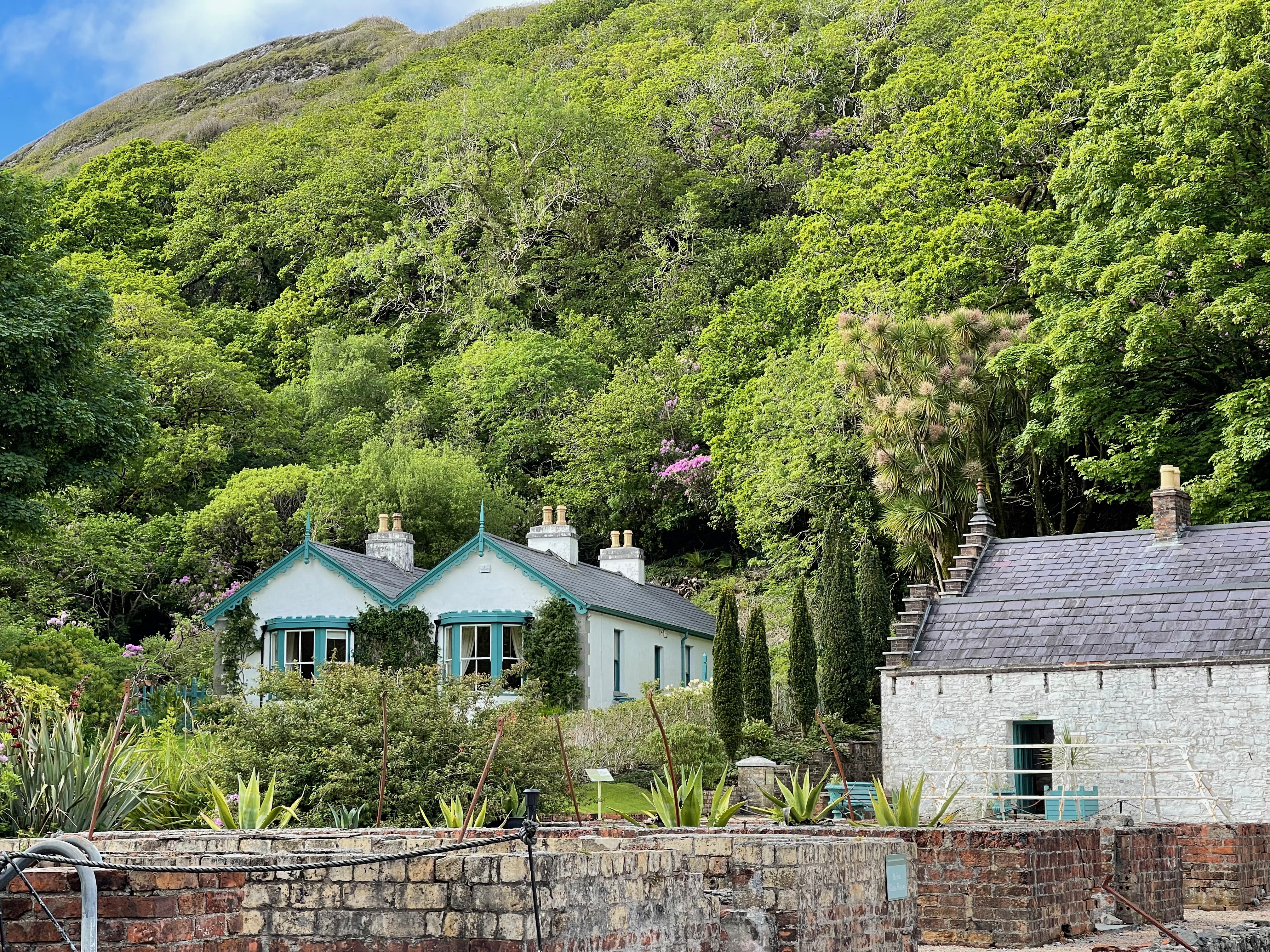
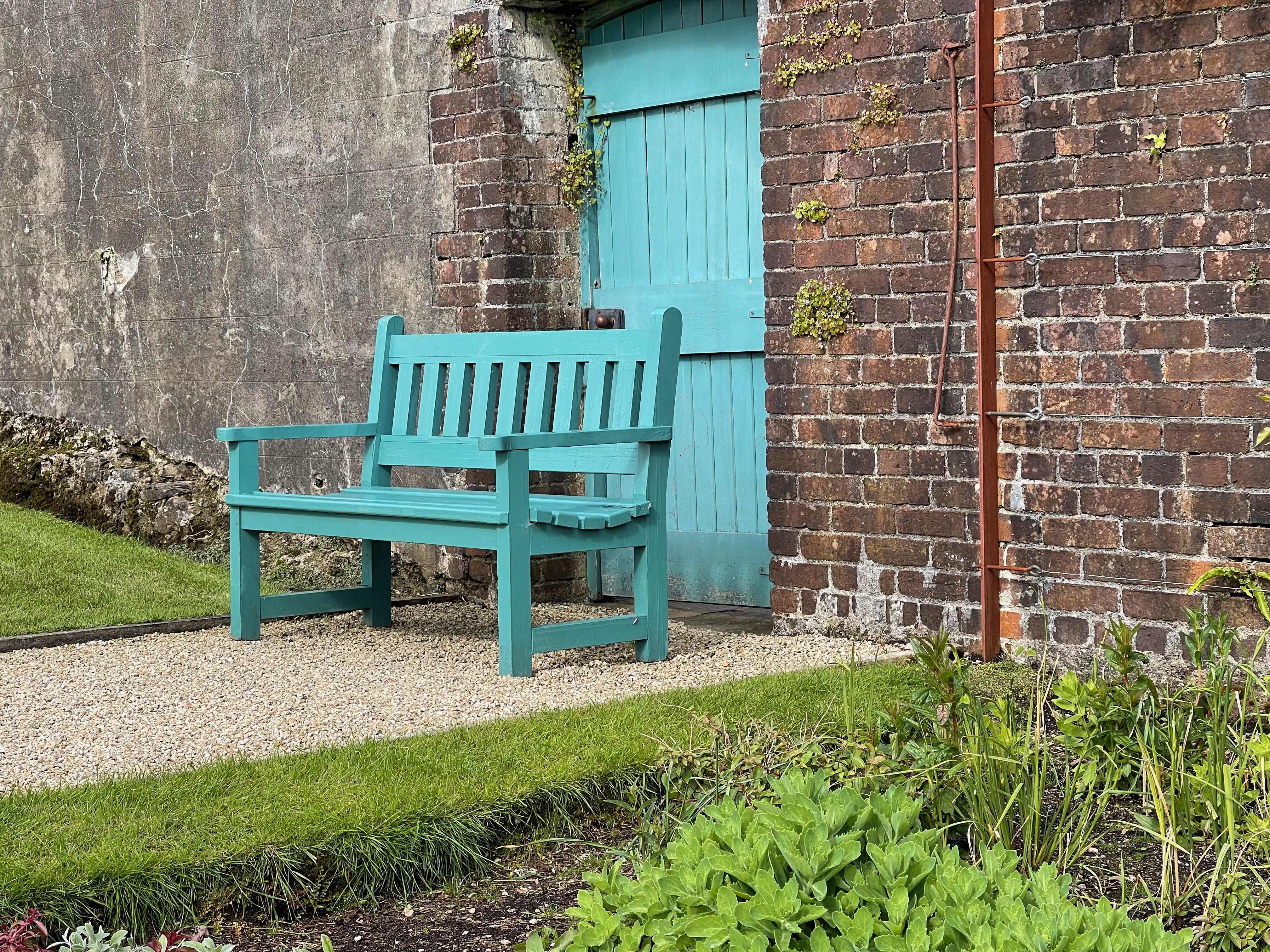
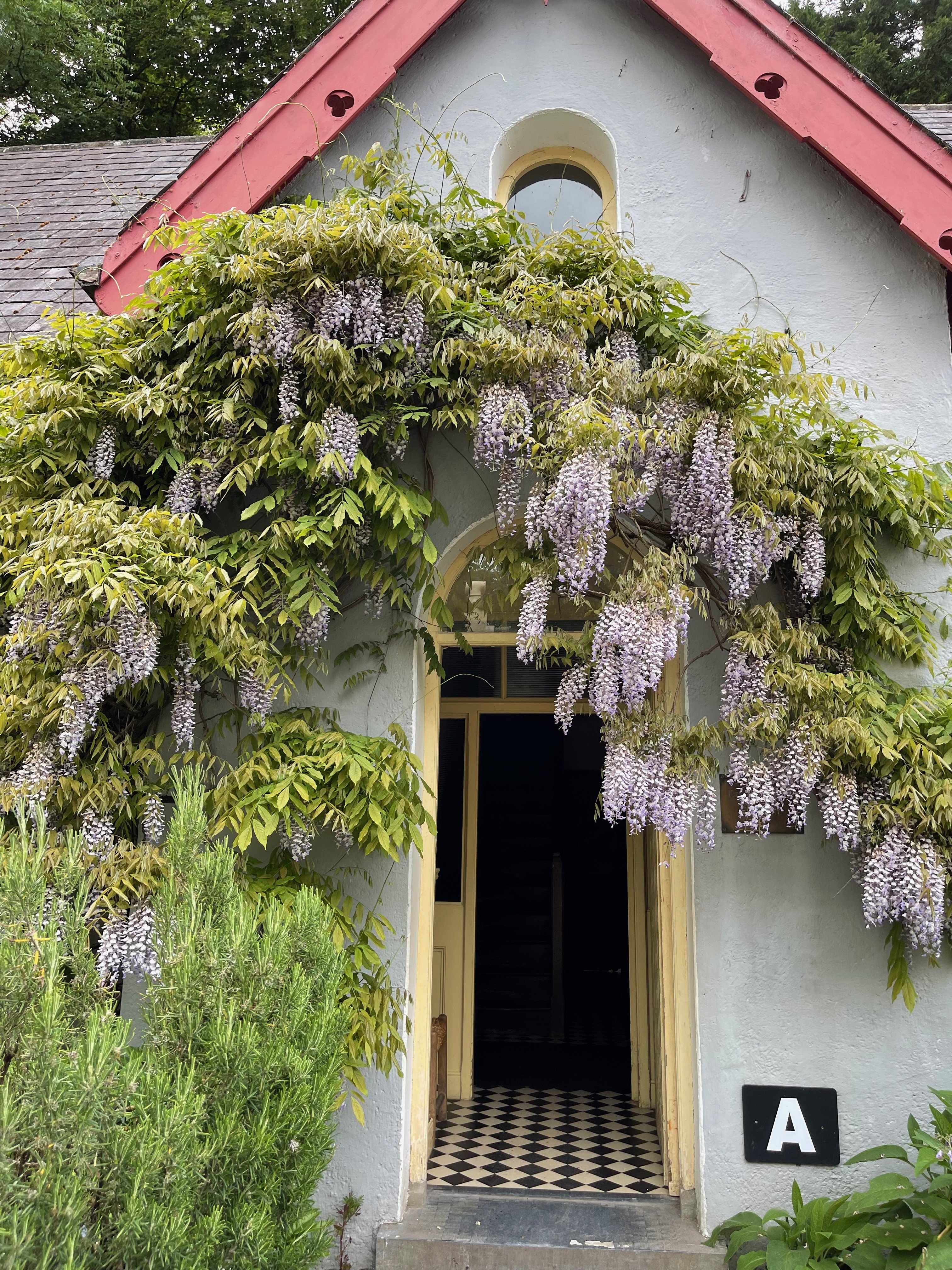
The white cottages with blue trim are homes to the Master Gardeners.
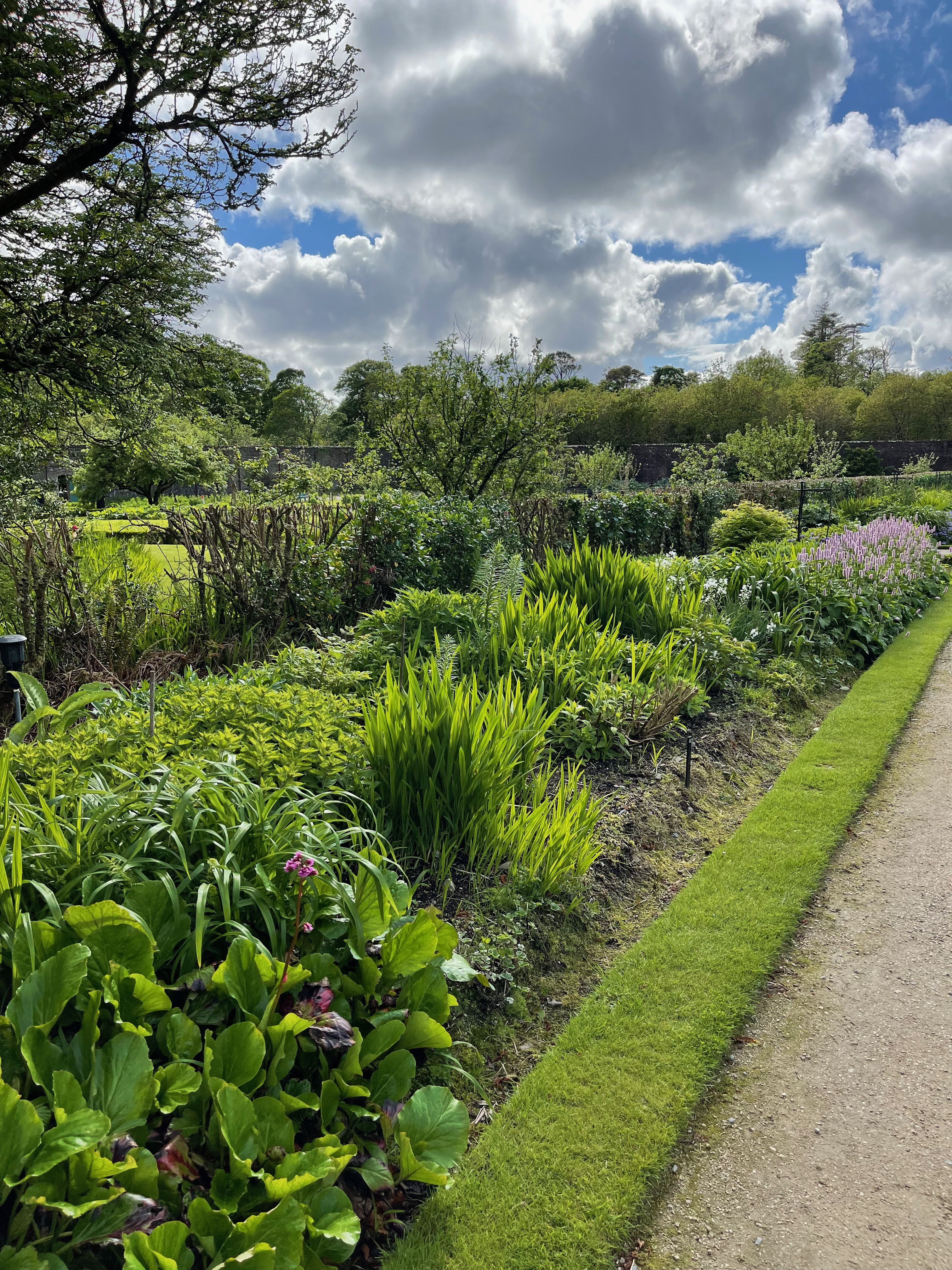
The walled gardens provide a wide range of fruit and vegetables, a well equipped kitchen with several pantries, an ice house, fish and meat larder and a beer and wine cellar.
Today we leave Kerry and head to Galway, but along the way we stopped at Bunratty Castle and Folk Park.
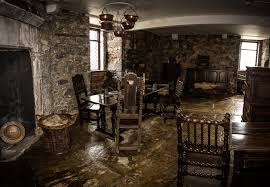
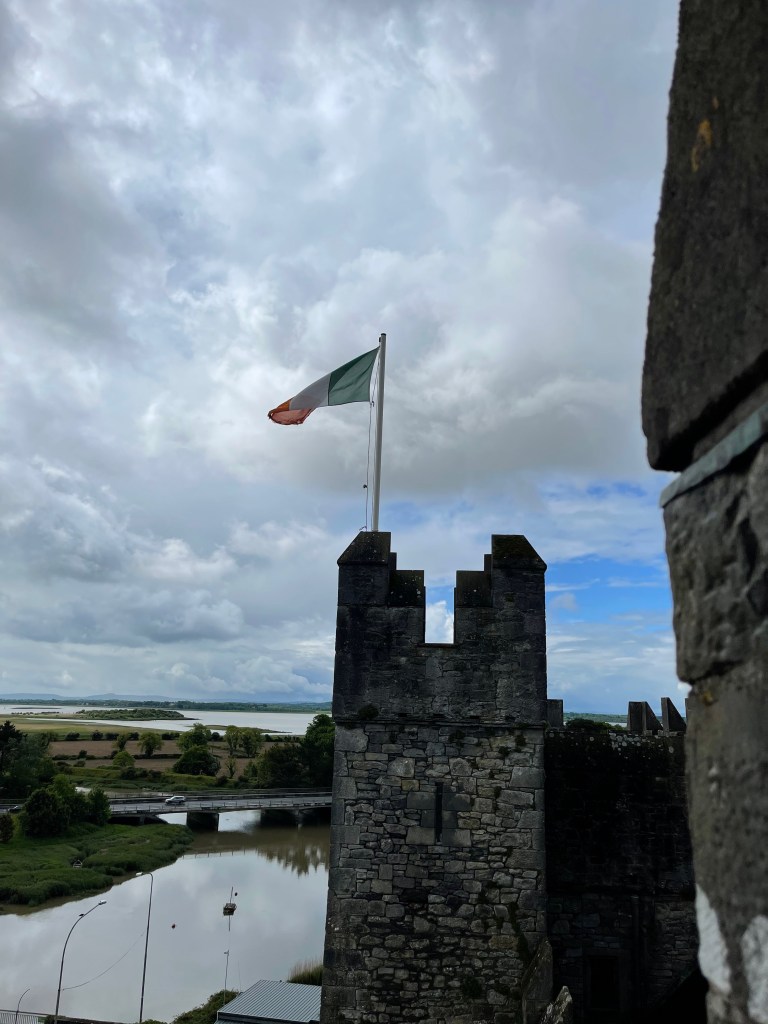
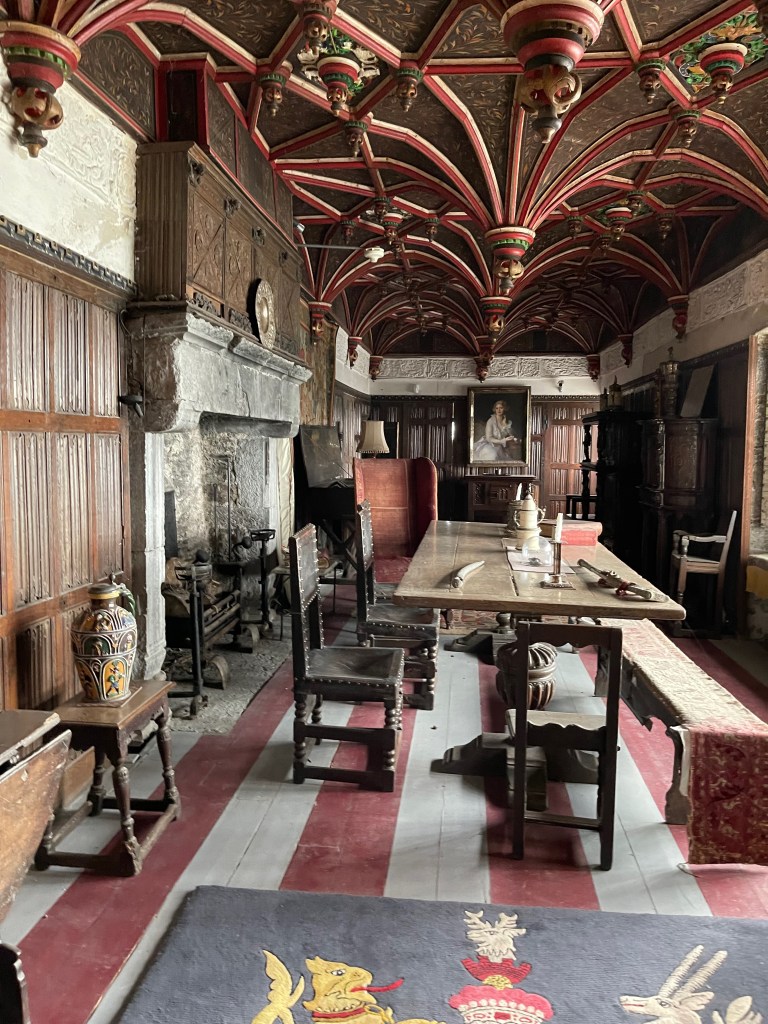
Bunratty Castle is a window on the past. The present castle, last of a series on the same site was built around 1425. During the 16th and 17th centuries it was an important stronghold of the O’Briens – kings and laters earls, of Thomond or North Munster. It is furnished with mainly 15th and 16th century furnishings in the style of the period of the Great Earl. The main block has three floors, each consisting of a single great room or hall. The four towers have six stories each. The castle is entered by a drawbridge to the Main Guard.
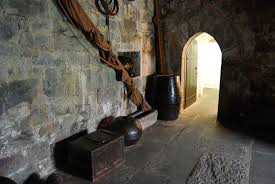
The lowest of the three central large rooms of the castle may have been used as a store room or stable. The vaulted hall with its Minstrels’ Gallery was the main living room of the common soldiers and of the Earl’s retainers. It is now used for medieval banquets. A small gate leads to a dungeon.
The Captain’s quarters is named for the captain of the guard and has a finely decorated ceiling.
The Great Hall was the original banquet hall and audience chamber of the Earls of Thomond. The Earl gave judgements while sitting his Chair of the Estate. The walls were hung with French, Belgian and Flemish tapestries. The oak dower-cupboard is dated 1570, and the 16th century standard displayed the coat of arms of the reigning family.
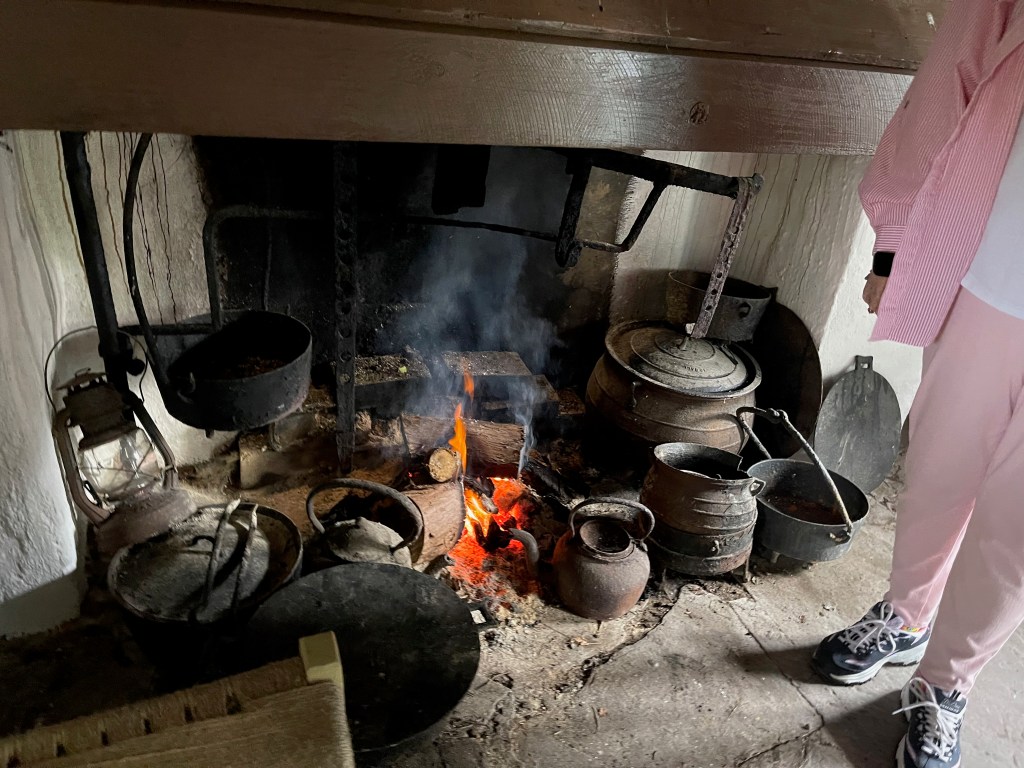
Earl’s Kitchen is where food was cooked for guests in the Great Hall. Large turtle shells were used as dishes and covers. The Kitchen even had its own garbage chute.
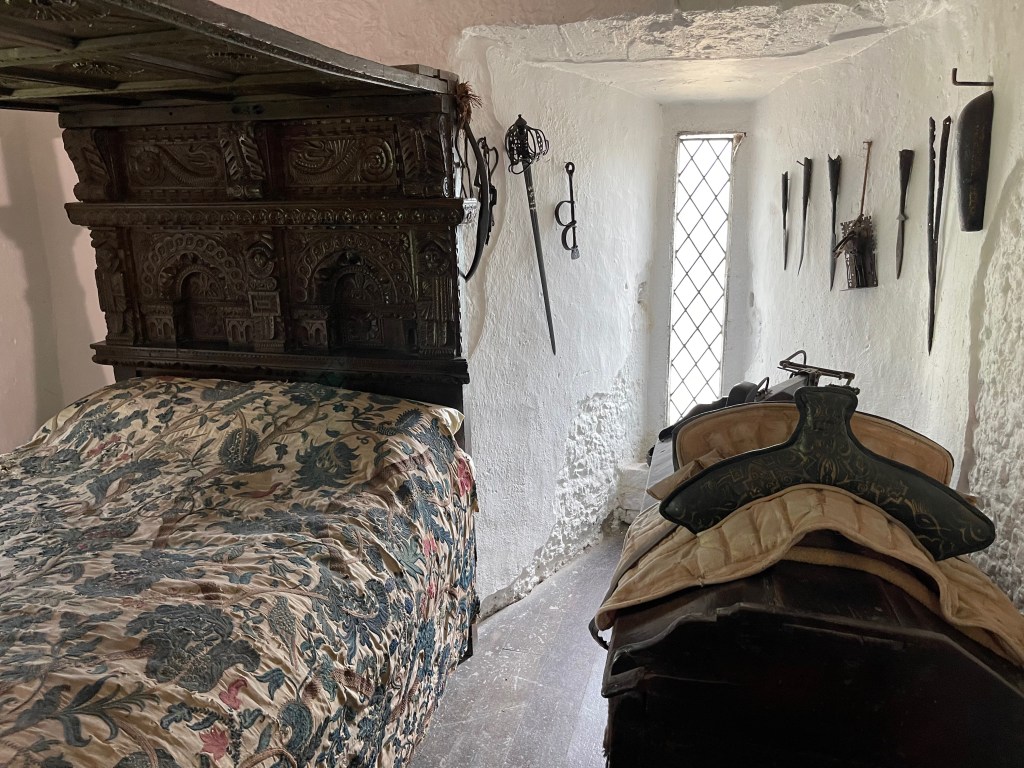
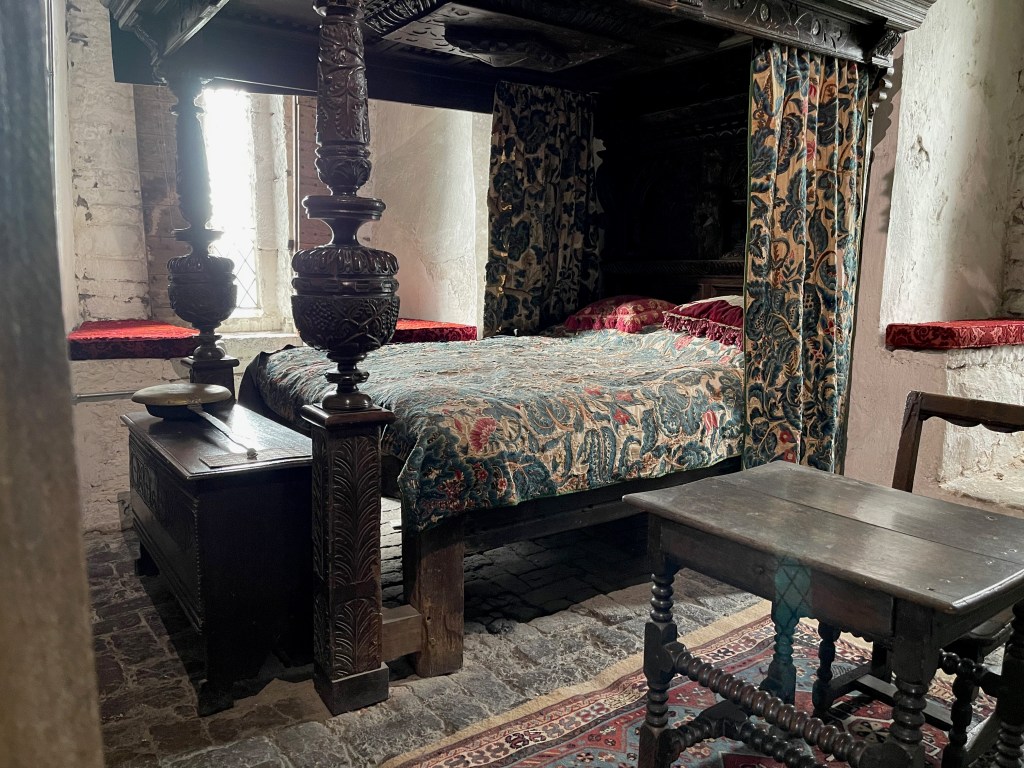
The Earl’s Bedroom is draped with damask and there is a magnificent carved bed. One of her ladyship’s dresses (on the bed) is elaborately beaded. Also pictured is an extremely rare example of a 15th century cupboard with writing flap.
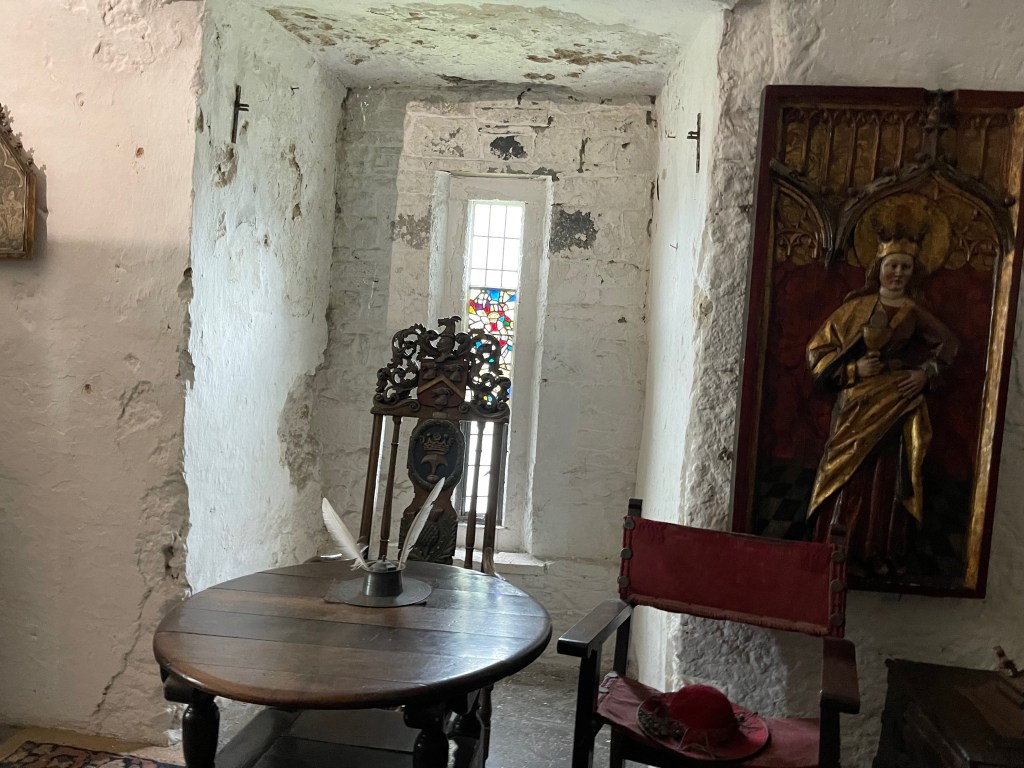
The North Solar was the private apartment of the Earl and his family. The oak paneling dates to c. 1500. The table is said to have been salvaged the wreck of a Spanish Armada ship. Attached is a private chapel containing several valuable and beautiful items.
Next was the Earl’s Pantry which may have been used as a kitchen or Servant’s Quarters.
The Public Chapel has a finely decorated 16th century stucco ceiling and several precious artifacts including a 15th century Swabian alter piece. The chaplain’s bedchamber is immediately overhead and his robing room directly across the hall.
The last room is the South Solar comprising the guest’s apartments. The ceiling is partially a replica, in Tudor style. Furnishings include a rare virginal dated 1661 and signed “Jacob’s white, Londoni”.
After touring the castle we ventured to the Park. The Park reminded us of Silver Dollar City and Mountain Home Folk Center, of course without rides.
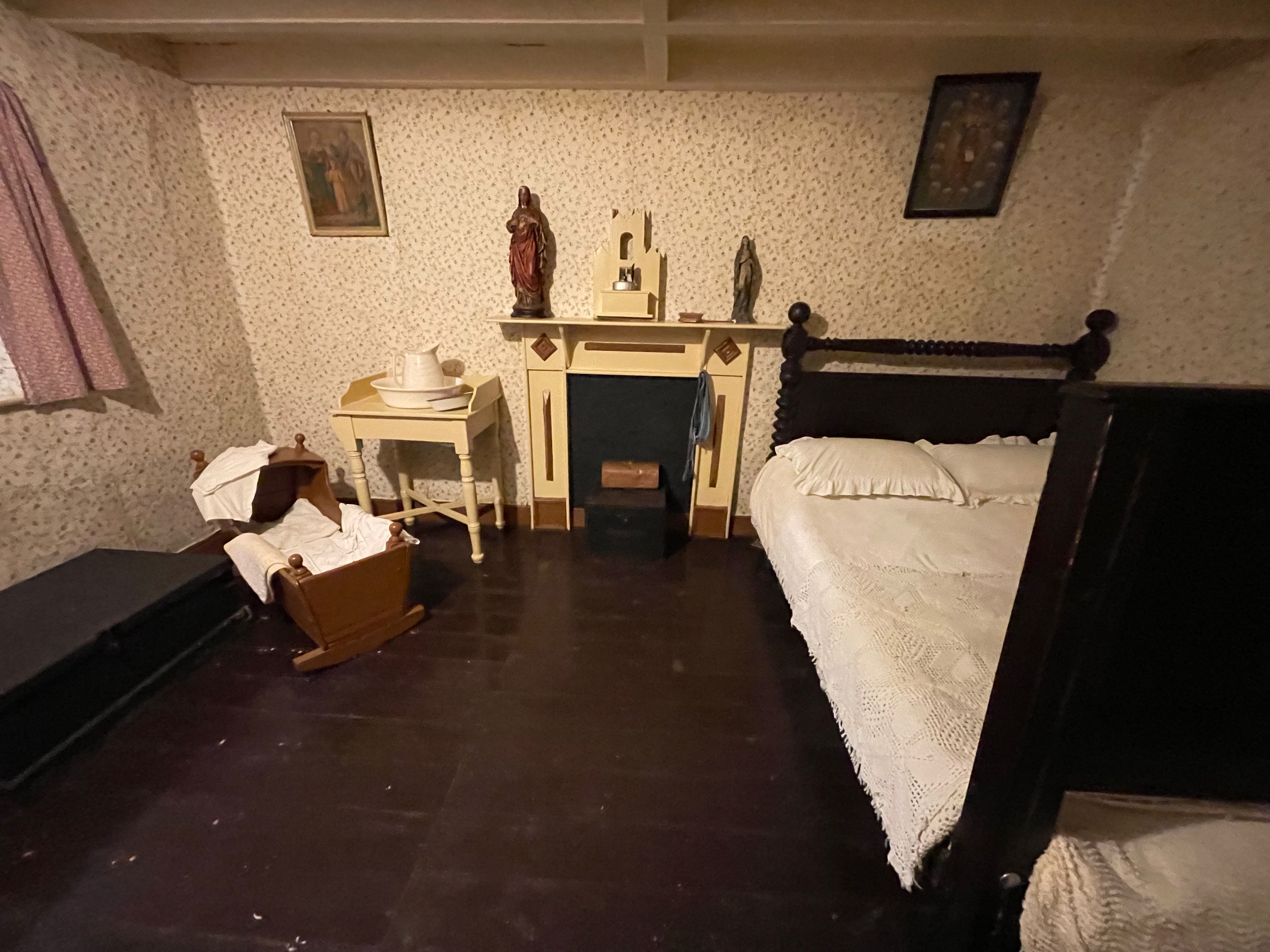
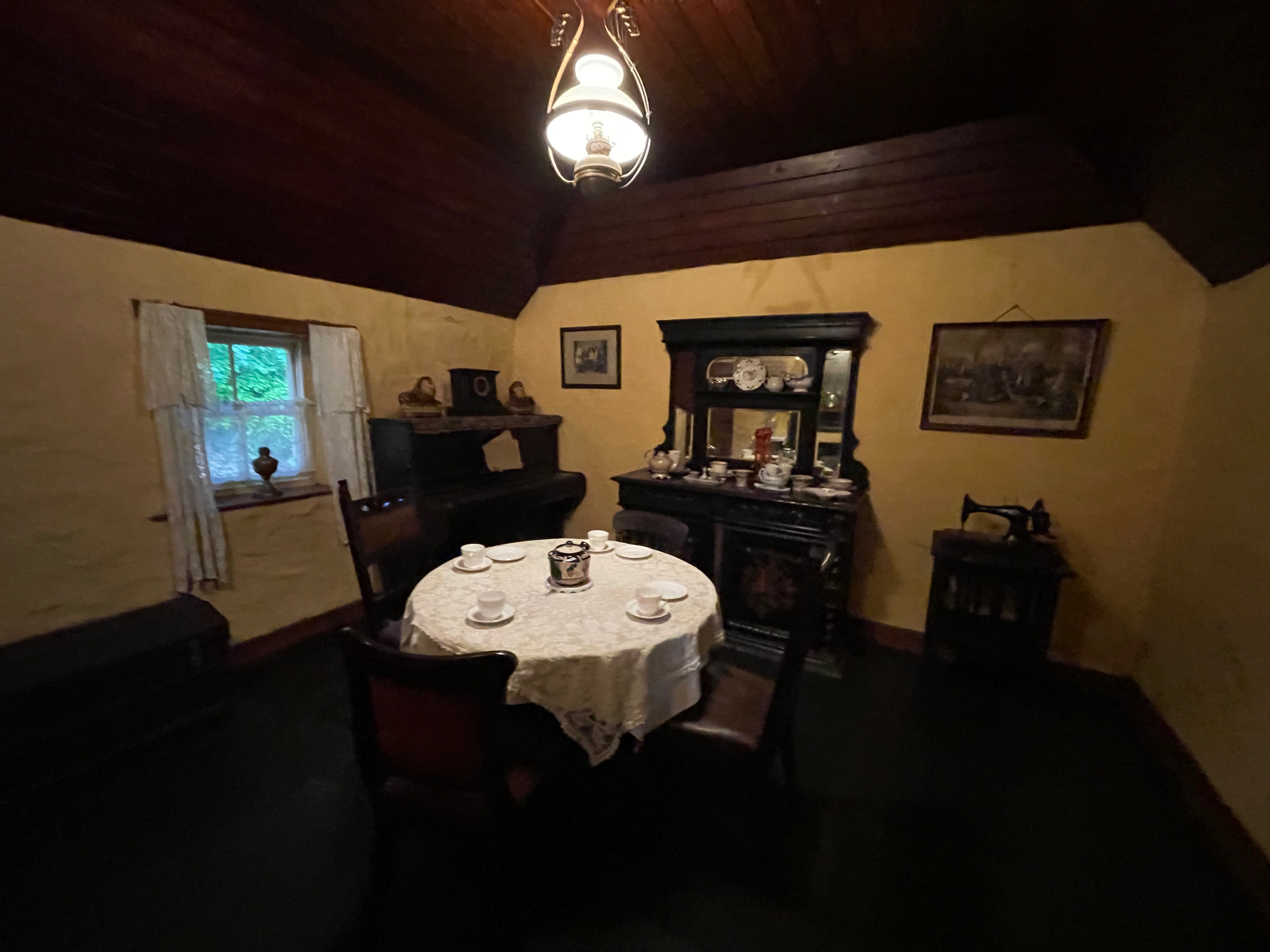
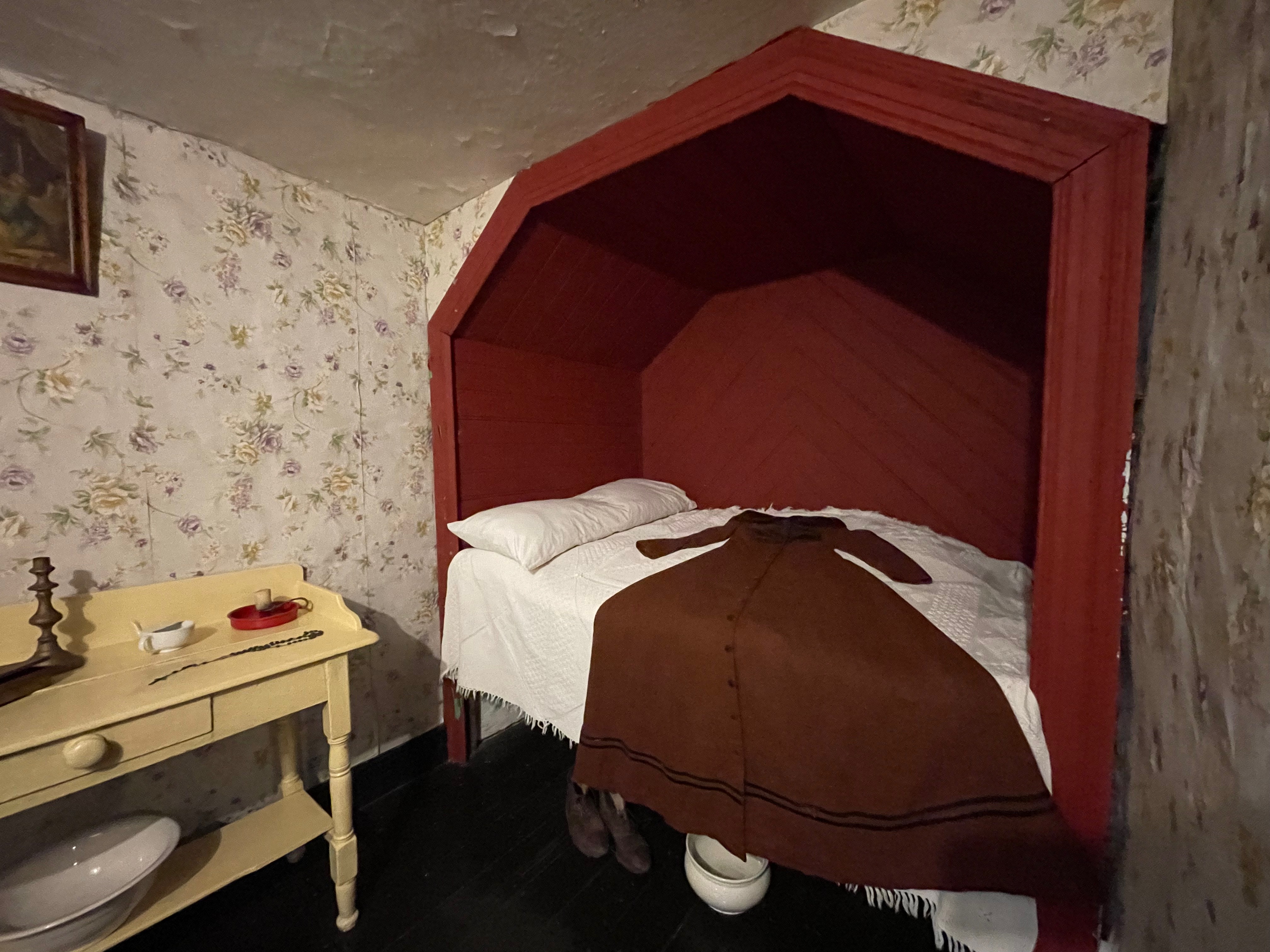
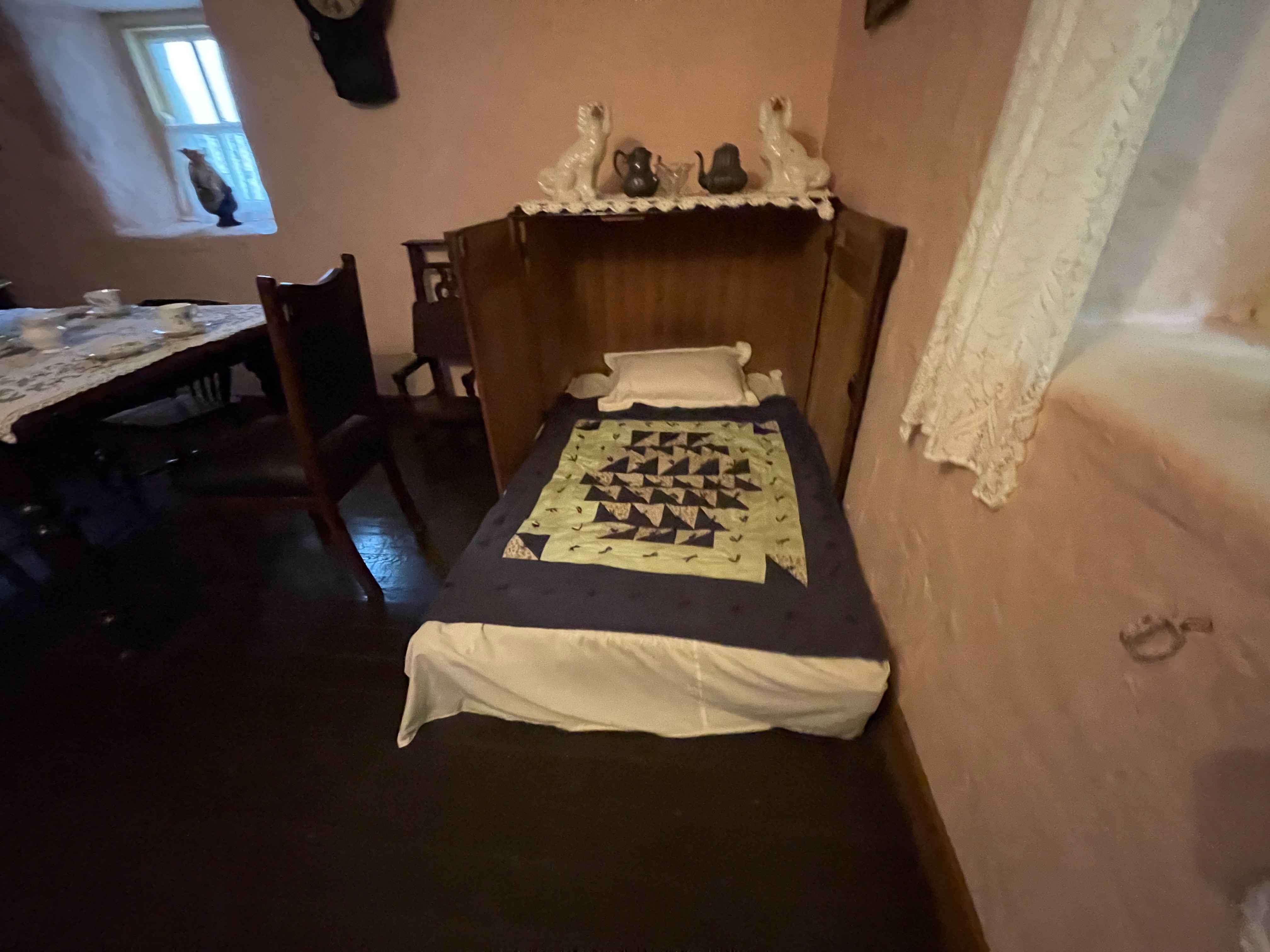
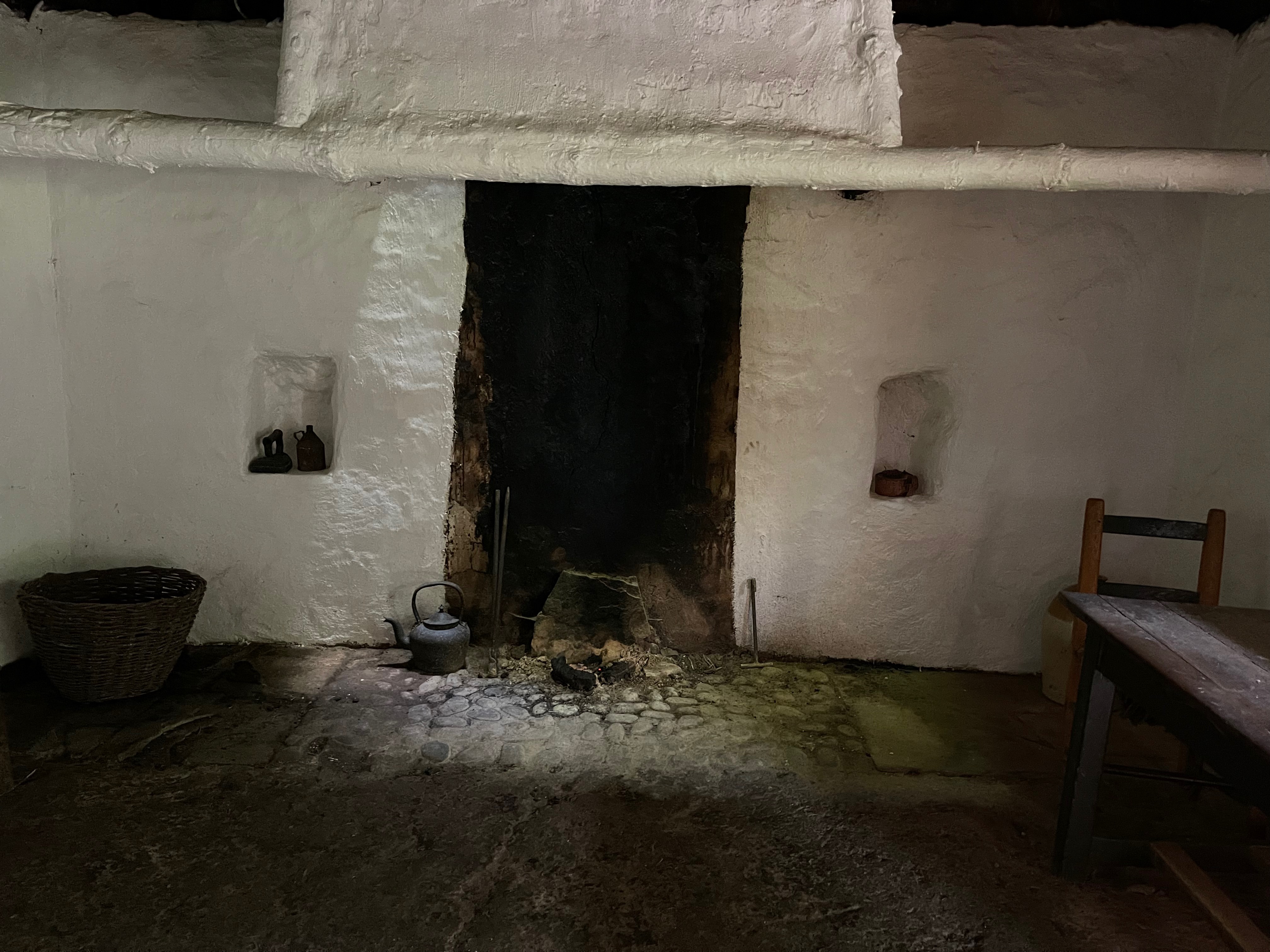
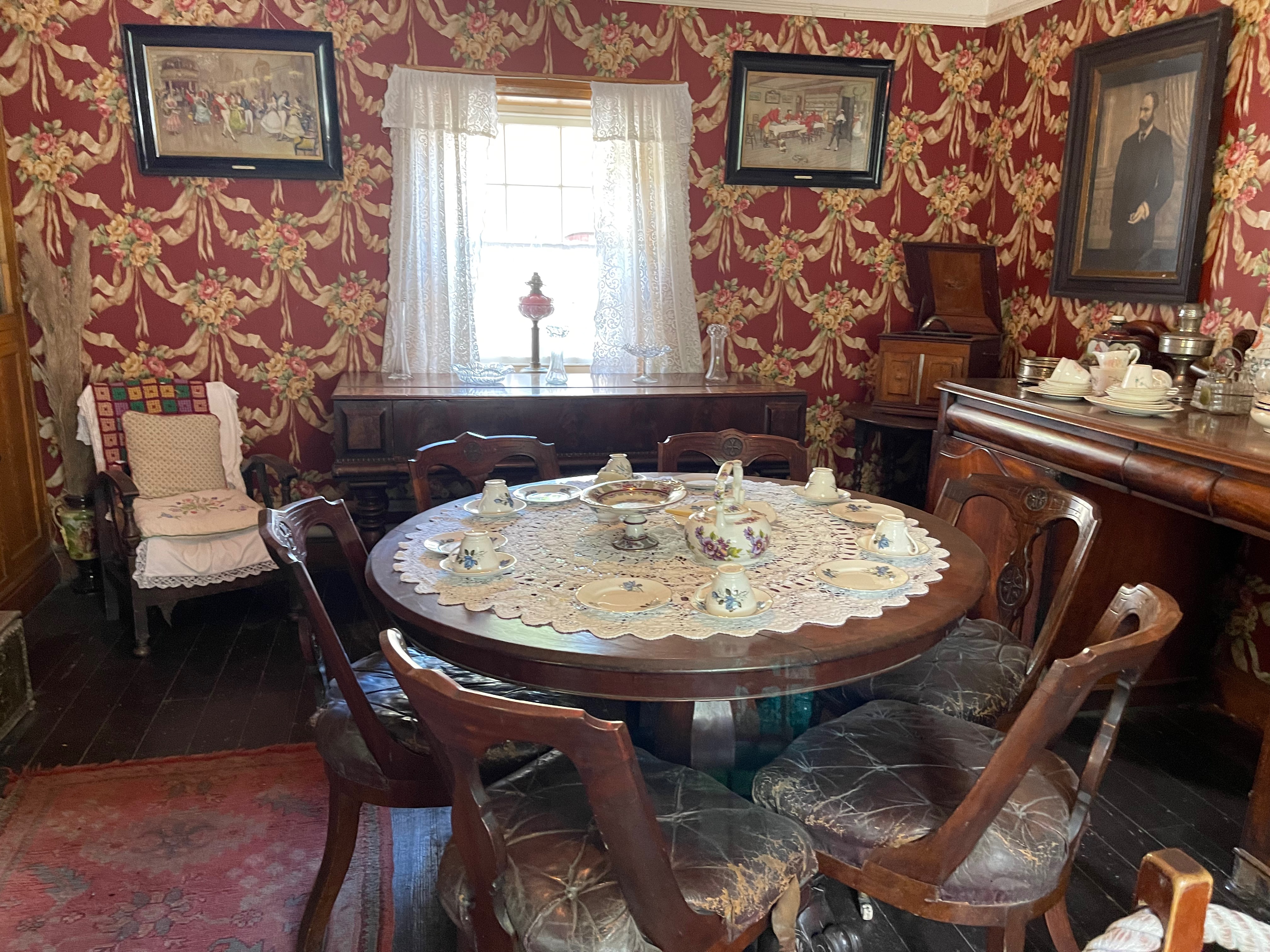
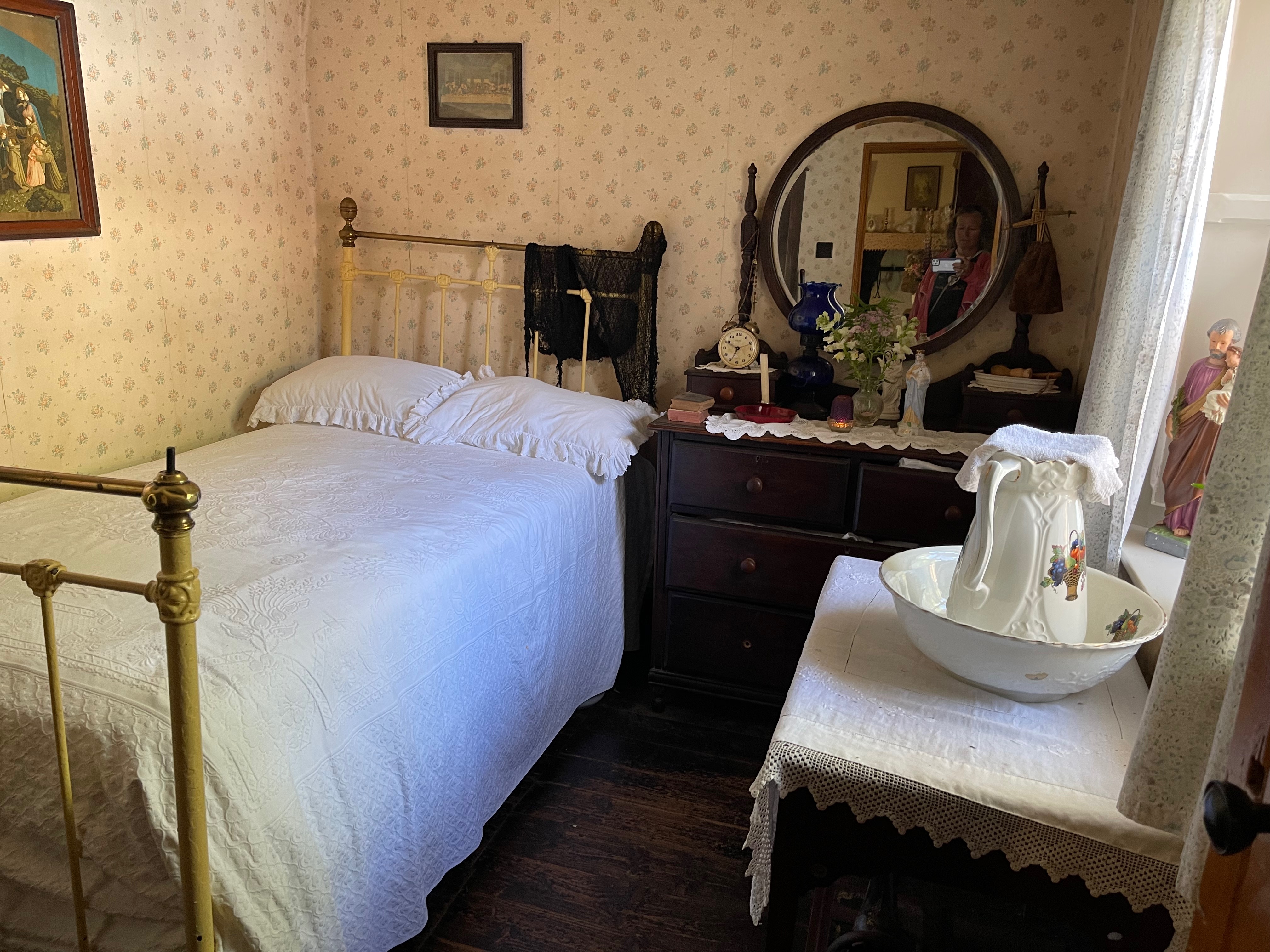
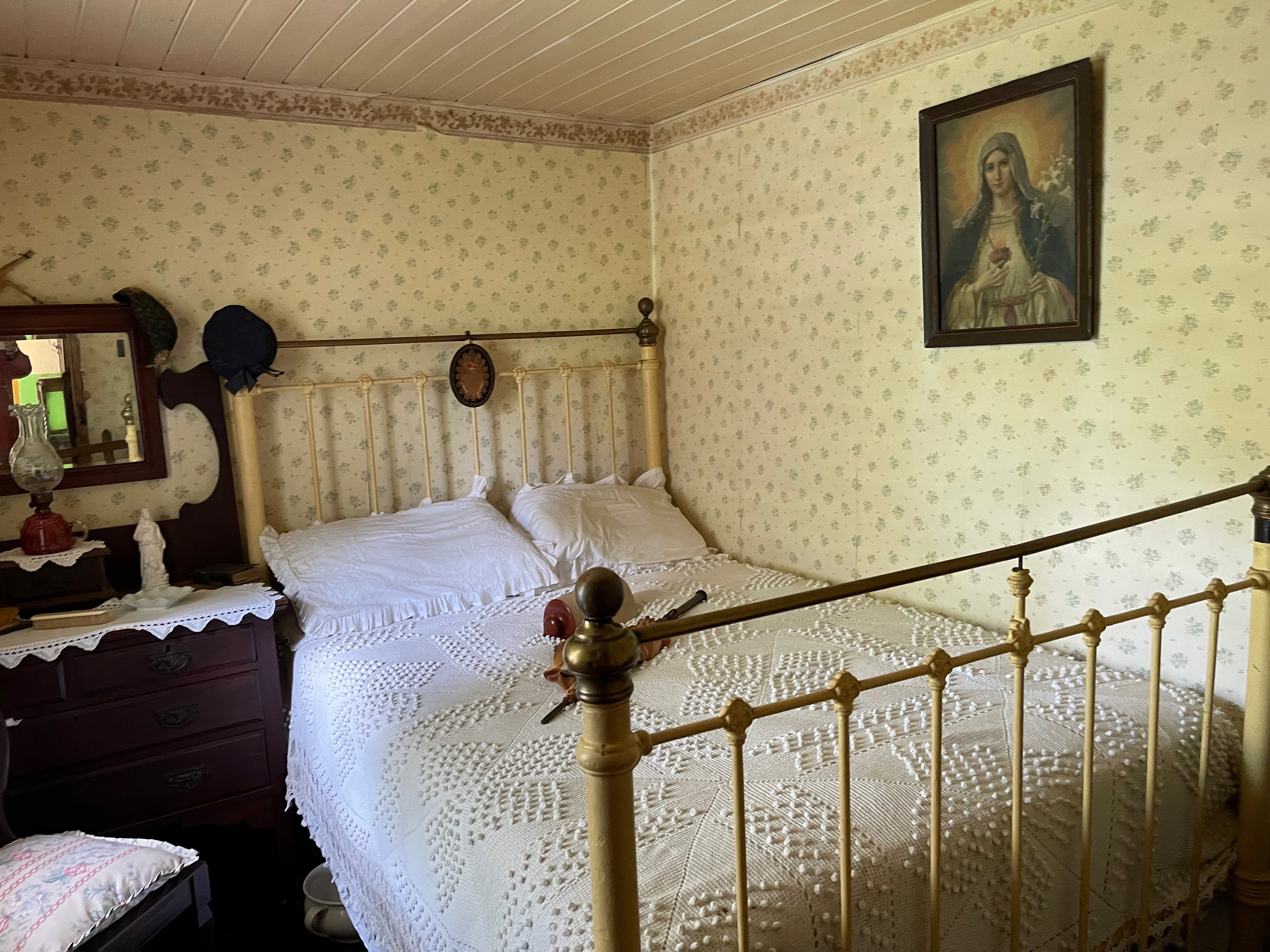
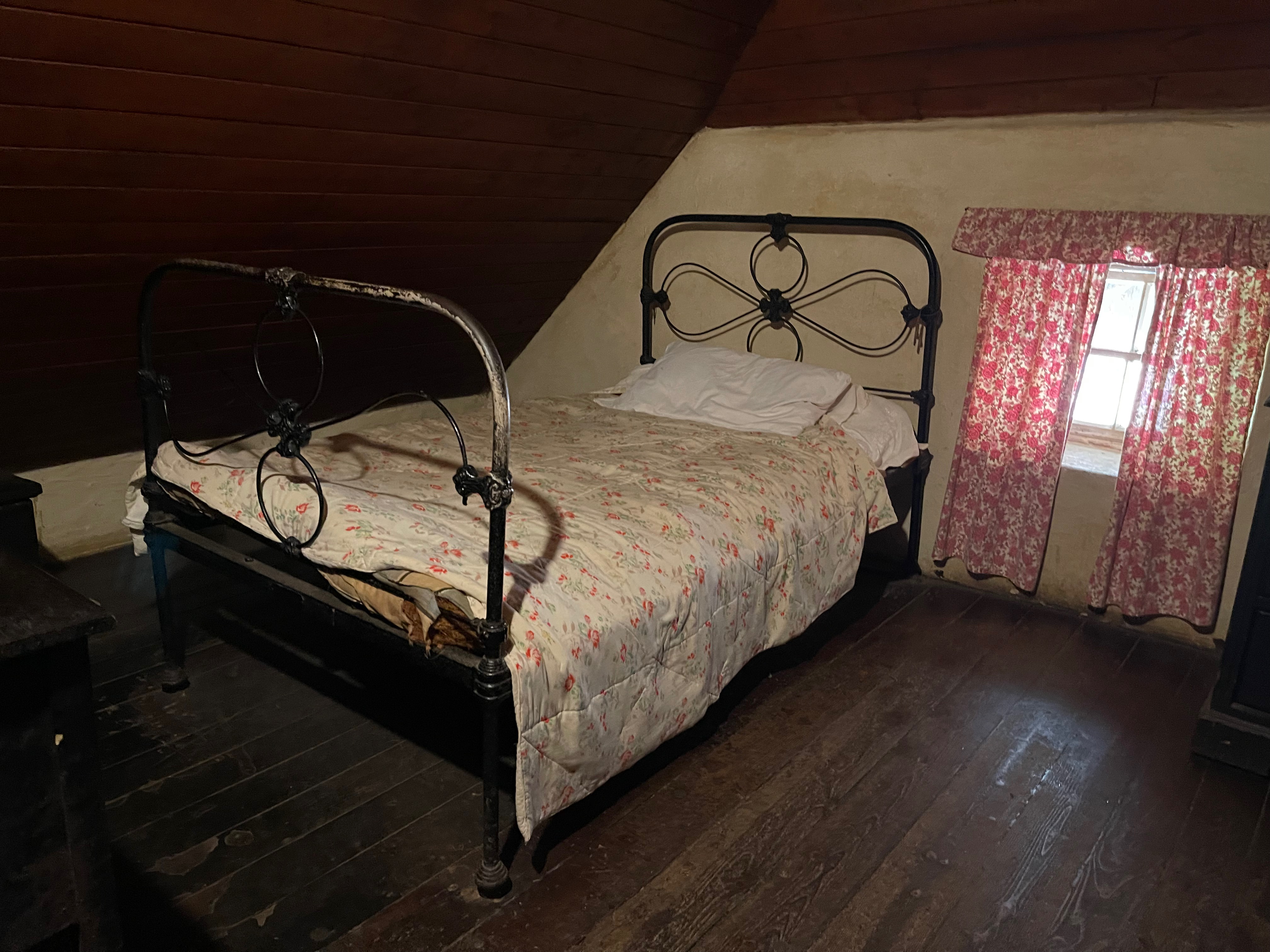
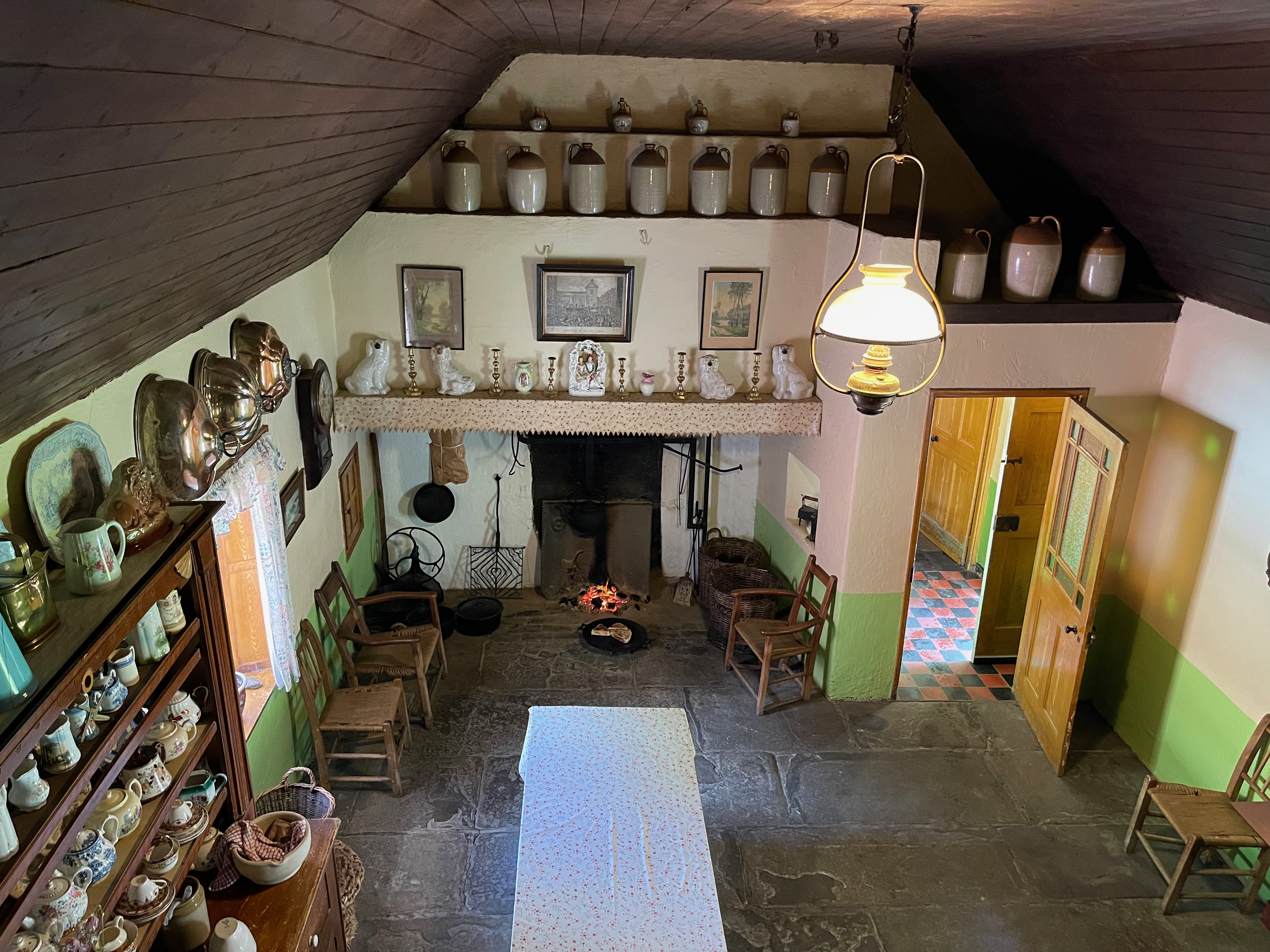
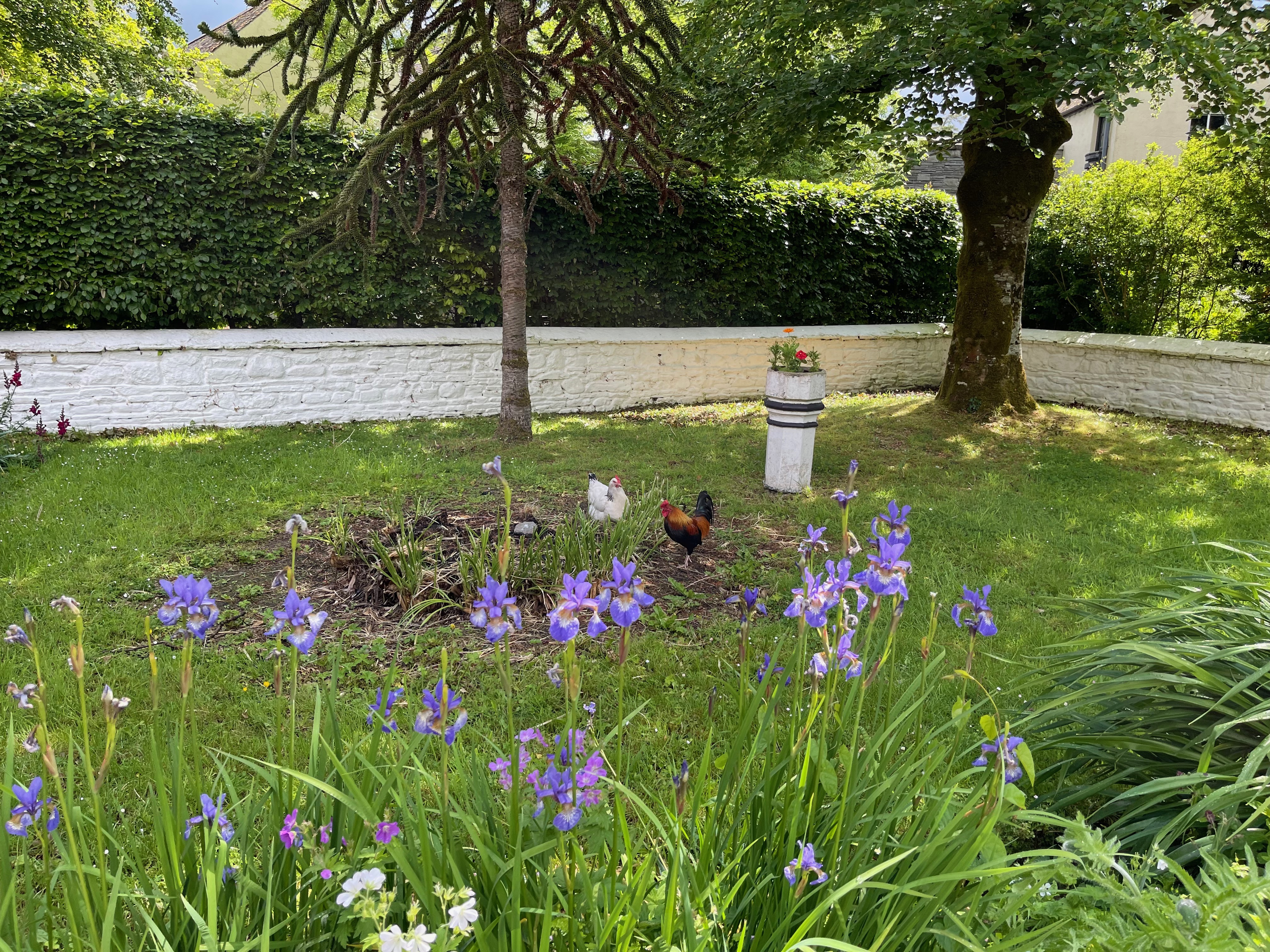
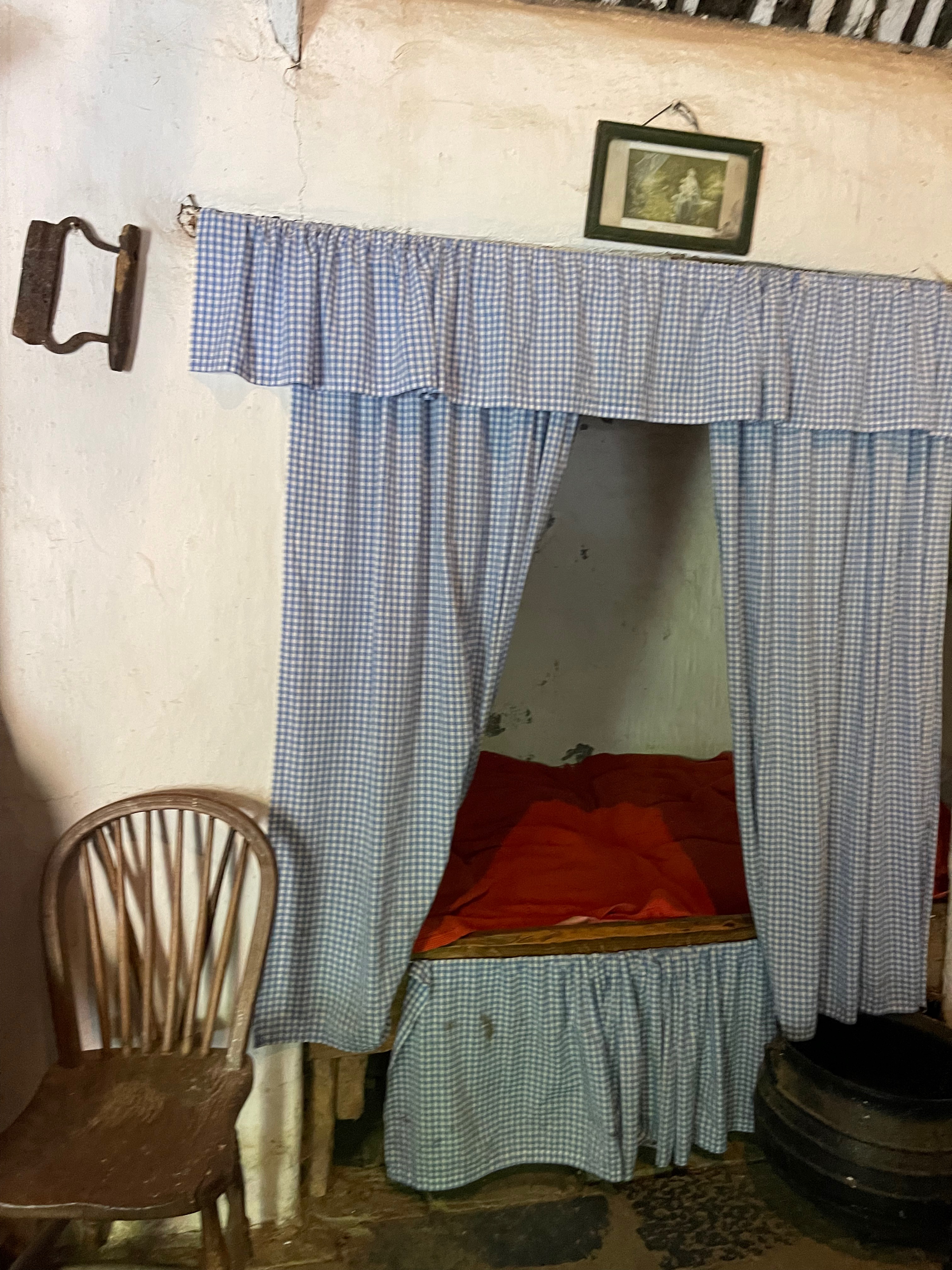
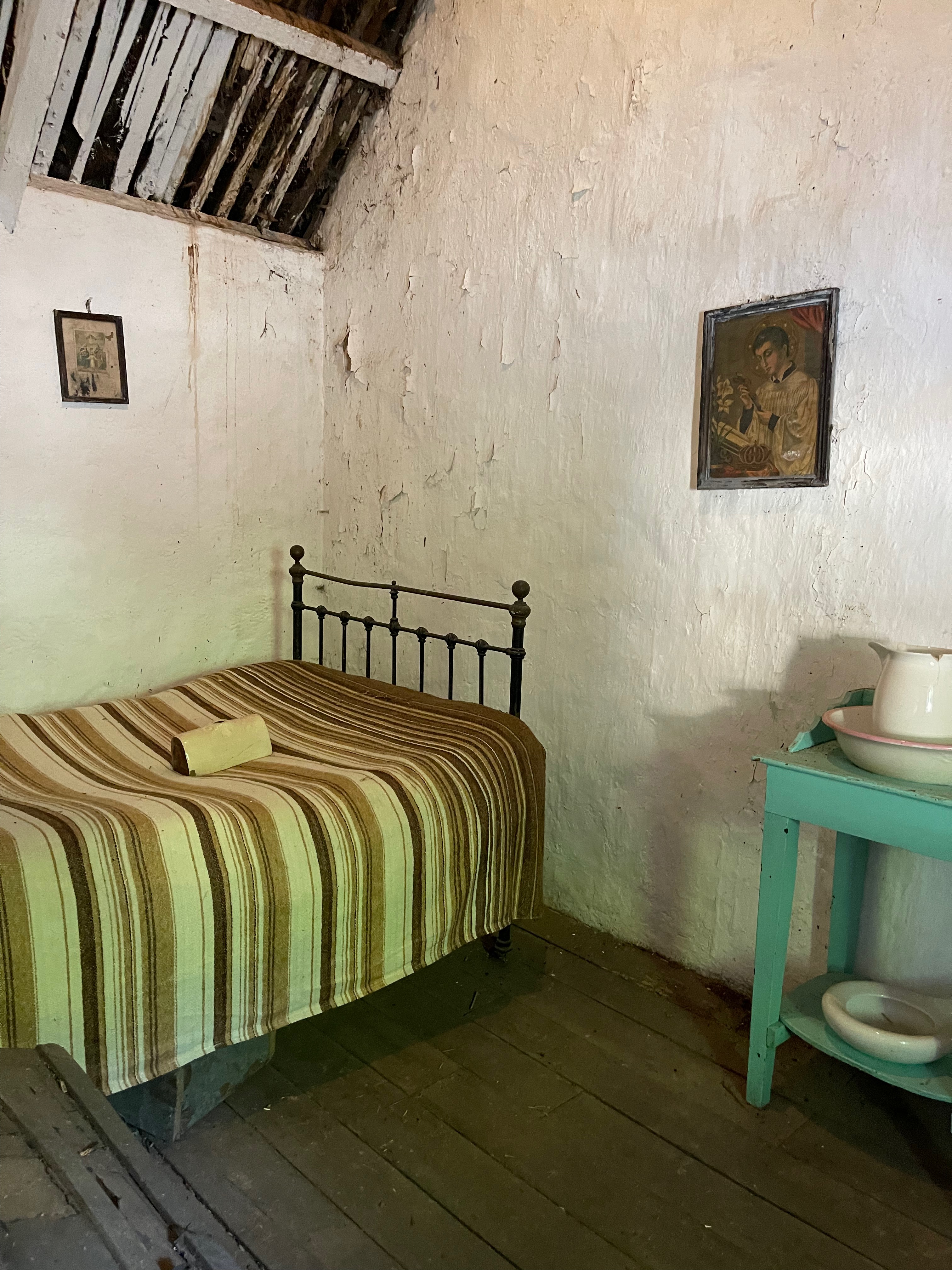
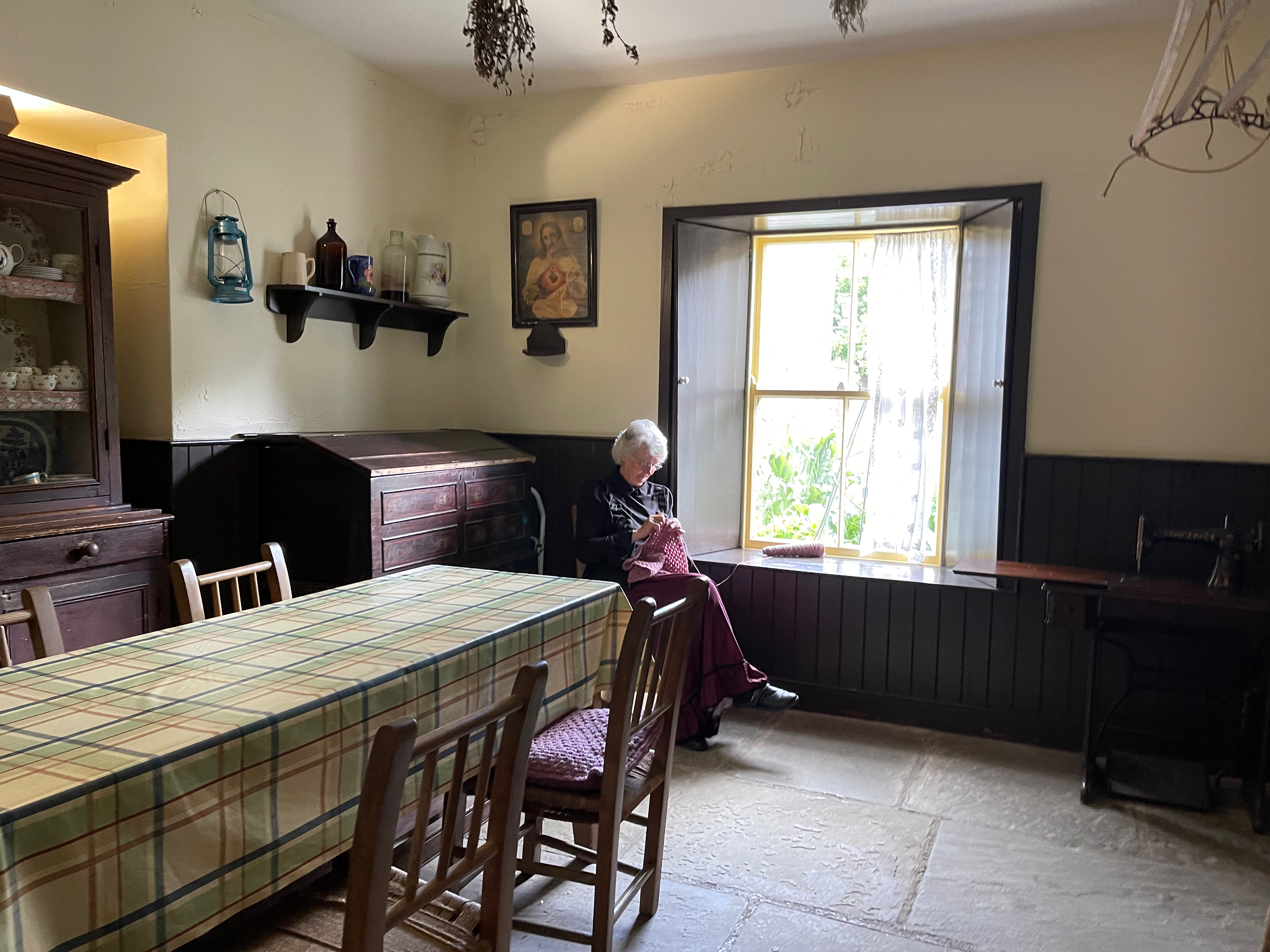
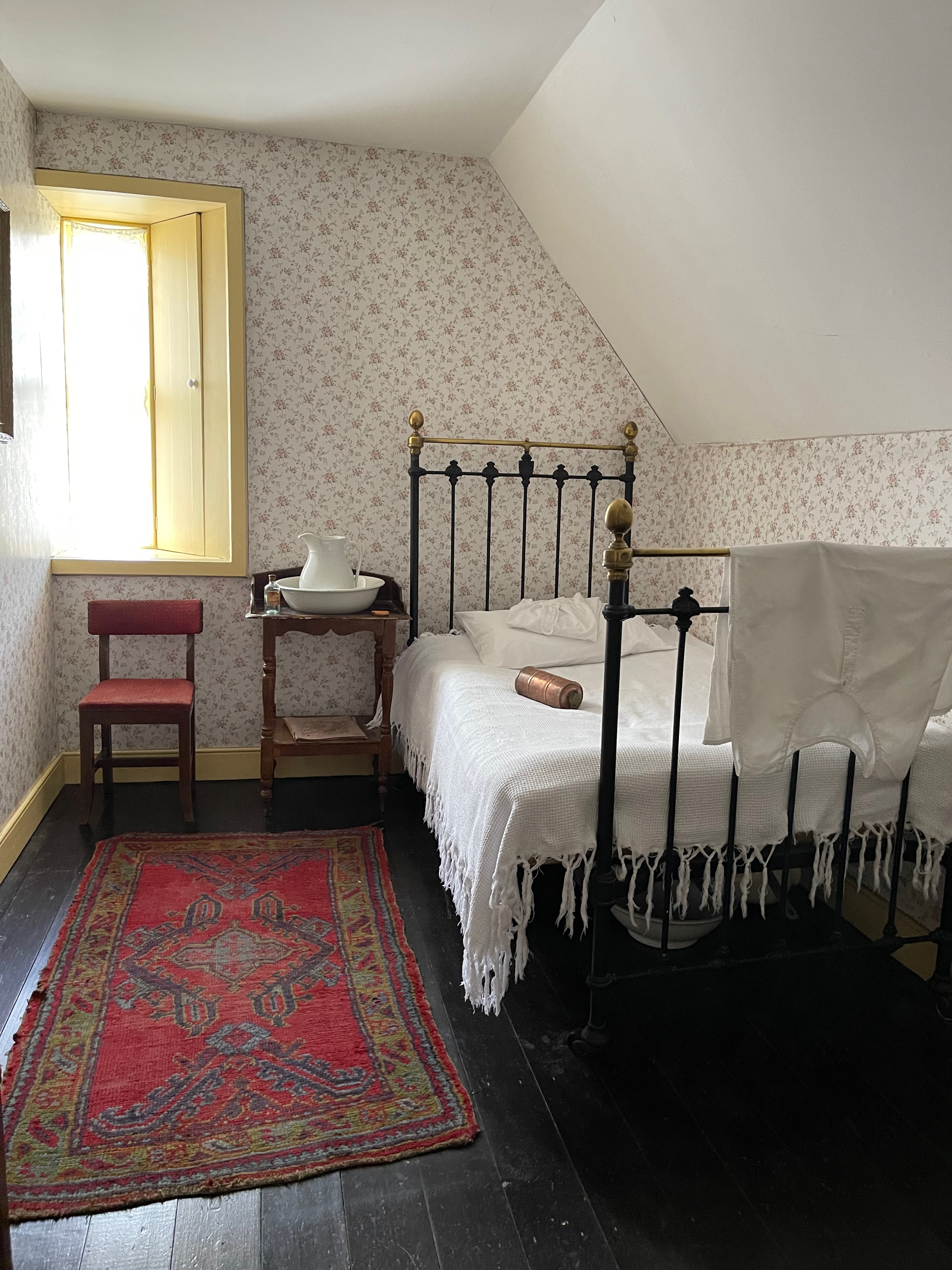
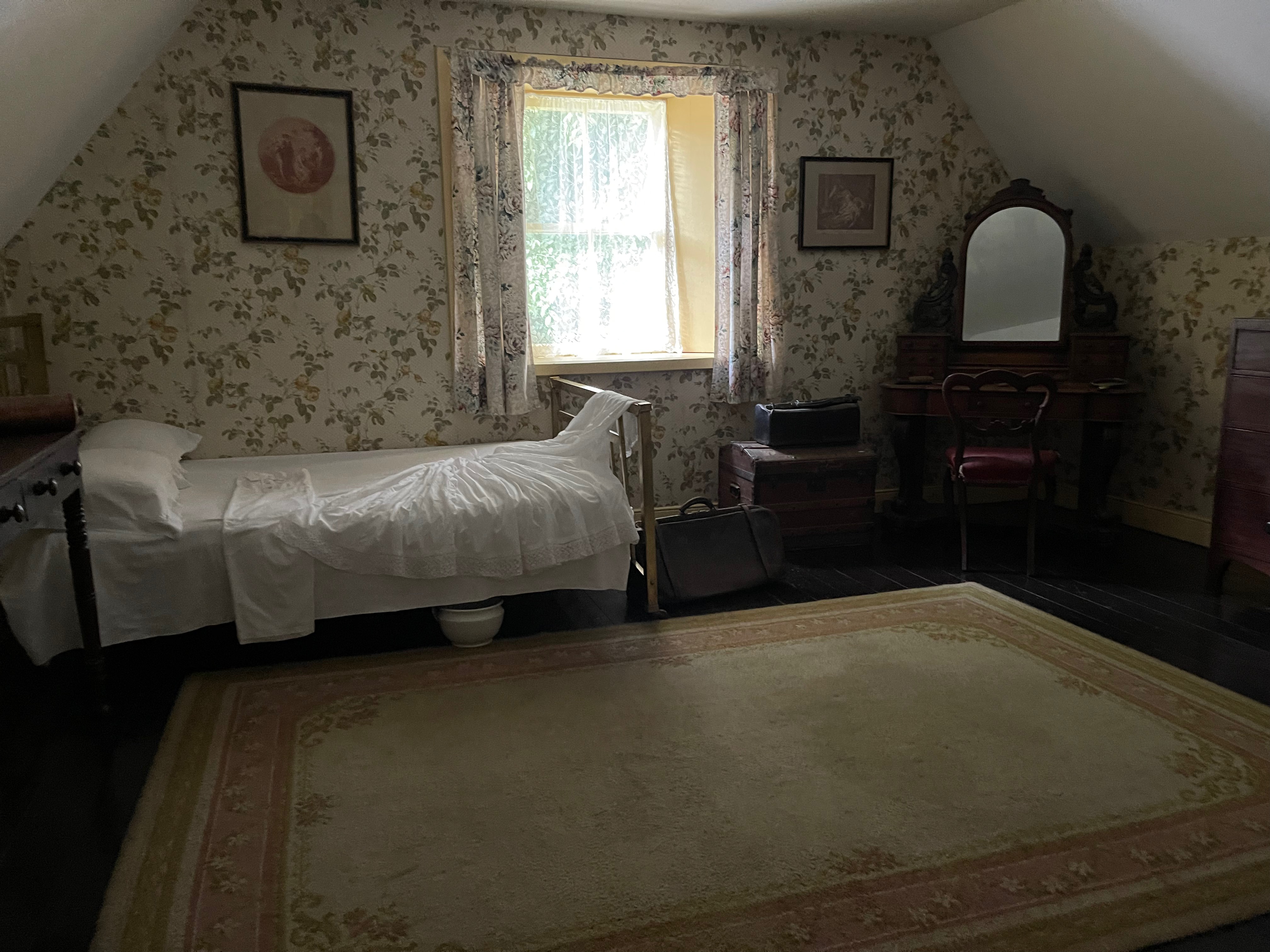
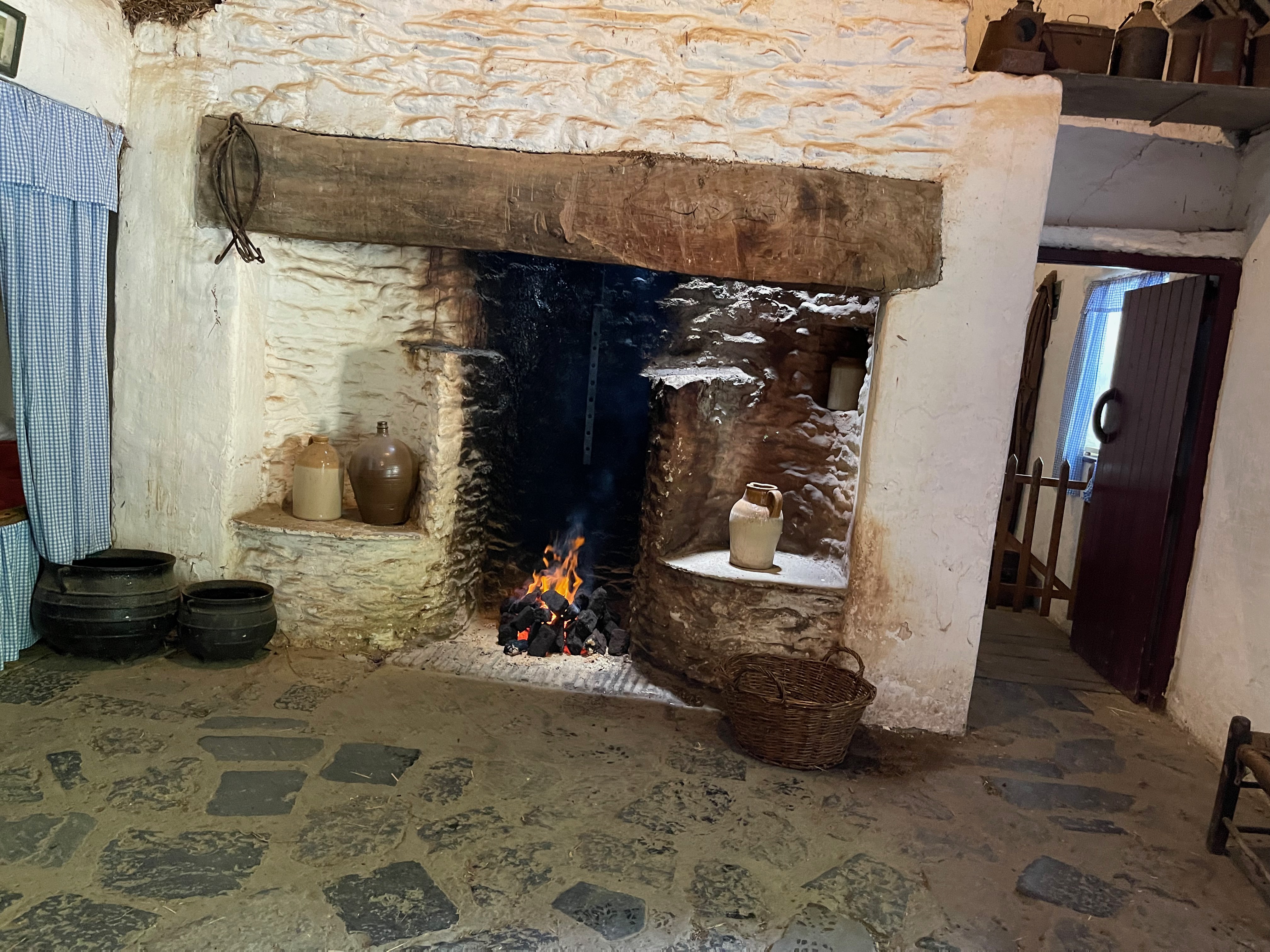
Bunratty Folk Park is a living reconstruction of the homes and environment of Ireland over a century ago. Rural farmhouses, a village street complete with shops and Bunratty House with its formal regency gardens are recreated and furnished as they would have appeared at the time.
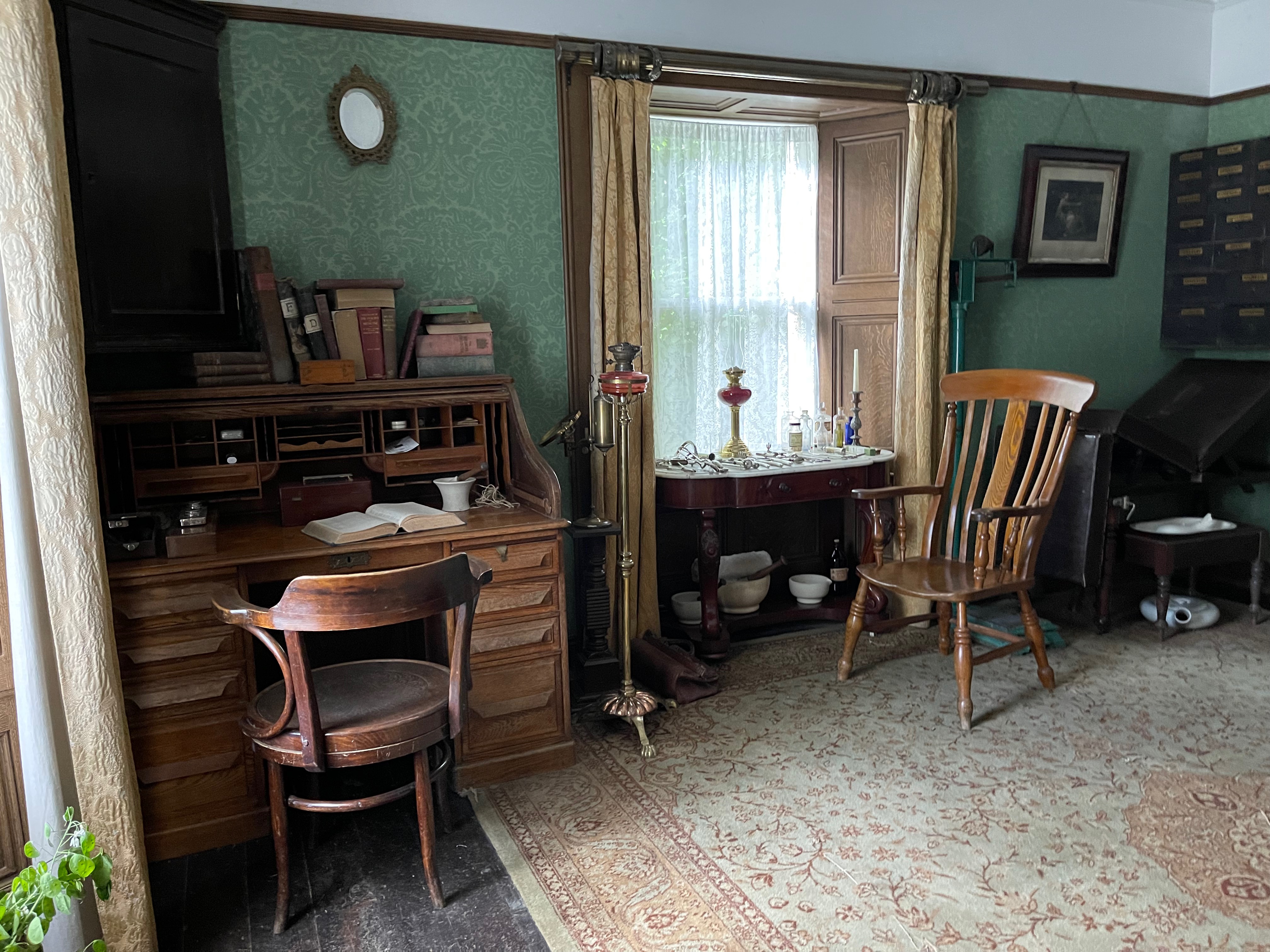
The Doctor’s house where the parlor was used as both dispensary and surgery was first on the “Village Street”. Next was an Artisan House, a small thatched dwelling which has been adapted as a potter’s workshop. Then Brown’s Pawnbroker, these ships were often an important part of the local economy. And of course there was JJ Cory’s Pub, a typical village pub. Each store front was also a home and many times the families kitchen would be used by well known customers. At Sean O’Farrell’s Drapery store you could find Irish linen, poplin and woolens. The family lived upstairs. Foster’s Printworks was typical of a small town printer which produced pamphlets, handbills, notices and newspapers, setting all they type by hand. So many shops/houses were to be seen. Everything from the Post Office to Grocery and Hardware stores.































































 Adventures with Cindy