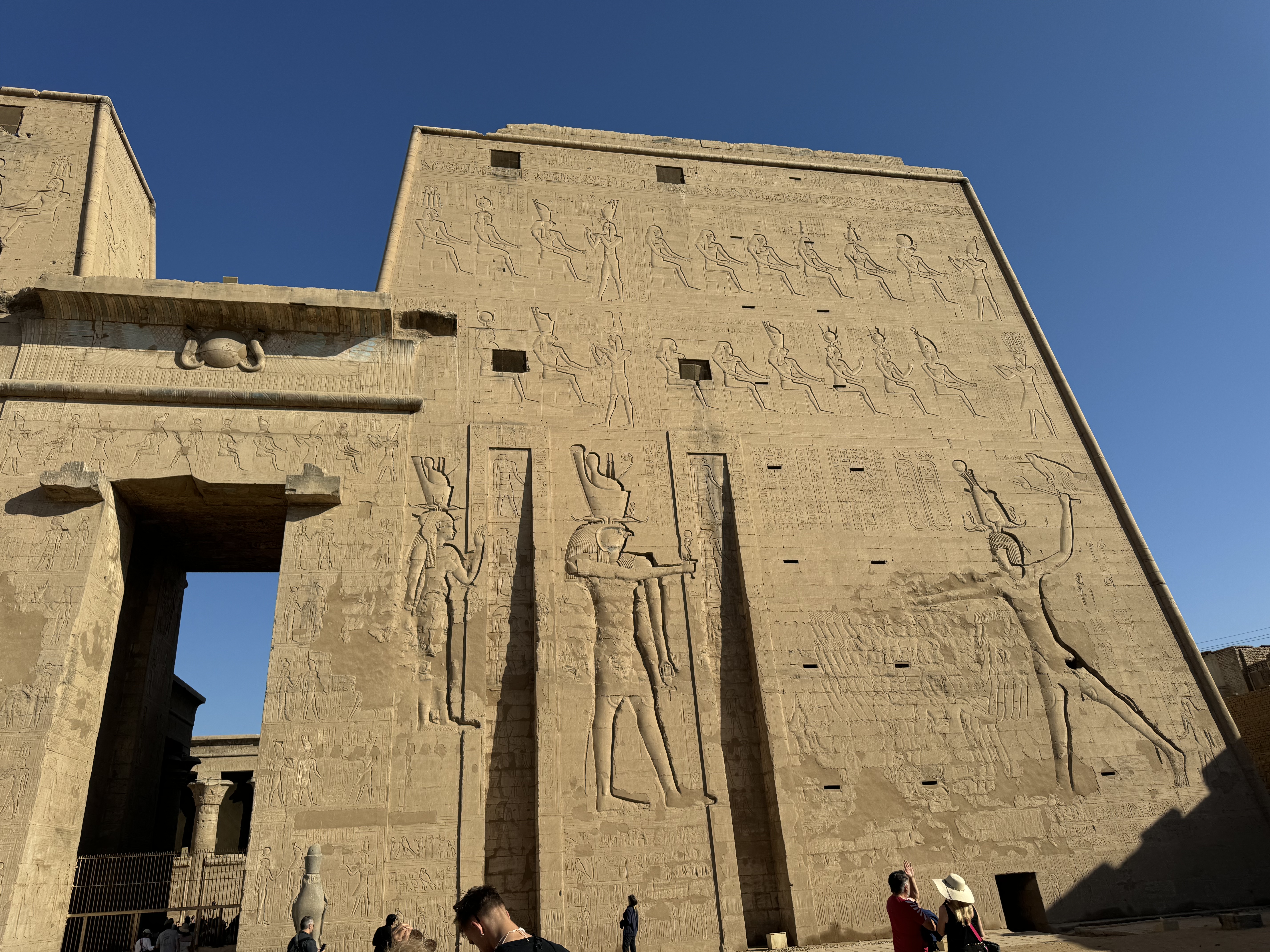
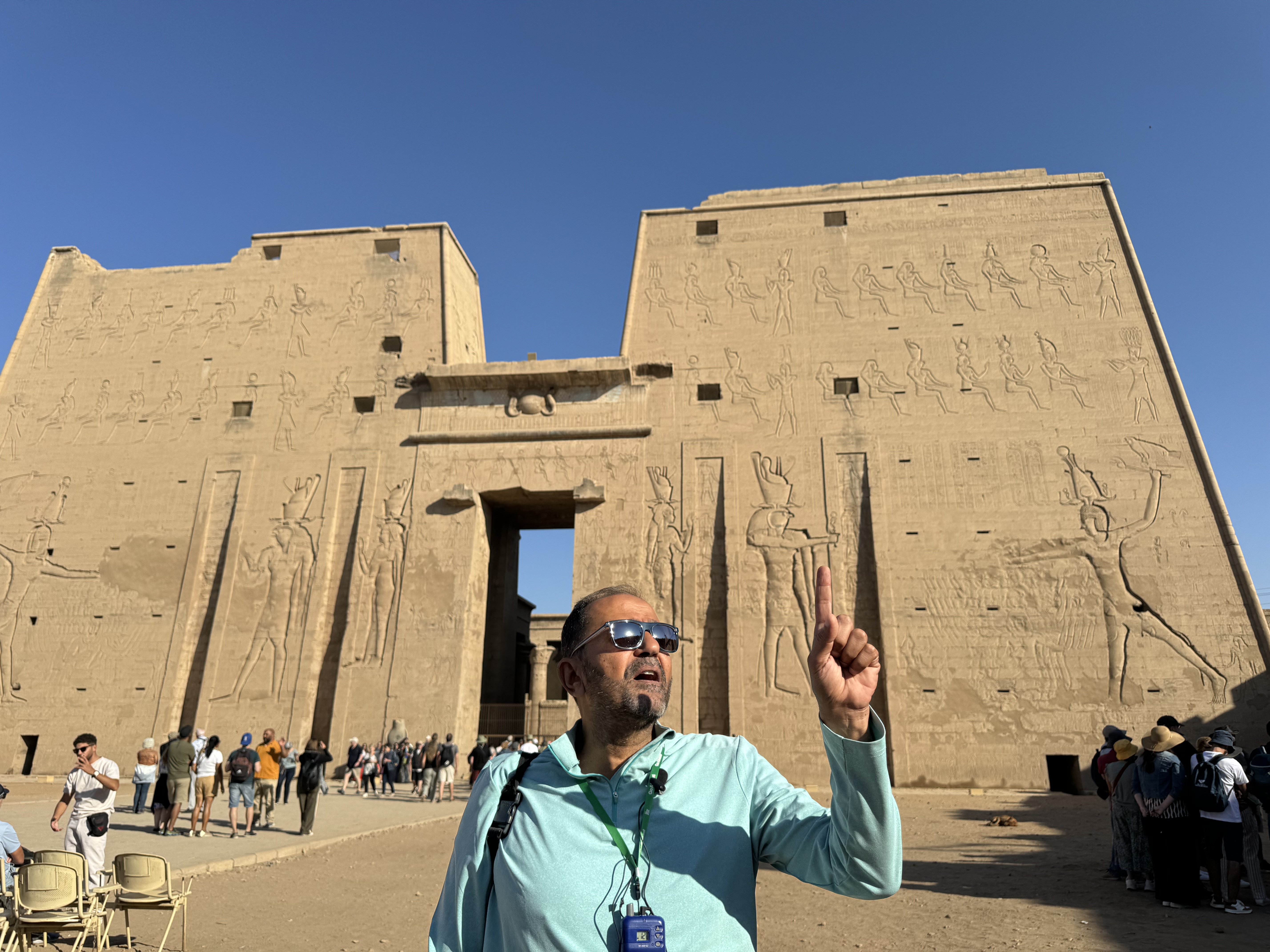
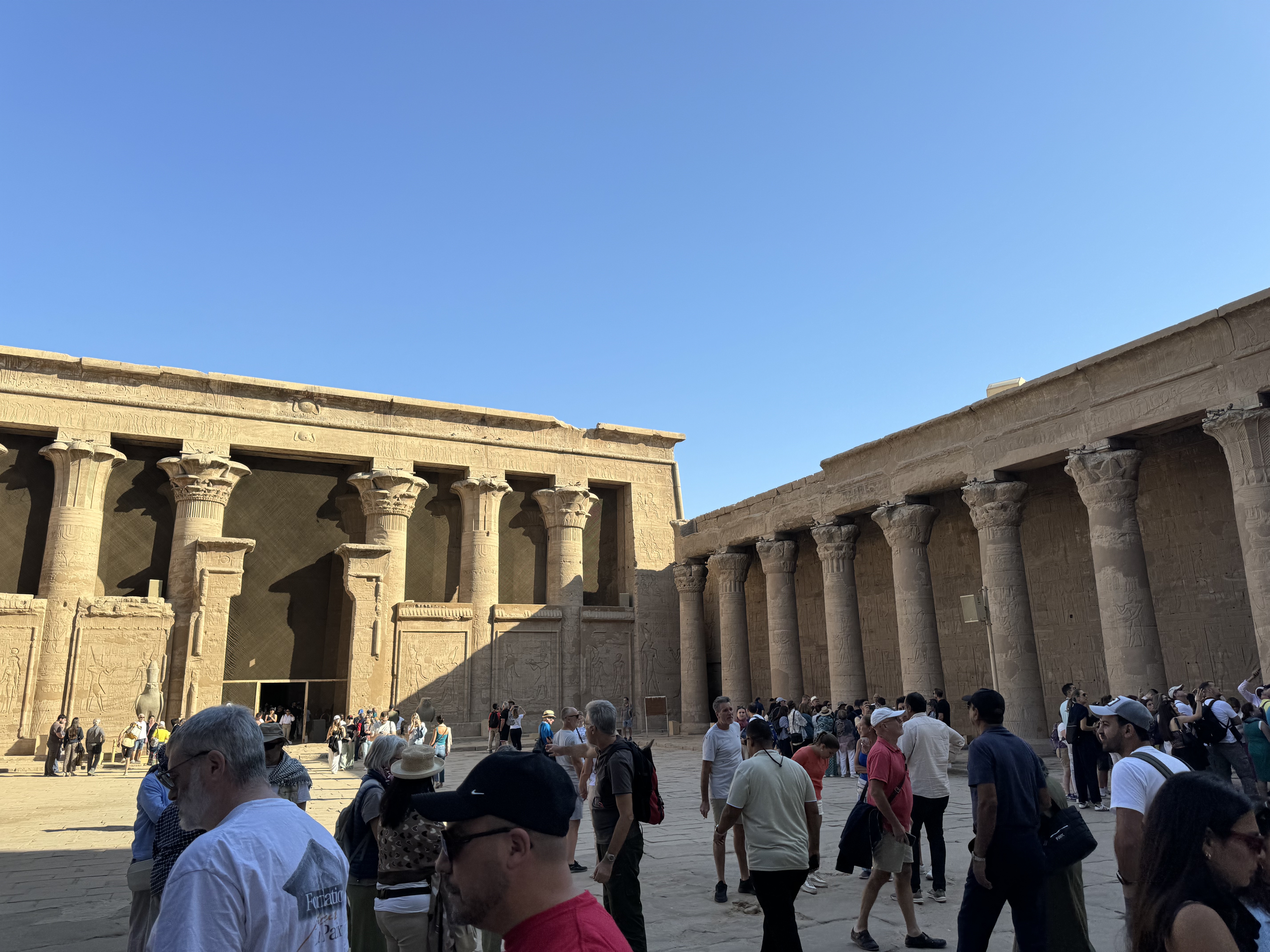
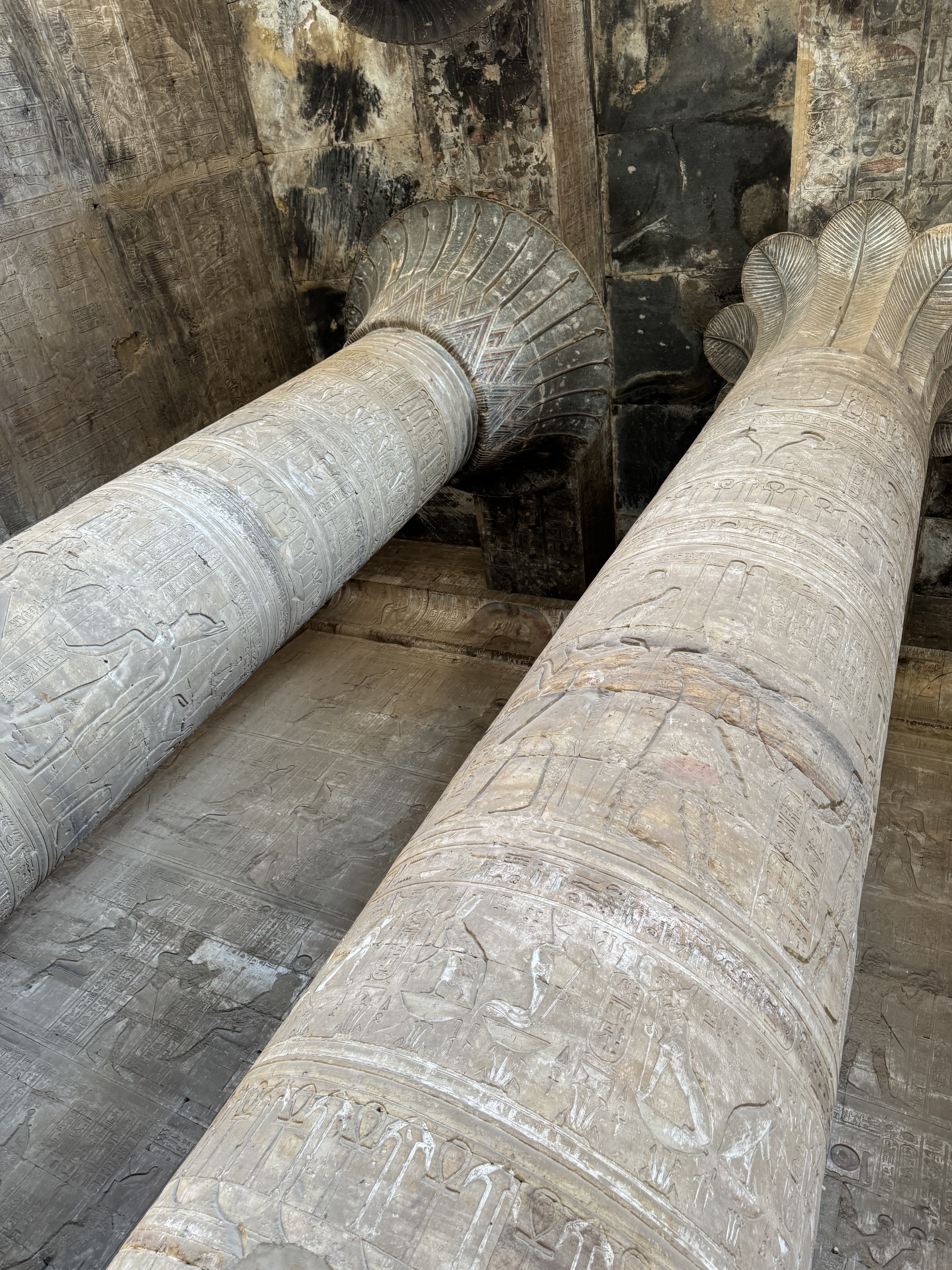
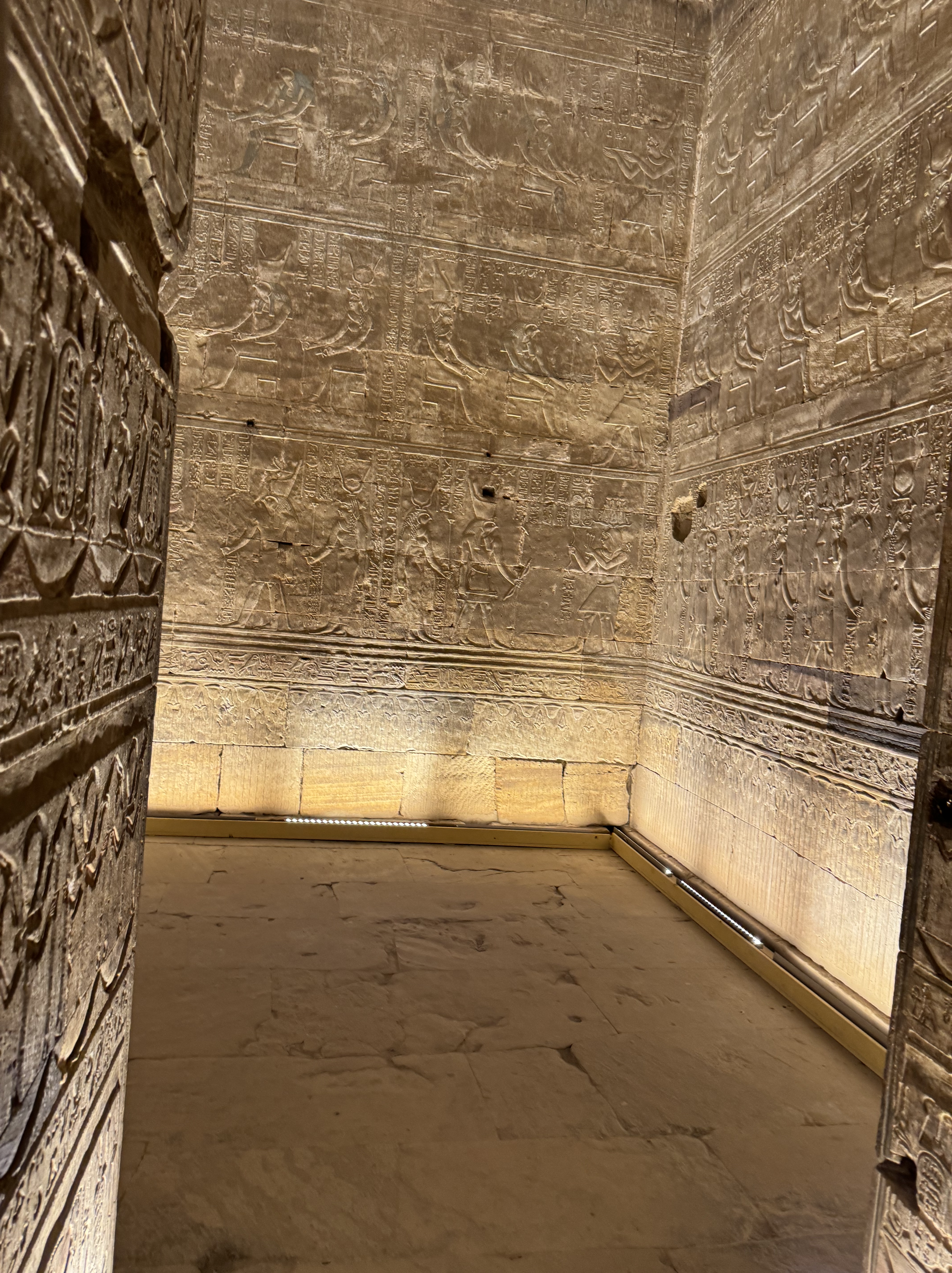
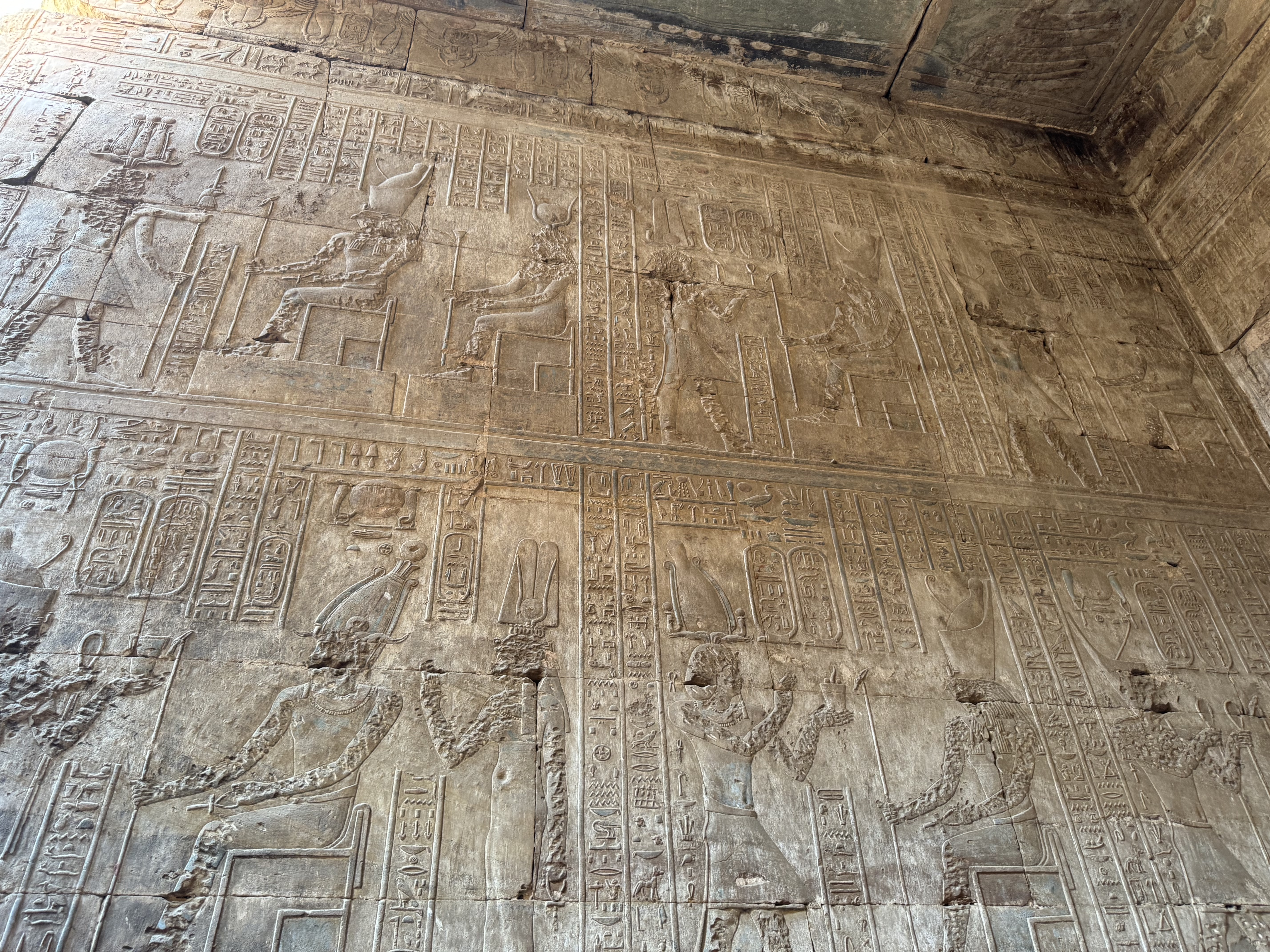
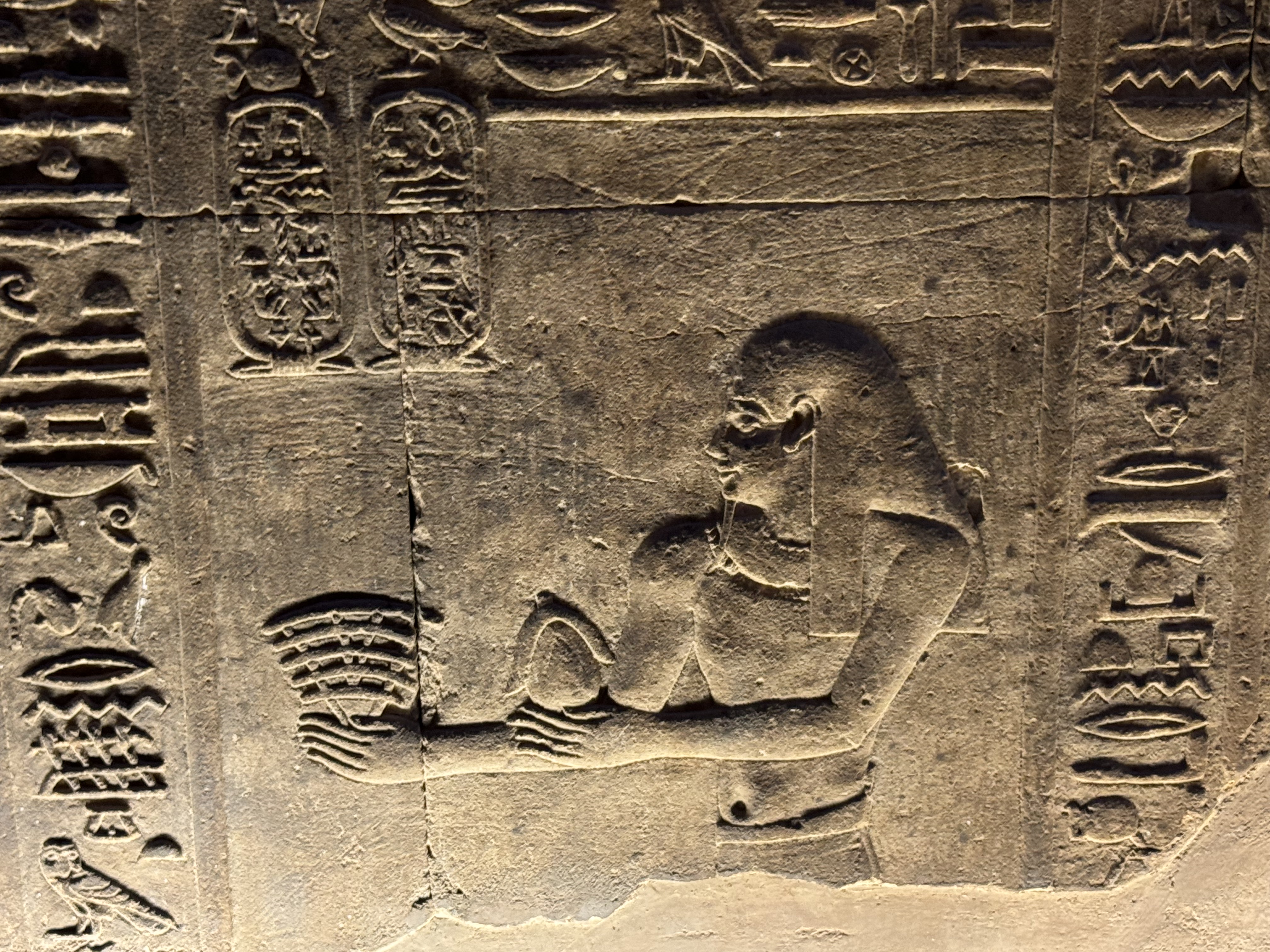
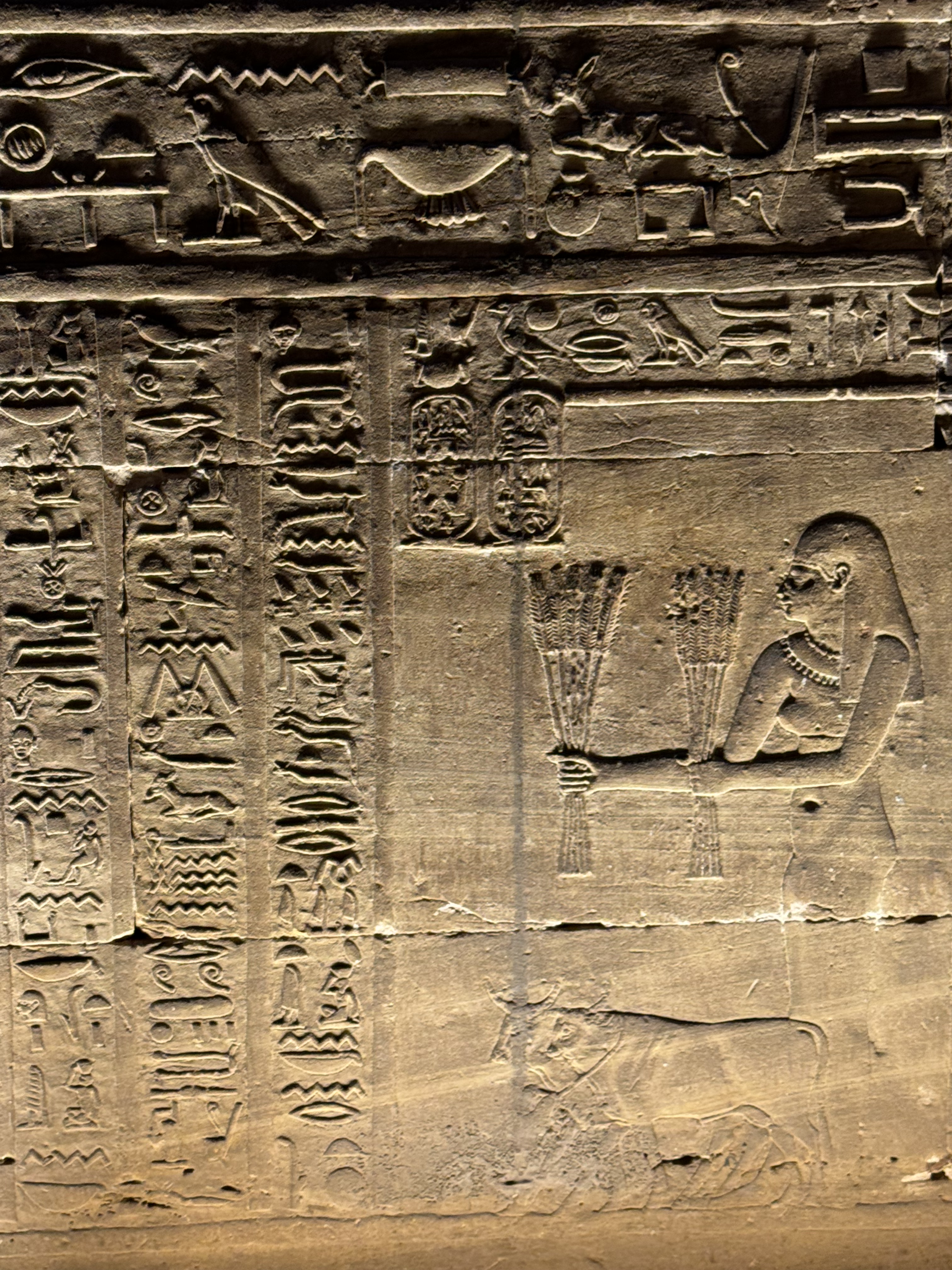
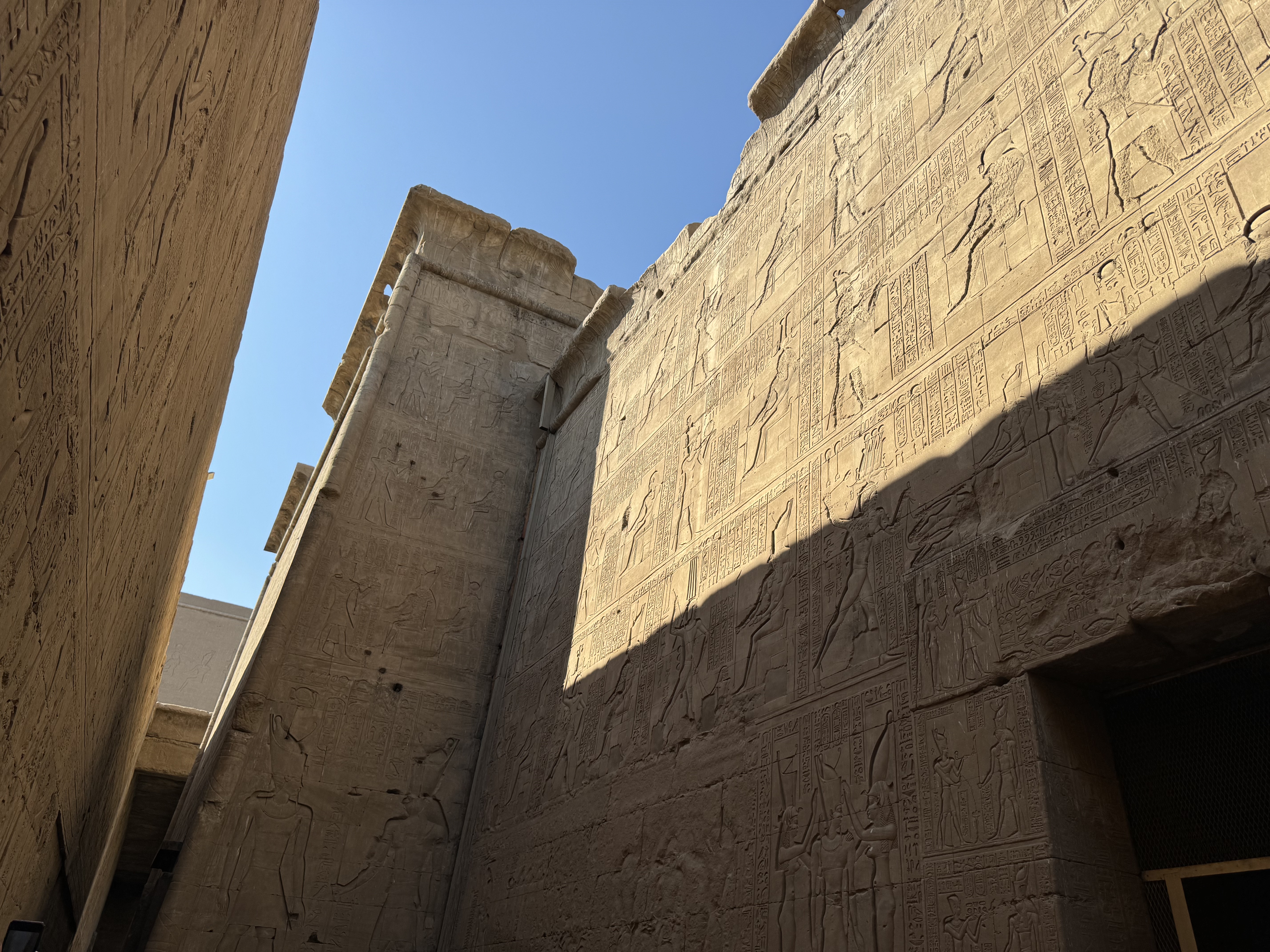
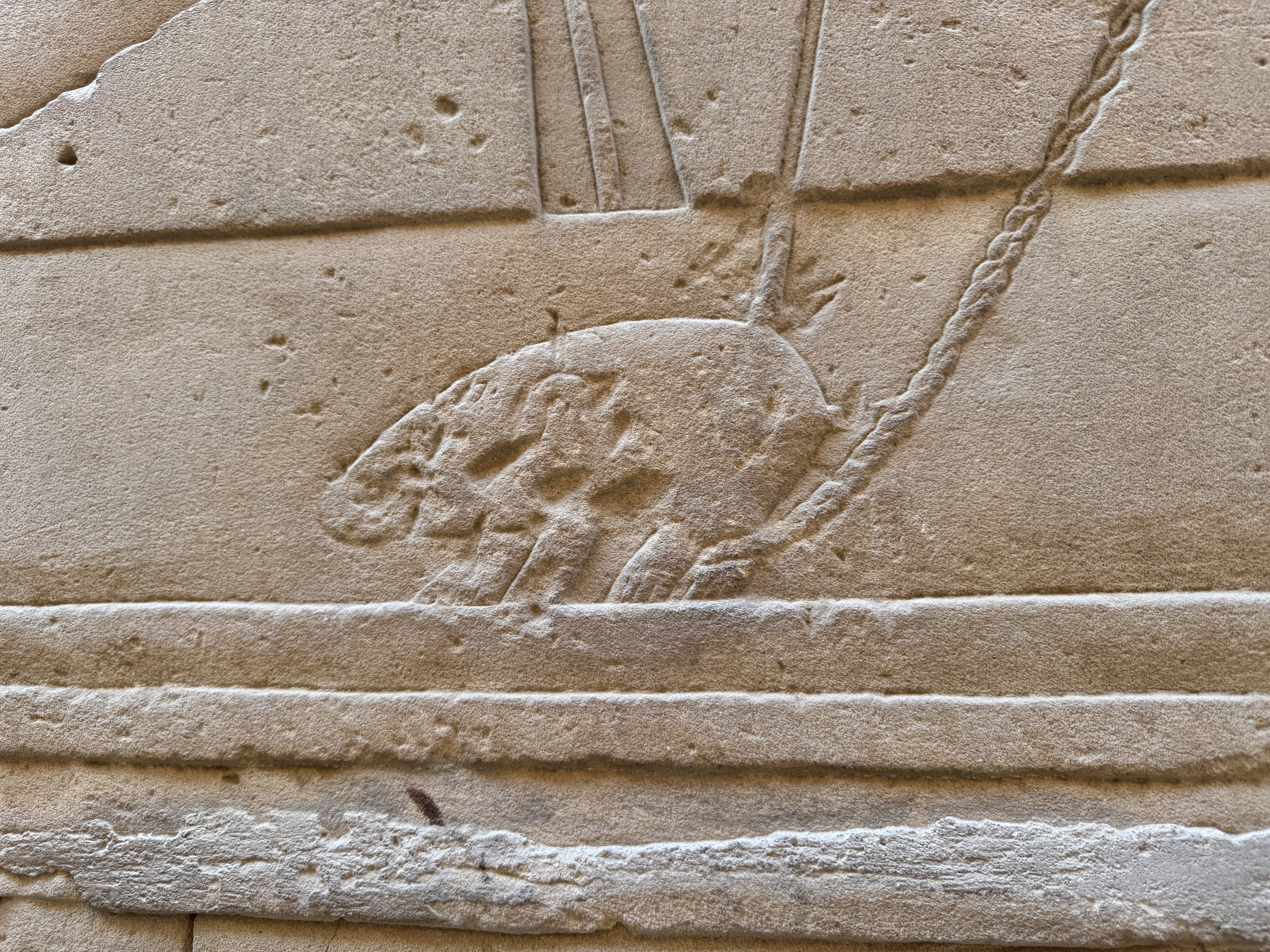
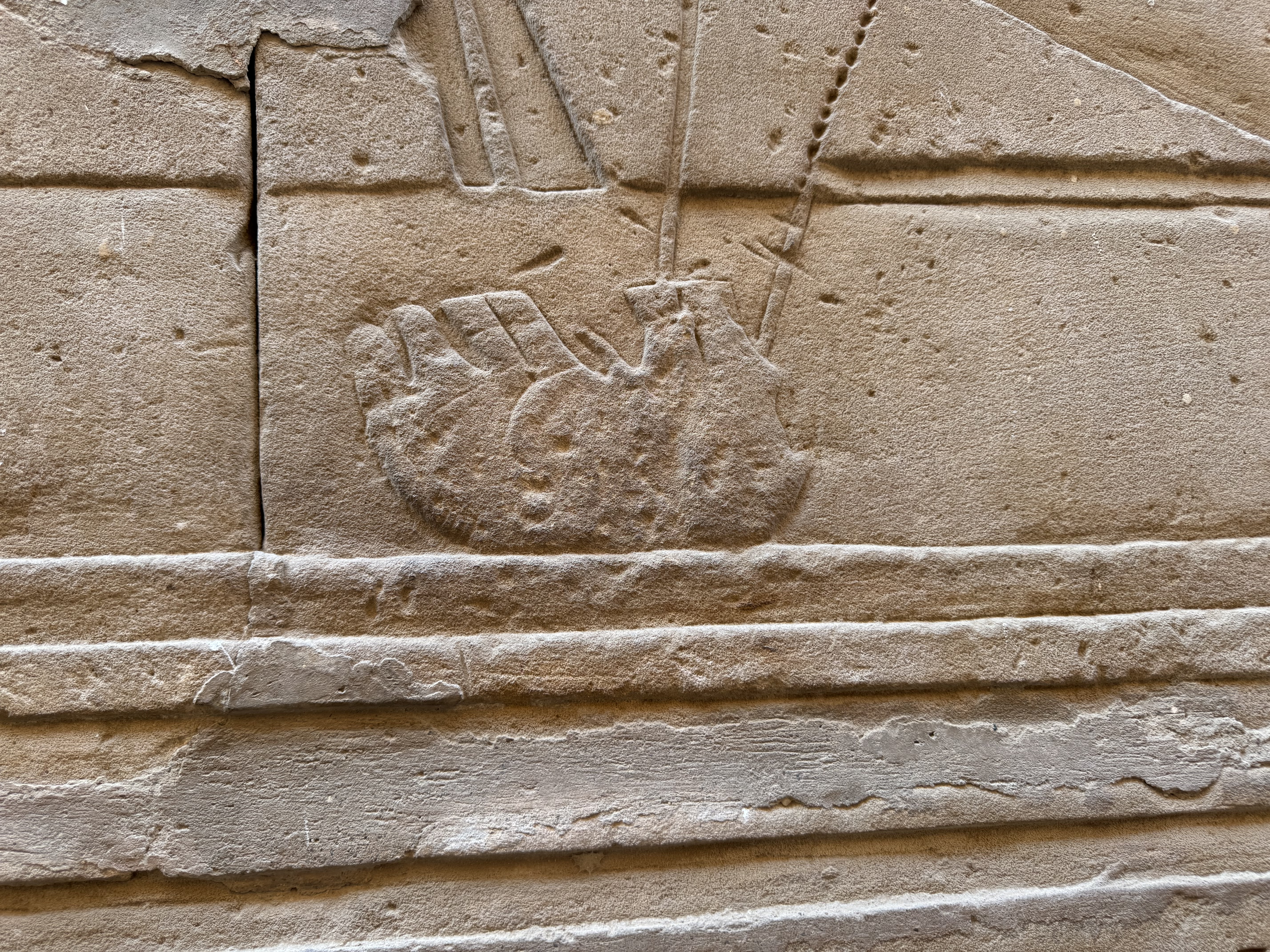
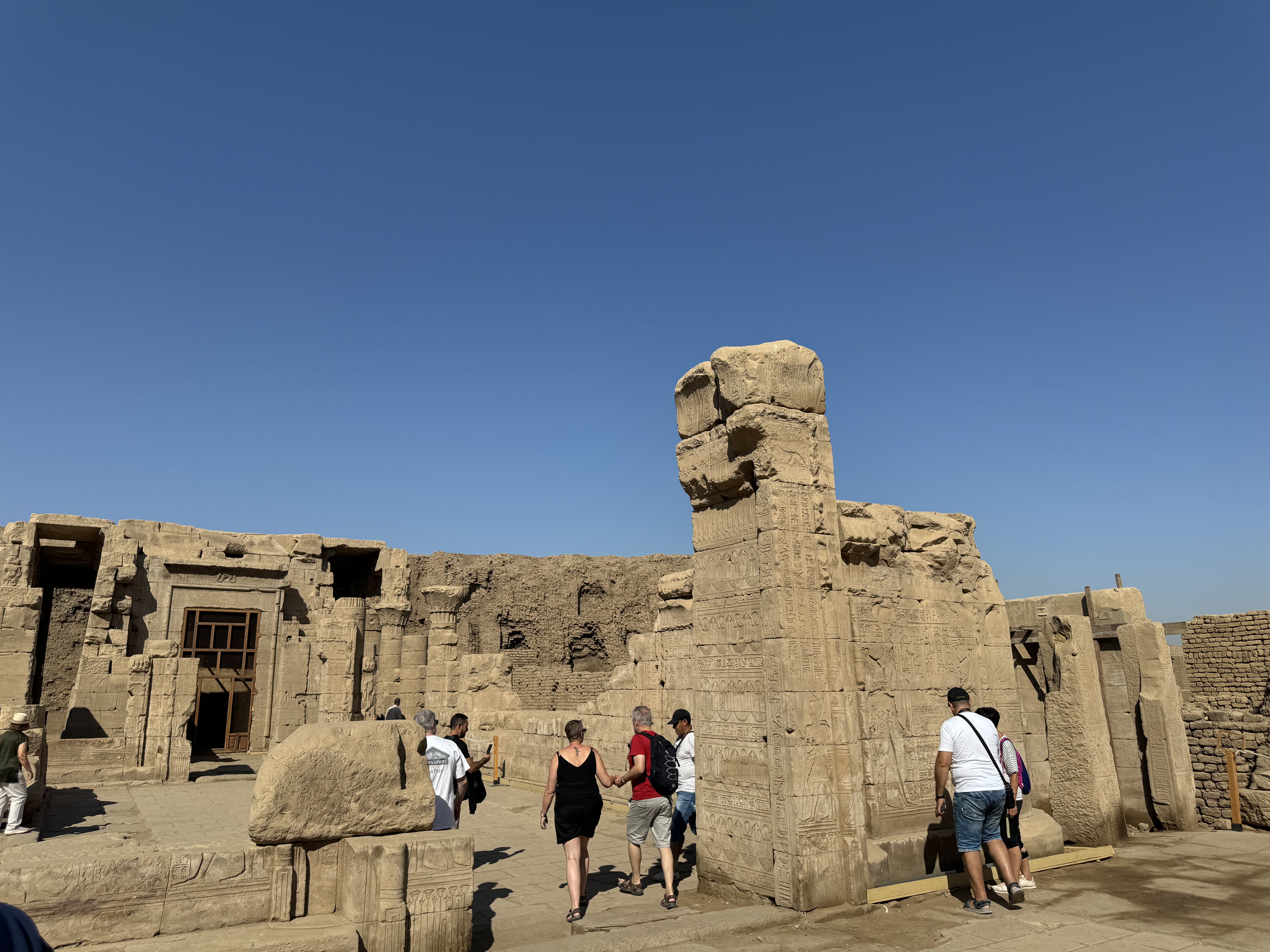
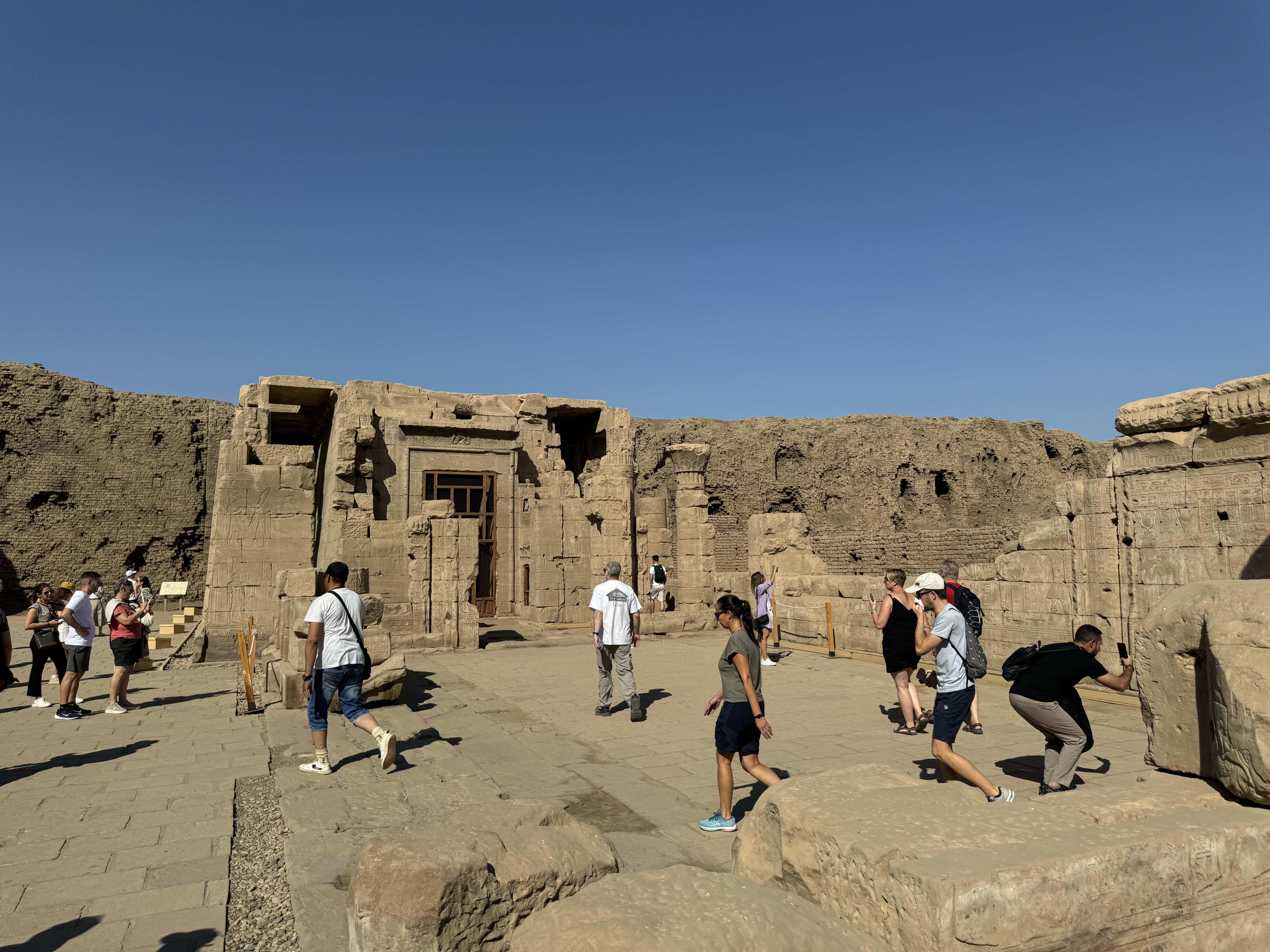
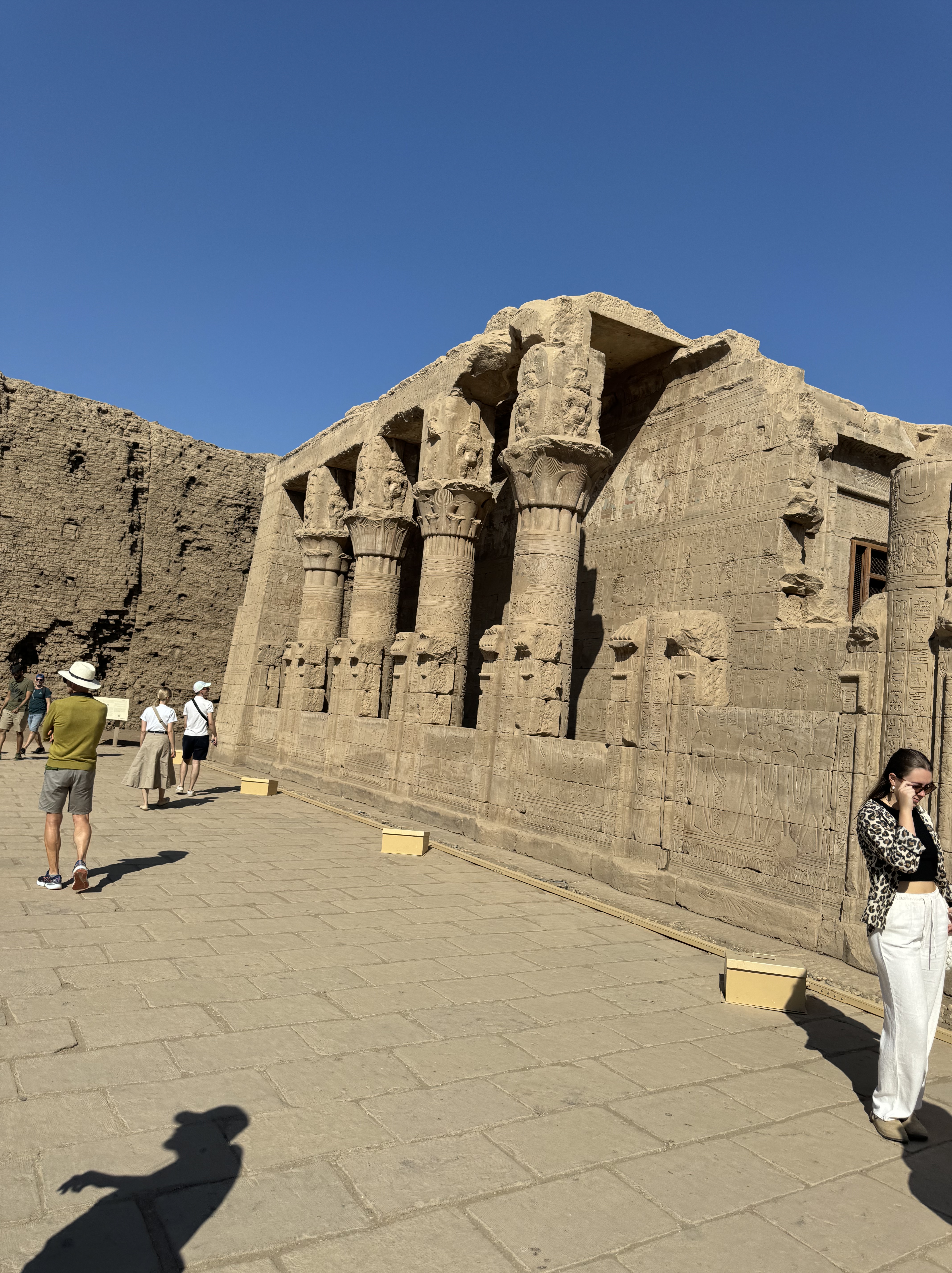
We began this day exploring one of the best preserved temples in Egypt – The Temple of Horus. This is a classic example of Ptolemaic architecture. It has massive stone walls and towering pylons. It is also one of the few temples in Egypt where inscriptions on its walls describe how it was built. They also show how it was used in ancient times.
To realize the size of the structures and to imagine being built without modern machinery is beyond comprehension.
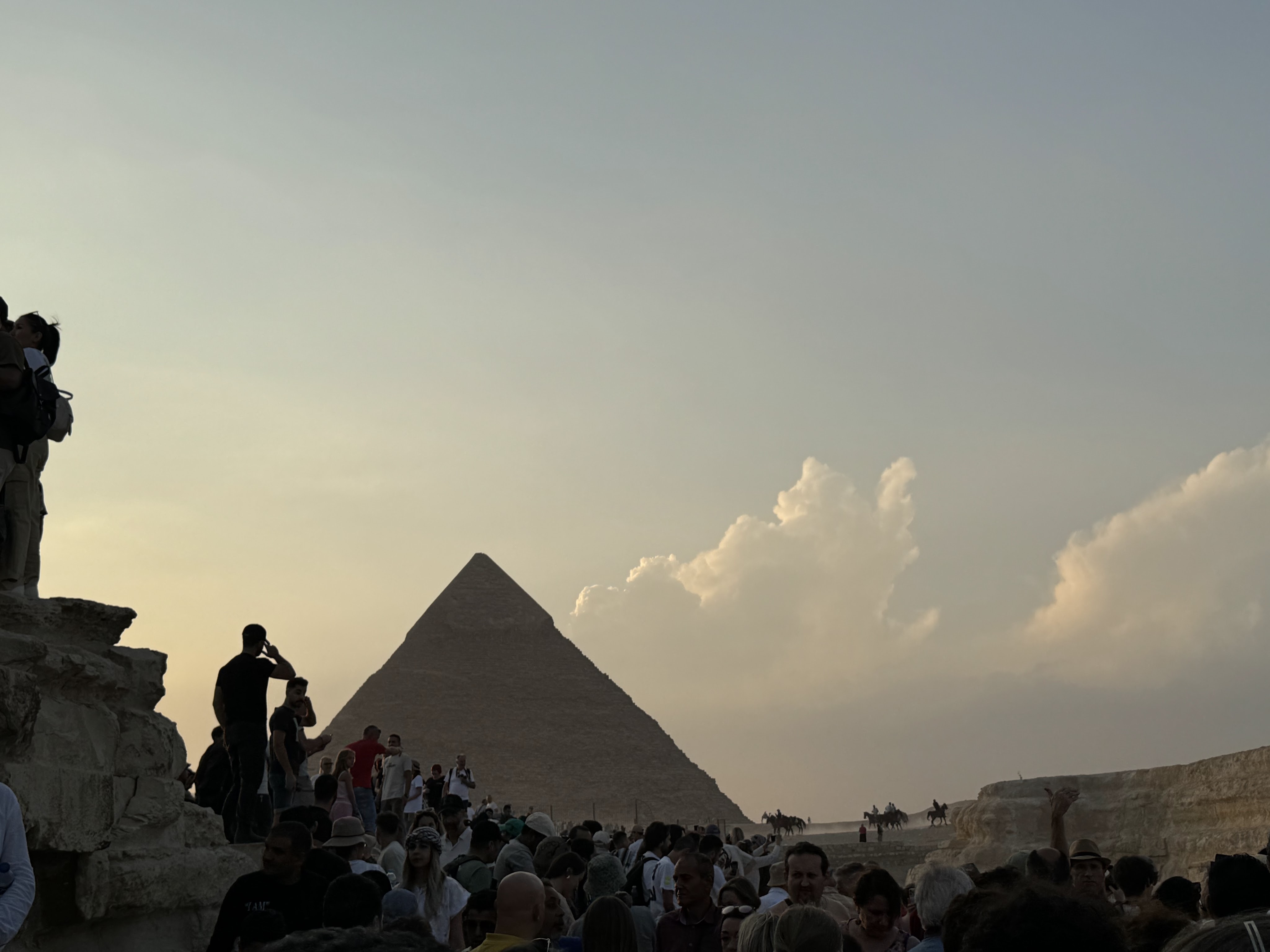
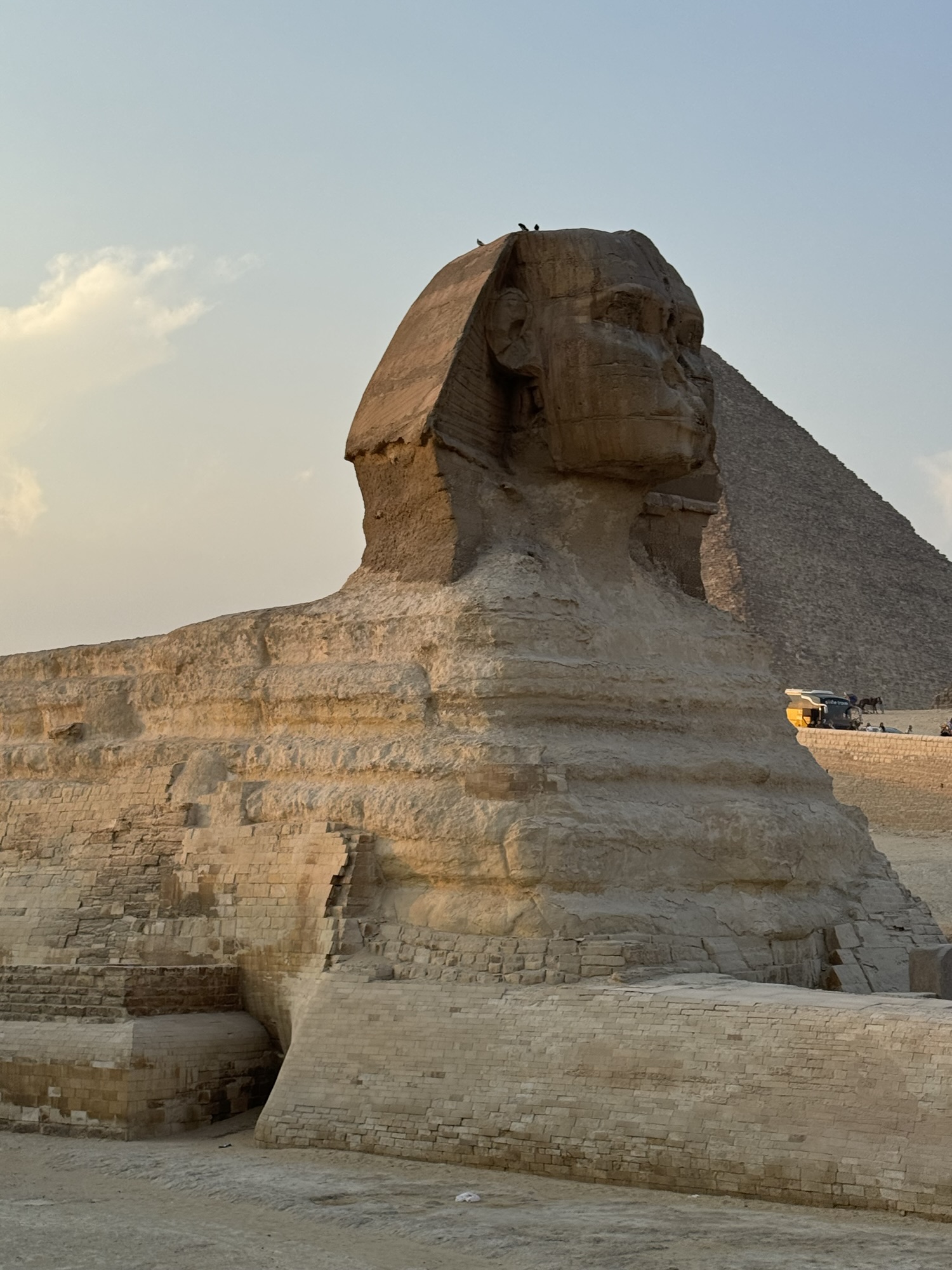
A guided tour of Giza was on the agenda for today. We stood in the shadow of the Pyramids of Giza. They are the only Wonder of the Ancient World to have survived into the modern era. Built to stand as tall as 480 feet, the Great Pyramid of Giza continues to amaze. It impresses with its size and construction precision. Several of us entered the Pyramid where you had to crawl and stoop to get to the main burial room. Once there, we posed for a picture in the burial area. Then, we made our way back out of the tomb. Riding a Camel at the Pyramids has been on my bucket list forever. Today I fulfilled that dream! The 4,500 year old Great Sphinx was next. It is the largest monolithic statue in the world. It was carved from a single limestone bedrock.
We walked 55 miles * took 132,000 steps * climbed 156 flights of stairs * stayed in 6 hotels * was on 4 continents (North America, Europe, Africa and Asia) * drank approximately 30 bottles of water * took 10 flights from start to finish * Traveled by car, plane, bus, balloon, motorboat, cruise ship, sailboat, camel and horse!
Day 1 & 2 ( Oct 29 & 30) started with our flight out of Little Rock to Dallas and then Cairo we didn’t arrive in Cairo until 11:30PM the next day. A very long trip.
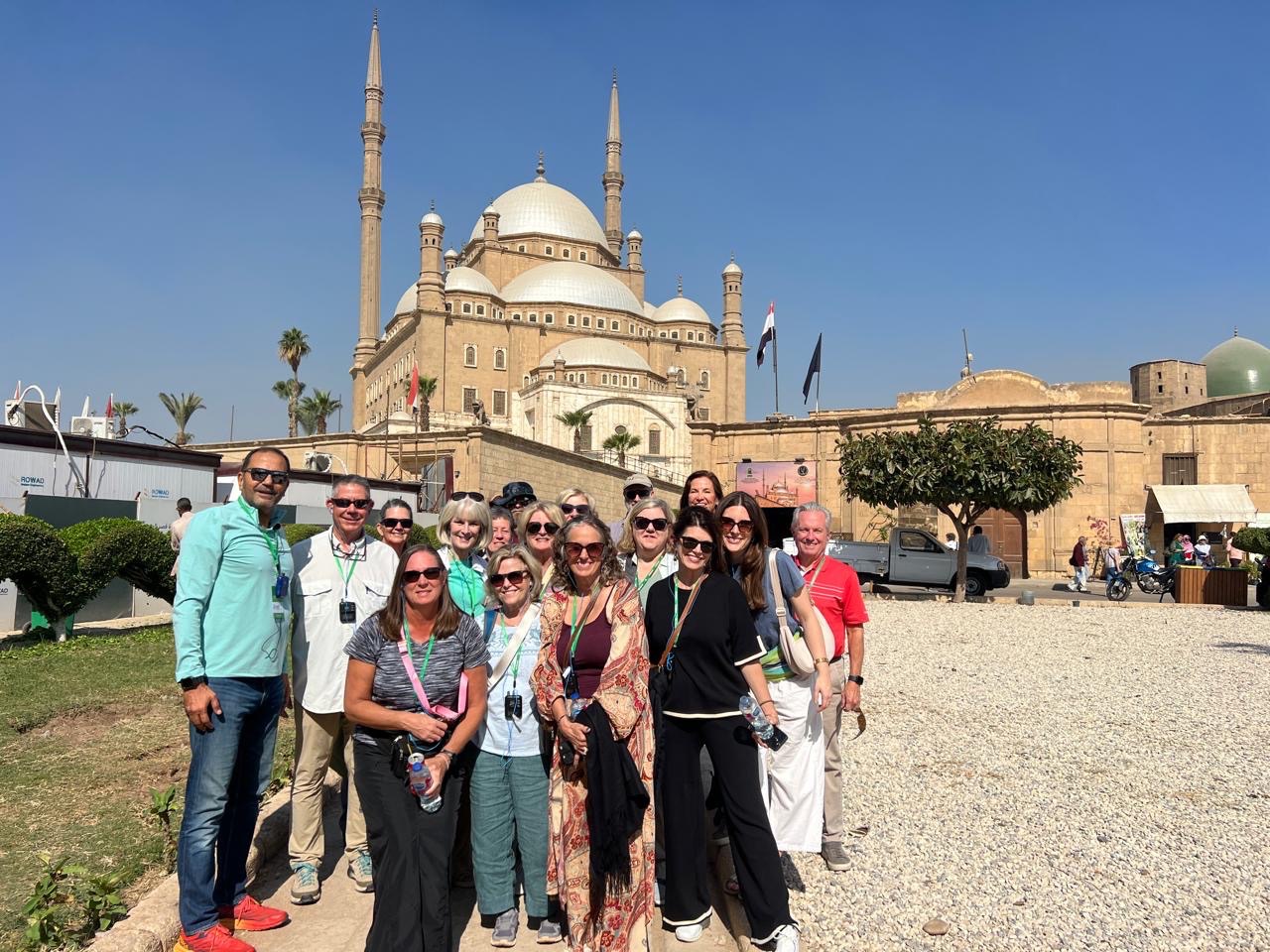
Day 3 (Oct 31) We set off on a guided tour of Cairo, by Amr Shamala, our Egyptologist for the next week. We visited the Cairo Citadel. Built in the 12 century by the mighty Saladin and originally used as a fortress, it remained the seat of the Egyptian government until the 19th Century.
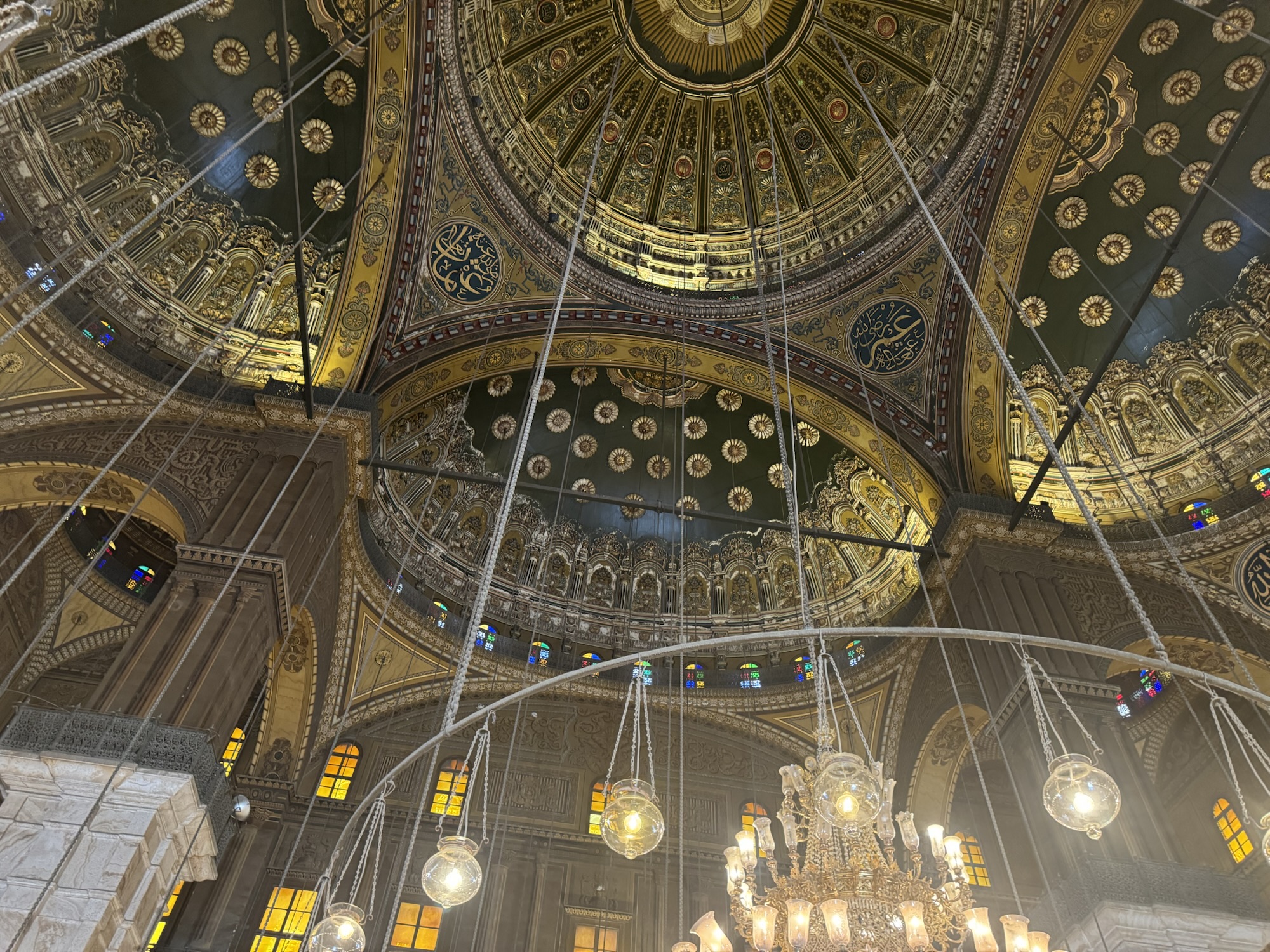
Next stop was the Muhammad Ali Mosque, built in the Ottoman stye and known as the Alabaster Mosque for its extensive marble paneling. Its twin minarets make it one of the most striking structures in Cairo’s cityscape.















 Adventures with Cindy